


CIRSE Fellowship report: Hamit Özgül
In May 2026, I had the privilege of spending one month as an observer at the Department of Interventional Neuroradiology at Klinikum Stuttgart, Katharinenhospital, within the framework of the CIRSE Fellowship Grant Programme. This fellowship was an exceptional opportunity to observe the daily practice of a highly experienced and internationally recognised neurointerventional centre, and to broaden my perspective in a field in which I have a strong clinical and academic interest.
My first positive impression of the institution came even before my arrival. After sending my application and initial e-mail, I received a prompt, welcoming and sincere response from Prof. Dr. med. Dr. h.c. mult. Hans Henkes. My application was reviewed and clarified very quickly, without unnecessary delays or uncertainty, which allowed the organisational process to proceed efficiently and smoothly. From the very beginning, I felt that I was being welcomed into a professional, open and supportive academic environment.
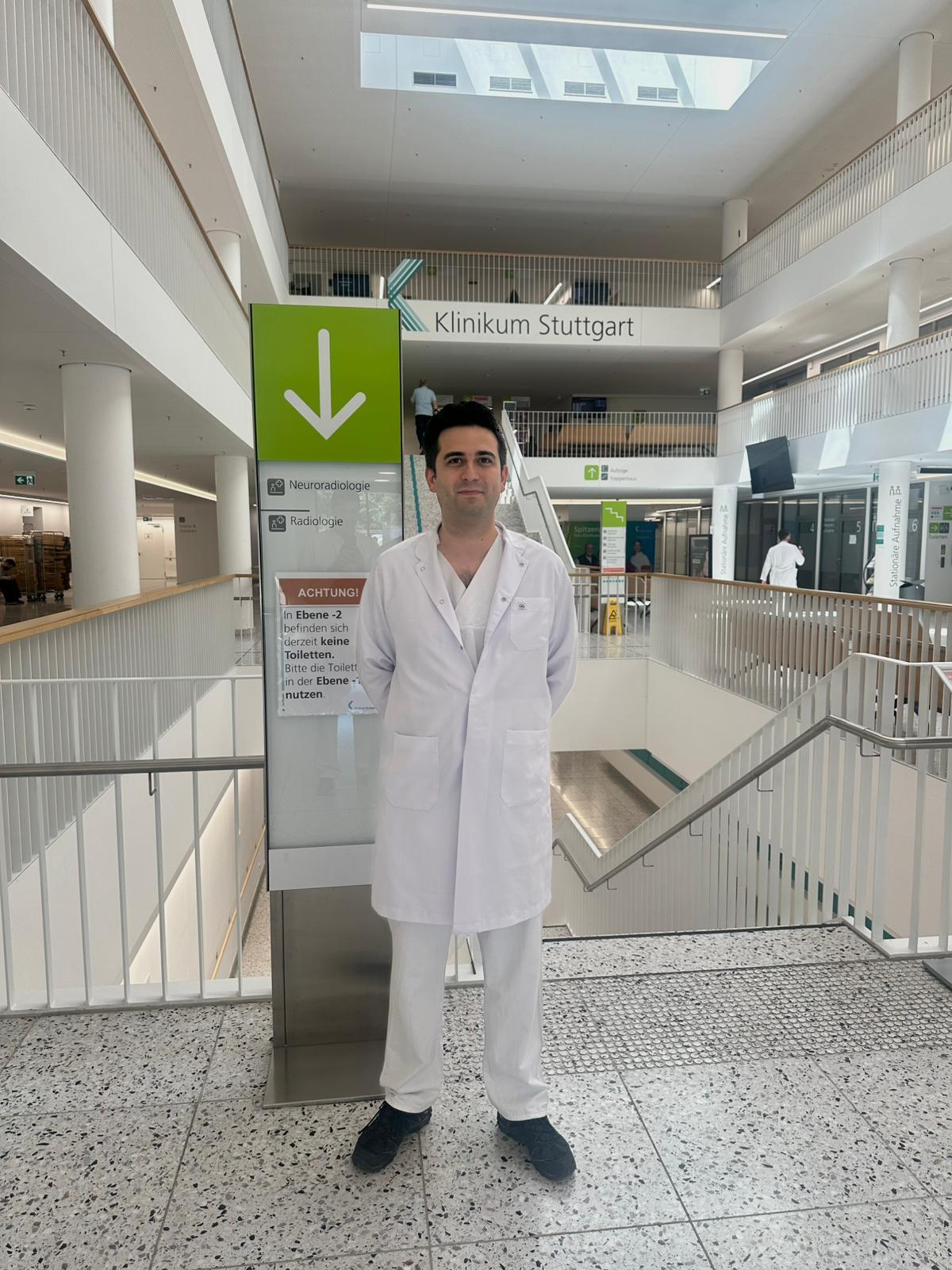
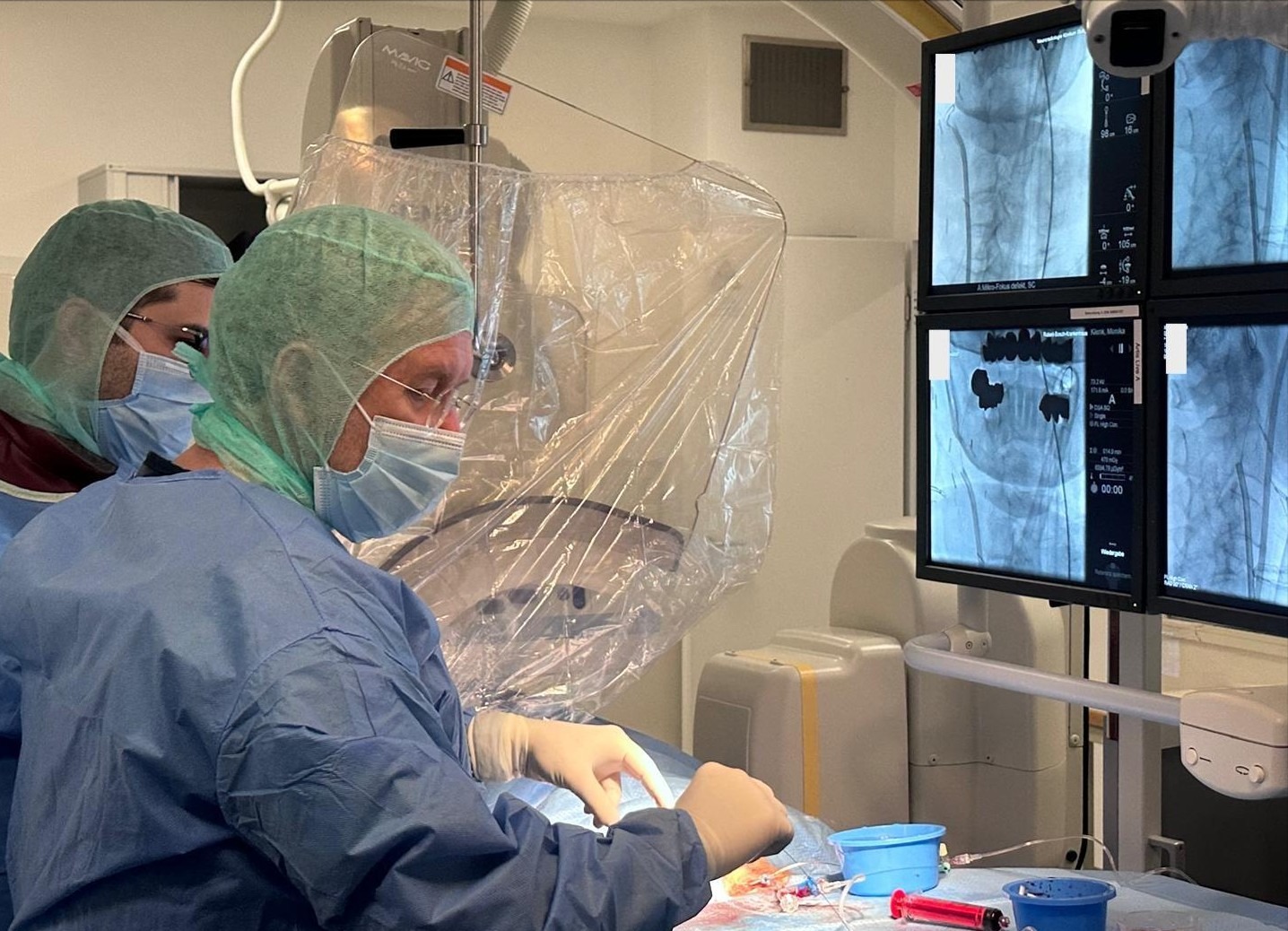
During my stay, the high case volume and wide variety of neurointerventional procedures were particularly impressive and educational. Klinikum Stuttgart is a reference centre where almost the full spectrum of modern interventional neuroradiology is performed. The department has three actively used angiography suites, and during my one-month fellowship I had the opportunity to observe and, where appropriate, assist in the workflow of a broad range of procedures, including 28 mechanical thrombectomies for acute ischemic stroke, 12 supra-aortic and intracranial stenting procedures, 32 intracranial aneurysm treatments, 4 embolization procedures for arteriovenous malformations and dural arteriovenous fistulas, 5 dural venous sinus stenting procedures, and numerous diagnostic cerebral angiographies.
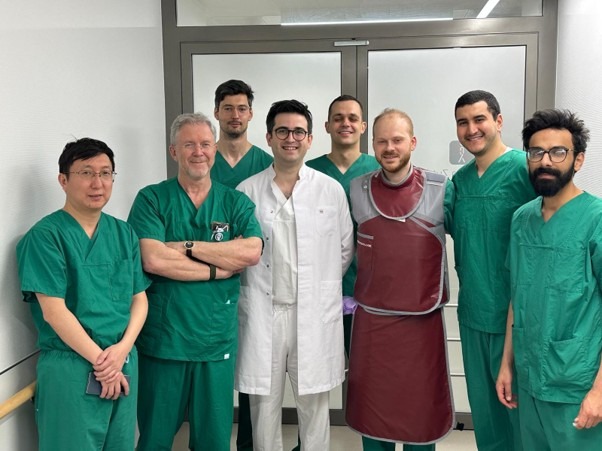
One of the main highlights of the fellowship was being exposed to the workflow of a centre with such a high neurovascular case load. Observing the management of acute stroke patients, ruptured and unruptured intracranial aneurysms, intracranial stenoses, arteriovenous malformations, dural fistulas and venous sinus pathologies within the same department allowed me to understand not only technical procedural details, but also the broader clinical decision-making process. This was especially valuable because it allowed me to compare different protocols, workflow structures and treatment strategies with those used in my own centre in Turkey. Rather than seeing these differences as limitations, I found them highly educational, as they demonstrated how different institutional setups can successfully approach complex neurovascular care.
Another important educational aspect was the acute management of ruptured intracranial aneurysms. The department is actively involved in studies and protocol development regarding perioperative patient management, and observing how these approaches are translated into daily clinical practice was highly instructive. I had the opportunity to follow differences in treatment approaches, medication strategies, perioperative monitoring and clinical follow-up, which helped me better understand how protocol details may influence the management of complex neurovascular patients.
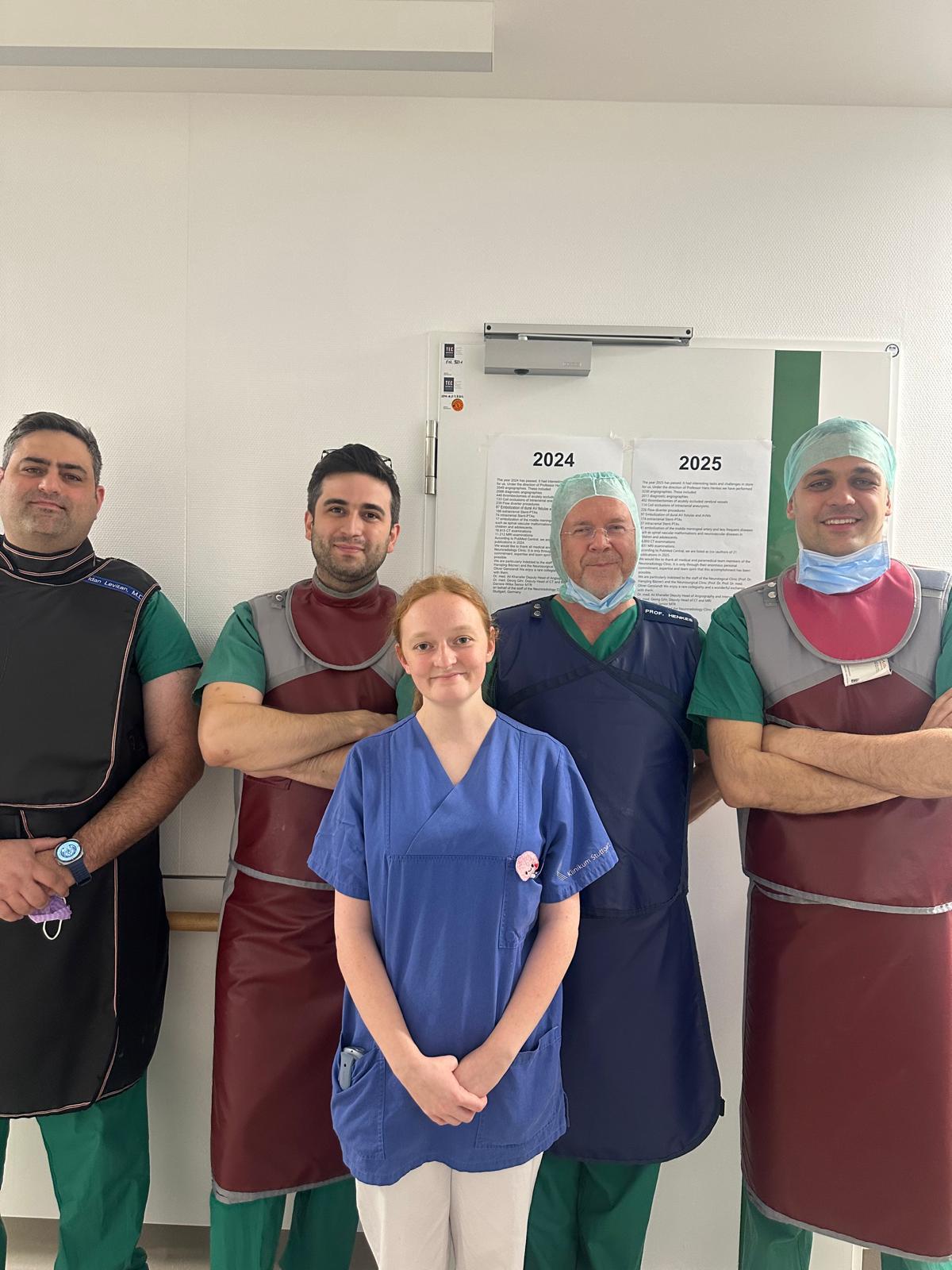
I also gained valuable insight into the diagnosis and treatment of dural venous sinus stenosis and intracranial hypertension, which are managed less frequently in my own centre due to differences in patient referral patterns and institutional focus. Observing patient selection, venous sinus stenting and postprocedural follow-up provided me with a more structured understanding of this specific disease group.
A further aspect that I found particularly valuable was the integrated clinical role of the interventional neuroradiology team at Klinikum Stuttgart. The department is actively involved in the longitudinal management of neurovascular patients, from preprocedural assessment to postprocedural care and, when necessary, inpatient and intensive care management. Although similar principles are also part of the clinical routine in my own institution, it was highly educational to observe how these processes are organised within a high-volume referral centre. This experience reinforced my understanding that neurointerventional practice extends beyond the angiography suite and requires close attention to clinical assessment, medication adjustment, complication management and structured follow-up.
The international atmosphere of the department was another important highlight. Since the centre regularly hosts researchers, observers and fellows from different countries, I had the opportunity to meet colleagues from Argentina, Israel and China. This created an intellectually stimulating environment in which we could exchange experiences, compare different healthcare systems and discuss approaches to neurointerventional practice. These interactions were not only academically valuable but also personally enriching.
Working under the mentorship of Prof. Henkes was one of the most memorable parts of the fellowship. In addition to being an outstanding operator with exceptional experience in complex neurointerventional procedures, he is also a highly experienced innovator and product developer. He has been involved in numerous patents and device development processes, some of which have become commercial products, while others remain part of the broader path of innovation. What impressed me most was his willingness to share his experience generously and openly. This was particularly motivating and encouraged me to think more actively about how clinical experience can be translated into innovation.
Overall, my expectations from this fellowship were fully met, and in many ways exceeded. I had hoped to observe high-level neurointerventional procedures, understand the workflow of a major European centre and improve my knowledge of advanced endovascular treatment strategies. During this month, I gained much more than procedural exposure. I observed a complete clinical and academic ecosystem in which patient care, technical excellence, research, teaching and innovation are closely integrated.
The experience I am most excited to bring back to my own centre is this broader understanding of interventional neuroradiology as a comprehensive clinical discipline. I believe that the lessons I learned regarding patient selection, perioperative management, workflow organisation, multidisciplinary collaboration and innovation will have a lasting influence on my professional development. I also believe that many of these observations can contribute positively to my own practice, especially in terms of structured follow-up, protocol awareness and multidisciplinary communication.
I am sincerely grateful to CIRSE for supporting this valuable opportunity, to Prof. Hans Henkes for his mentorship and generous sharing of experience, and to the entire team at Klinikum Stuttgart, Katharinenhospital, for their warm welcome and inspiring professional environment. This fellowship was an unforgettable and highly formative experience, both professionally and personally.