
Programme | Chairpersons | Faculty | Venue | Registration | Accommodation

November 18-19 | Wuppertal, DE
November 18-19 | Wuppertal, DE
November 18-19 | Wuppertal, DE
November 18-19 | Wuppertal, DE
November 18-19 | Wuppertal, DE
Image-guided pain intervention techniques: spine, joints, nerves and pelvic, Wuppertal/DE, November 18-19, 2027
Percutaneous image-guided interventions in pain management constitute a rapidly evolving field. A wide variety of techniques are available to treat pain of different origins. Over the past decade, numerous advances have further expanded the therapeutic options. Appropriate patient selection is fundamental to a tailored treatment strategy, while technical expertise and high-quality imaging guidance are essential to ensure both safety and efficacy.
This course will discuss the indications and technical aspects of image-guided pain interventions involving the spine, joints, peripheral nerves, and pelvis. Extensive hands-on workshops will provide participants with the opportunity to perform these procedures in a safe environment, develop the required technical skills, and learn practical tips and tricks from experienced faculty.
Who should attend?
This course is designed for interventional radiologists who have completed their training and are interested in further developing their practical skills and updating their knowledge.
To further multidisciplinary team building, multidisciplinary colleagues may attend this course together with an interventional radiologist from the same hospital under the registration type “Team fee.”
Programme
Thursday, November 18
08:30-09:00 Registration
09:00-09:10 Opening
09:10-10:25 Lecture I – Essentials of spine pain interventions
Understanding pain mechanisms
Multimodality imaging for pain assessment
Percutaneous treatments for intervertebral disc herniation
Vertebral augmentation techniques
10:10-11:10 Lecture II – Nerve-based pain and neurolysis
Nerve blocks
Neurolysis
Basivertebral nerve ablation
Spinal cord stimulation
11:10-11:30 Coffee break
11:30-12:30 Lecture III – Pain management: advanced
Patient selection
Navigation-/robotic-assisted techniques
Tumour ablation and cementoplasty
Complication avoidance and treatment
12:30-13:30 Lunch
13:30-15:15 Hands-on Workshop
MSK neurolysis
Basivertebral nerve ablation
Vertebral augmentation
Pain pumps/SCS
Navigation-assisted targeting
Robotic guidance
15:15:15:30 Coffee break
15:15-17:00 Hands-on Workshop I – continued
MSK neurolysis
Basivertebral nerve ablation
Vertebral augumentation
Pain pumps/SCS
Navigation-assisted targeting
Robotic guidance
Friday, November 19
09:00-09:45 Lecture IV – Visceral and pelvic pain
Pelvic venous pain and embolization
Sympathetic and visceral pain: IR approaches
Advanced IR decision-making in pain interventions (cases)
09:45-10:55 Hands-on Workshop II
Celiac plexus block and neurolysis
Superior hypogastric plexus block
Thermal ablation (RF and cryo)
Pelvic venous embolisation
Spinal cord stimulation
10:55-11:10 Coffee break
11:10-12:55 Hands-on Workshop II – continued
Celiac plexus block and neurolysis
Superior hypogastric plexus block
Thermal ablation (RF and cryo)
Pelvic venous embolization
Spinal cord stimulation
12:55-13:15 Final discussion
Course chairpersons

Patrick Haage
(Wuppertal/DE)
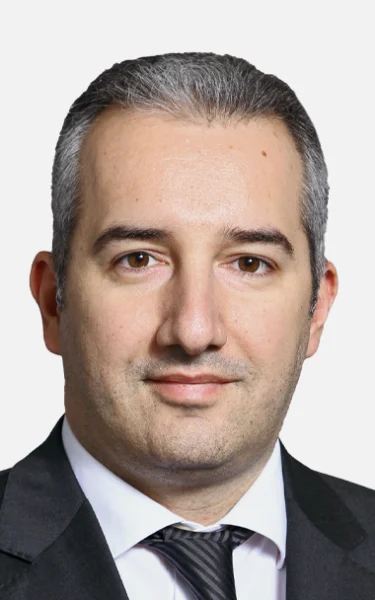
Dimitrios Filippiadis
(Athens/GR)
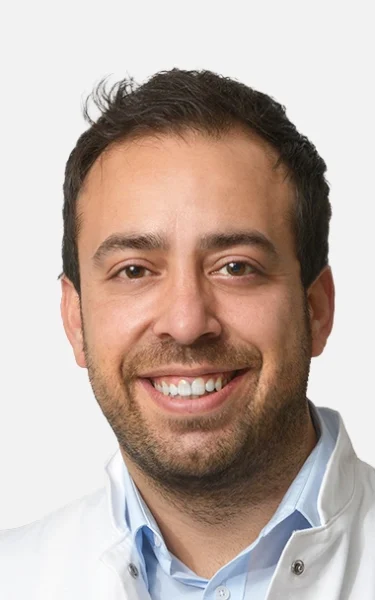
H. Saygin Tuna
(Wuppertal/DE)
Faculty
Stefano Marcia (Cagliari/IT)
Kai E. Wilhelm (Bonn/DE)
Marco van Strijen (Nieuwegein/NL)
Roberto Cazzato (Strasbourg/FR)
Belarmino Goncalves (Porto/PT)
Venue
Helios University Hospital Wuppertal
Heusnerstraße 40
42283 Wuppertal
Germany
Registration
Please note that this course is open to interventional radiologists who have completed their radiology training. To further multidisciplinary team building, multidisciplinary colleagues may attend this course together with an interventional radiologist from the same hospital under the registration type “Team fee.”
| Early fee (until September 23, 2027) | Regular fee (as of September 24, 2027) |
|
|---|---|---|
| Course registration | € 730 | € 960 |
| Course registration – team** | € 1200 | € 1500 |
| Course registration (CIRSE member*) | € 630 | € 760 |
| Course registration (CIRSE member*) - team** | € 900 | € 1100 |
To attend the ESIR courses as a member, CIRSE membership fee for the year of the course must be settled.
Interventional radiologists attending the course may bring with them an endocrinologist colleague from the same hospital with whom they work together in a multidisciplinary team. These two physicians will then be able to attend the ESIR course under the “team fee”. A copy of a medical license/certificate listing the endocrinology specialty of the teammate will be required and needs to be uploaded. If you have any questions, please contact [email protected].
These fees include:
- Course attendance
- Teaching material for the course
- Coffee breaks
- Lunch on the first day
General information
- Please note that this course is limited to 30 participants and registrations will be accepted on a first-come, first-served basis.
- Please note that your registration becomes valid only after receipt of payment and after confirmation by the CIRSE Central Office.
- When making your flight bookings, please make sure that you will be able to stay for the entire course.
Invoices will be issued by the CIRSE Foundation, Neutorgasse 9, 1010 Vienna, Austria.
CIRSE Foundation
Neutorgasse 9
1010 Vienna
Austria
Phone: 0043 1 904 2003
Fax: 0043 1 904 2003 30
Email: [email protected]
Cancellation of course registration
The CIRSE Foundation offers all participants the possibility of purchasing insurance with our partner “Europäische Reiseversicherung” via this link. Thus, the CIRSE Foundation itself will not refund any amount after a cancellation of registration. All requests have to be issued to the “Europäische Reiseversicherung” directly. Refunds will be given within the terms and conditions of the “Europäische Reiseversicherung”. Name changes will be handled as a cancellation and new registration. Please note that CIRSE offers just a platform to affect a policy between you and “Europäische Reiseversicherung”.
Accommodation
Suggestions for accommodation are coming soon!