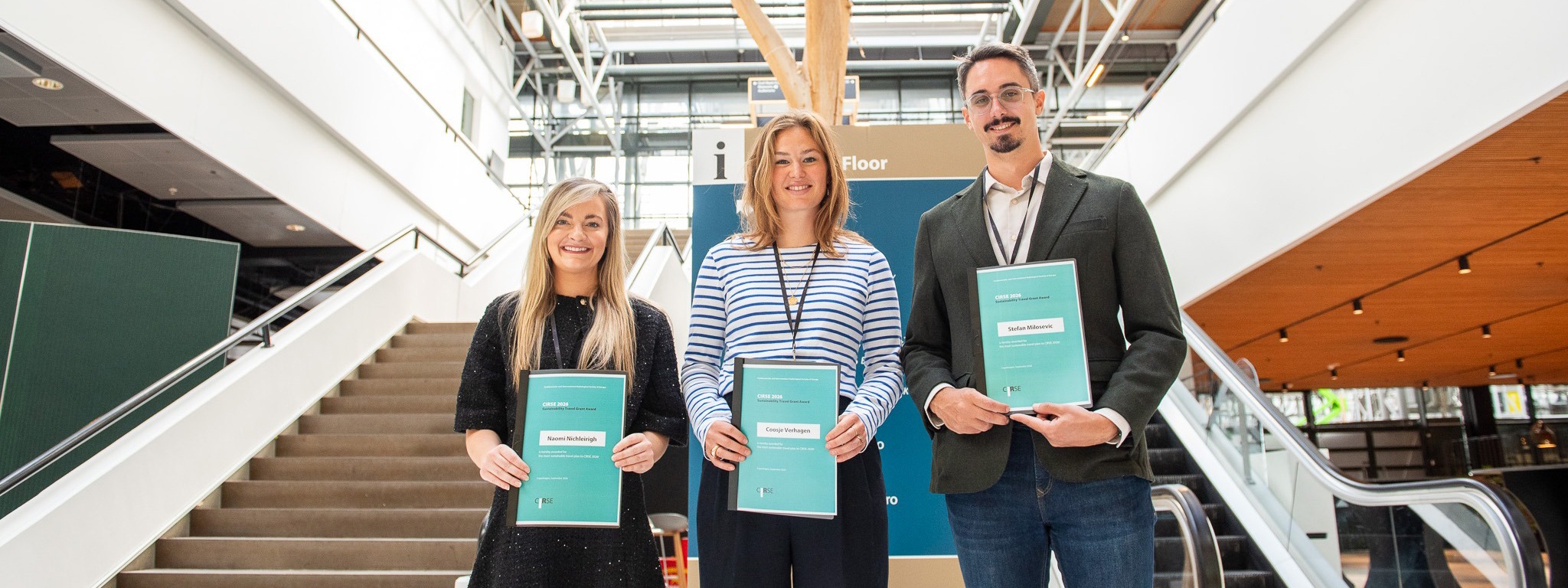
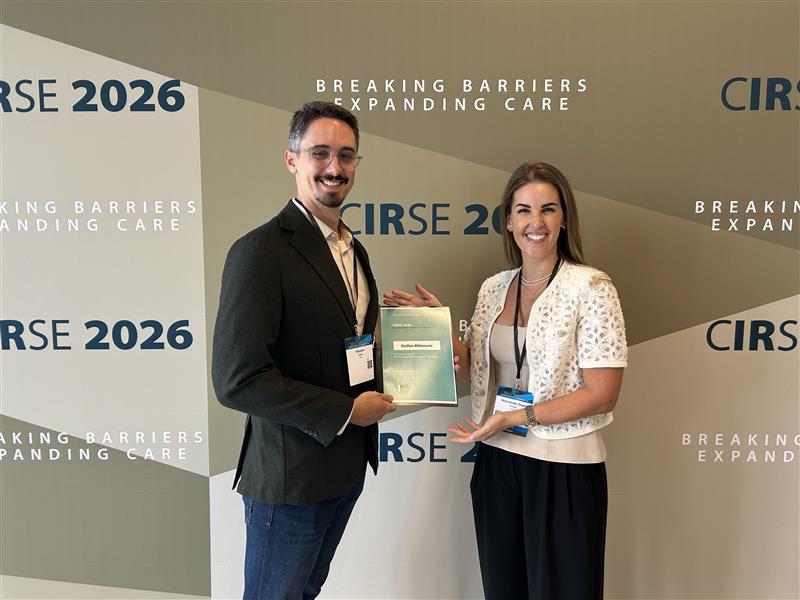
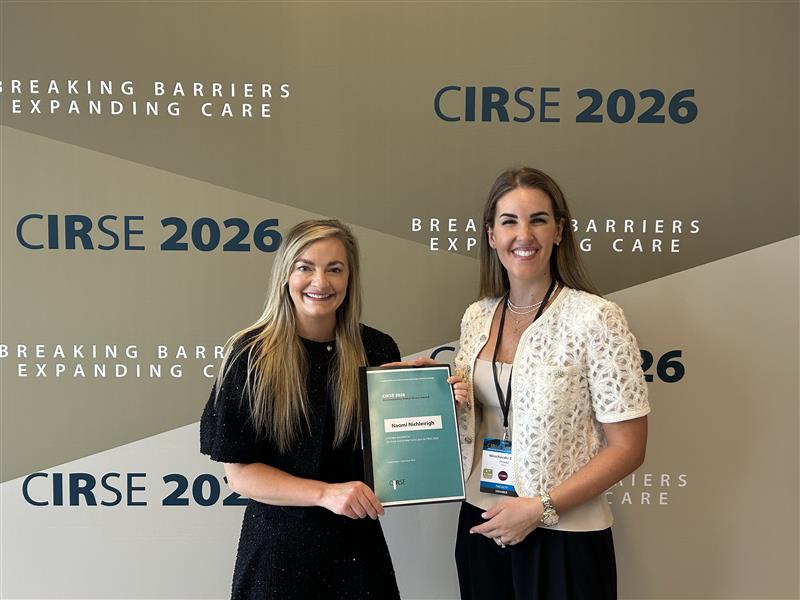
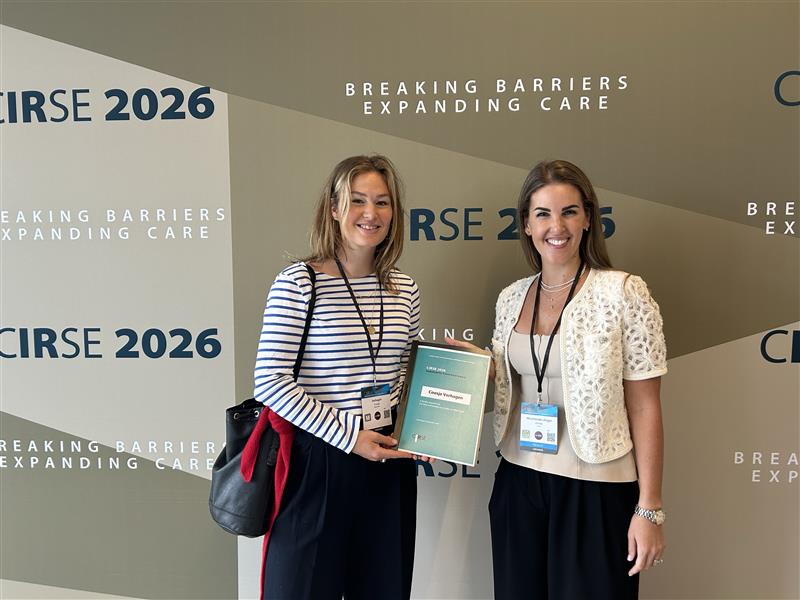
What motivated you to apply for the CIRSE 2026 Sustainability Travel Grant and to choose a more sustainable way of travelling to Copenhagen?
Milošević: As an early-career radiologist, attending the CIRSE Annual Congress is a vital opportunity for my professional development, but long-distance travel often comes with an environmental cost. The grant inspired me to critically evaluate my own travel footprint. I wanted to demonstrate that as healthcare professionals dedicated to improving patient health, we should also be conscious of environmental health. Choosing an overland route allowed me to align my personal commitment to sustainability with CIRSE’s initiative, proving that attending international scientific meetings can be done responsibly without relying on high-emission flights.
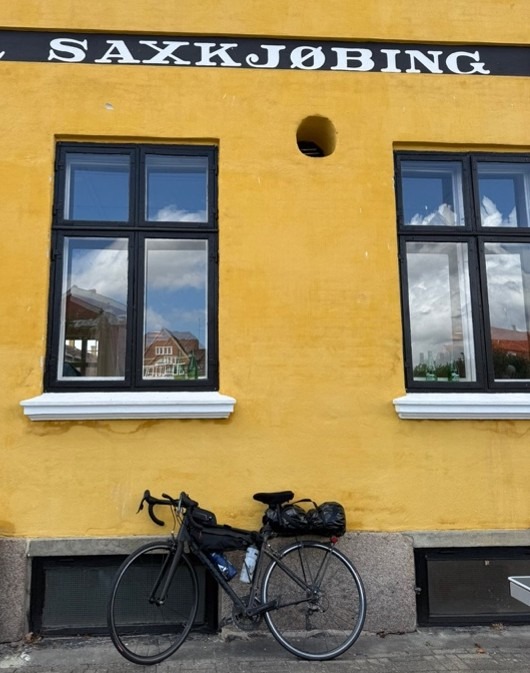
Verhagen: Working in healthcare, sustainability in clinical practice is a topic that is regularly discussed. To me, that conversation should also include how we travel to scientific meetings. By travelling by bicycle, I hope to inspire others that low-emission international conference travel is not only desirable, but also feasible and, above all, great fun. I find it very encouraging that CIRSE offers sustainability grants to support initiatives like this. For me, the grant was extra motivation and, most importantly, a practical support that made this journey possible. I hope that offering this kind of support will also encourage and inspire other colleagues to consider more sustainable ways of travelling to scientific meetings!
Ní Chléirigh: I wanted to challenge the idea that flying is the only realistic way to travel to an international medical conference. Coming from Cork, travelling by rail to Copenhagen is obviously a much longer journey (1,200 km) but I wanted to see whether, with a bit of planning and support, sustainable travel could be a realistic option. I also think the healthcare sector has a responsibility to consider its environmental impact, and that should extend to how we travel to conferences. The Sustainability Travel Grant made it much easier to make that choice, but I was also keen to experience it for myself. I wanted to show others that it doesn’t necessarily mean compromising on the conference experience.
What do you think could make sustainable conference travel more realistic for others?
Milošević: First, financial and institutional support is key. Grants like CIRSE’s make eco-friendly options viable for young doctors on tighter budgets. Second, better integration and synchronization of cross-border rail booking platforms would make planning long overland trips much easier. Finally, recognizing sustainable travel within academic institutions, such as offering flexible travel days for conference attendees who choose low-carbon routes over flying, would encourage far more clinicians to adopt green travel habits.
Verhagen: Sustainable travel is often more feasible than we think. There is a common assumption that sustainable travelling inevitably means much more travel time and effort, but with the options available nowadays, this is no longer true. Looking at the different approaches taken by my fellow grant winners, I am impressed by what is possible when the available options are properly explored and planned. Reflecting on my own way of travelling, I realize that my position as a PhD student (and of course the flexibility of my supervisor) gave me the unique opportunity to make this journey possible, since I was able to work remotely during parts of it.
Ní Chléirigh: The biggest barriers are probably time, cost, and convenience. If conferences provided clearer information about rail and other low-carbon travel options, and if there were financial incentives, I think more people would consider it. Time is probably the top issue for doctors in particular. If you’re taking several days to travel to a conference, it can be difficult when you’re already trying to organize annual leave and clinical/call cover. There’s also something to be said for changing the culture around it. If people see colleagues travelling by train, cycling, or using other alternatives and realize that it’s actually doable, it becomes less unusual.