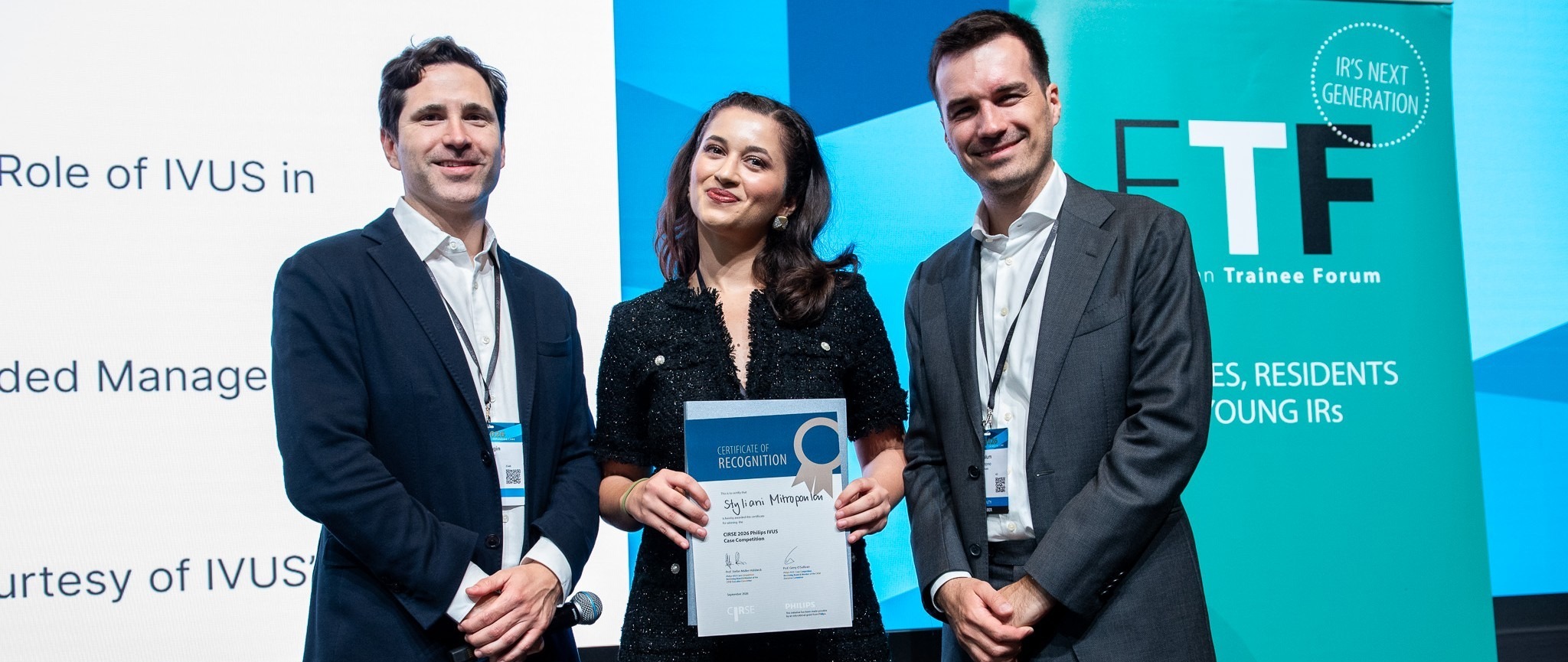
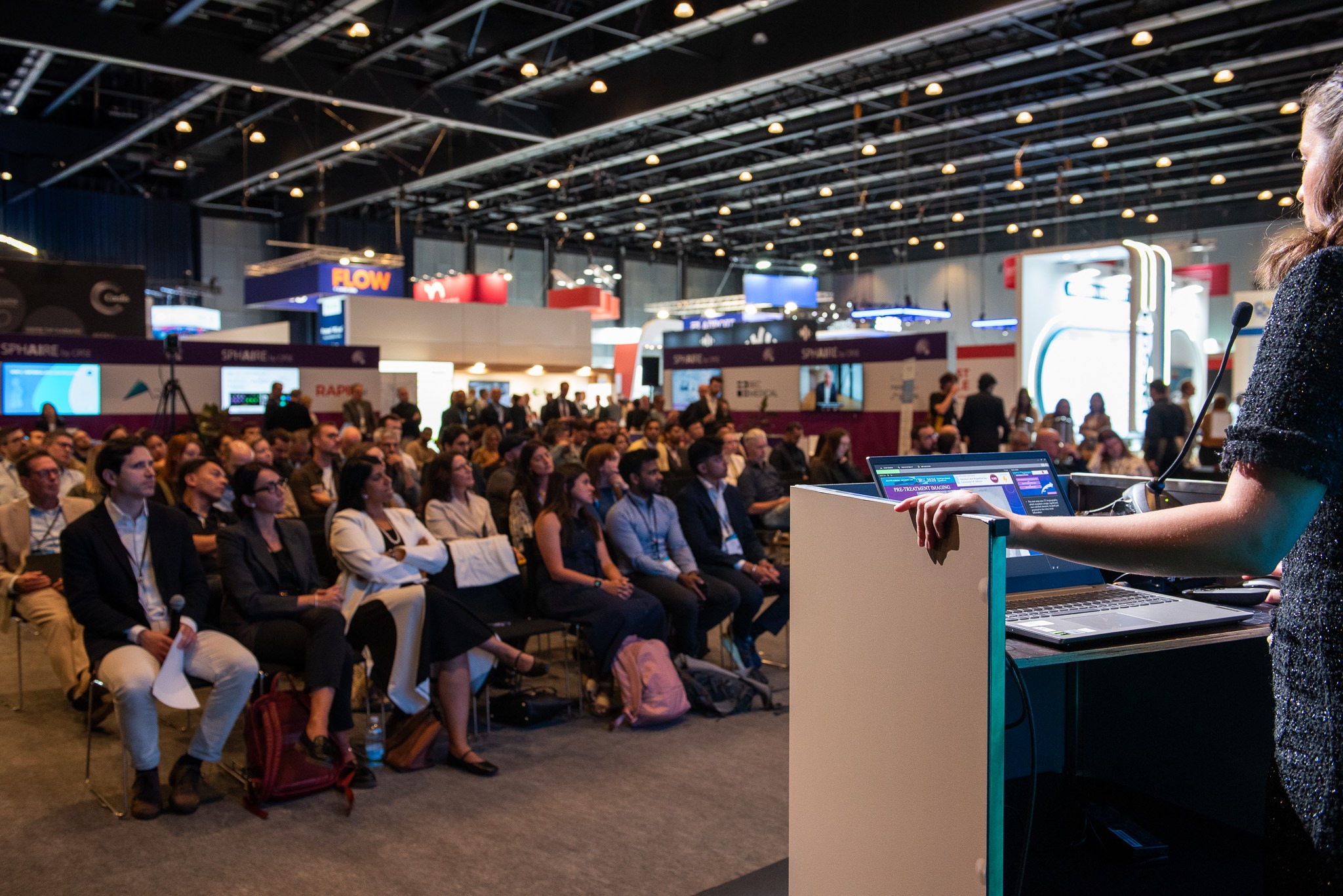
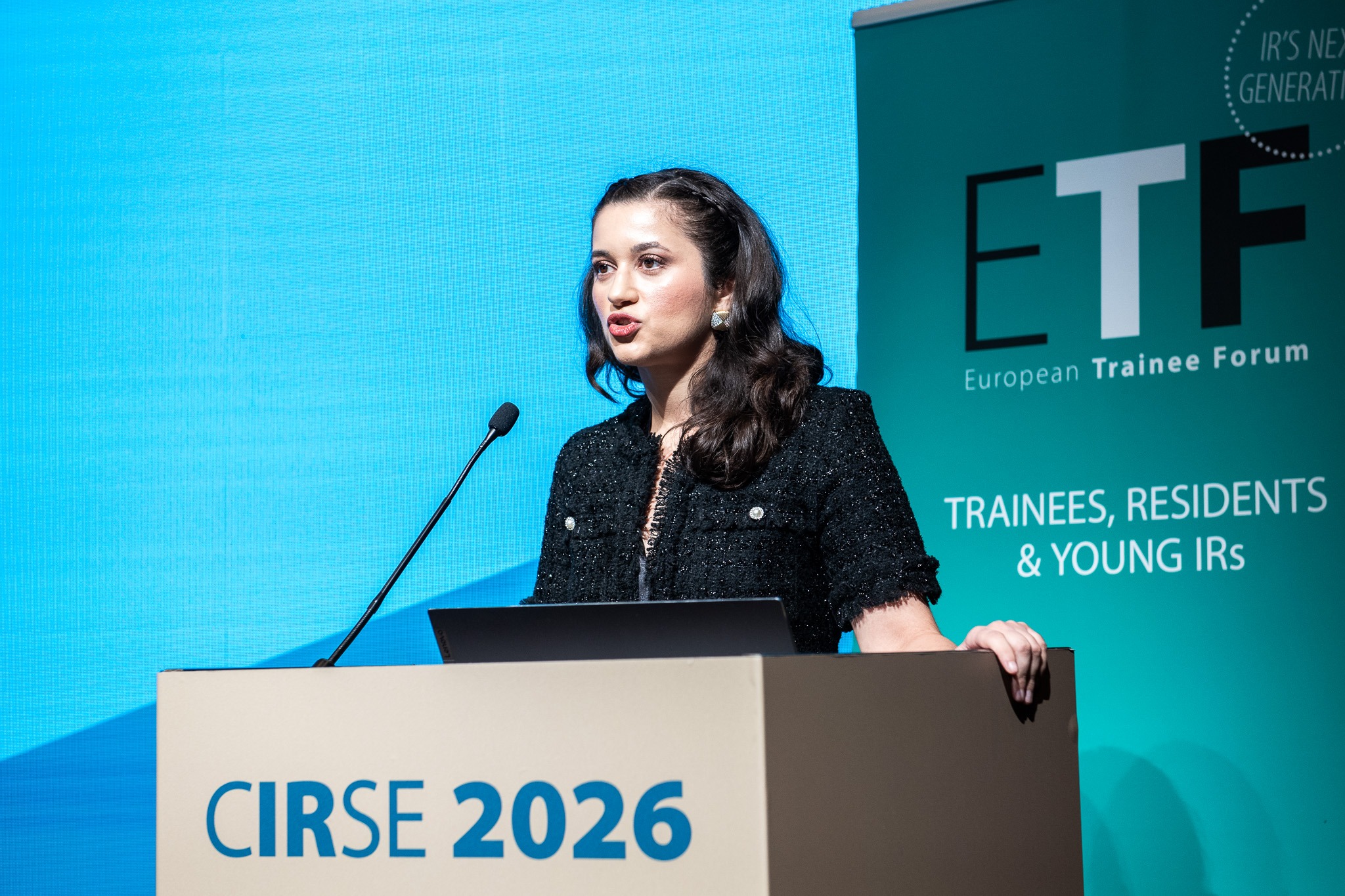
Could you briefly introduce yourself and tell us about the case you presented? What made you choose this particular case?
Mitropoulou: My name is Styliani (Stella) Mitropoulou, and I am a fourth-year radiology resident in the 2nd Department of Radiology at University General Hospital “ATTIKON” with a strong interest in interventional radiology.
The case I presented was entitled “Endovascular Treatment of Transplant Renal Artery Stenosis: The Role of IVUS.” It involved a 60-year-old female kidney transplant recipient with resistant hypertension and renal artery stenosis. The case focused on using intravascular ultrasound (IVUS) to obtain additional information beyond DSA and CT angiography to better assess the extent of the stenosis and to guide our treatment strategy.
We chose this case because it highlighted the added value of IVUS in a complex clinical scenario. What I found particularly interesting was how IVUS identified an additional distal stenotic lesion that was not visible on CTA or DSA, influencing our approach to treatment. It also demonstrated how intravascular imaging can support more precise decision-making while taking renal function preservation into consideration.
How did you prepare your case presentation? Did you practice your presentation with colleagues or mentors, and what feedback proved most helpful?
Mitropoulou: I prepared my presentation by thoroughly reviewing the clinical details of the case and practicing it repeatedly on my own. I wanted to make sure that my presentation was clear, well-structured, and that I could communicate the clinical reasoning behind our treatment decisions effectively.
I received valuable feedback from Prof. Stavros Spiliopoulos and Dr. Moschovaki-Zeiger. One of the most helpful recommendations came from Prof. Spiliopoulos, who encouraged me to emphasize the importance of clearly communicating that, without IVUS, we would not have identified the distal lesion and, consequently, we would not have been able to treat it.
This feedback helped me focus on the key message of the presentation: IVUS was not simply an additional imaging tool but also played a crucial role in identifying a lesion that was not detected on the initial imaging and guiding our treatment strategy.
How did you feel when your presentation was voted the best of the session by the audience?
Mitropoulou: At first, I couldn’t believe it. I was genuinely surprised and needed a moment to realize what had just happened. It was a very special moment for me, especially because I had put so much effort into preparing this presentation.
What made it even more meaningful was the support from the whole “Attikon” team and from everyone who came to attend and support us. For me, this achievement was first and foremost a recognition of the team and only secondly a personal achievement. I felt incredibly grateful and proud to have had the opportunity to represent our team and present such a meaningful case. It was a moment that I was very happy to share with everyone who had supported me along the way.