Cardiovascular and Interventional Radiological Society of Europe
CIRSE insider - NEW - animated
PublicationsCIRSE InsiderIn conversation with the CIRSE 2026 Magna Cum Laude Poster Award winners

In conversation with the CIRSE 2026 Magna Cum Laude Poster Award winners

September 11, 2026

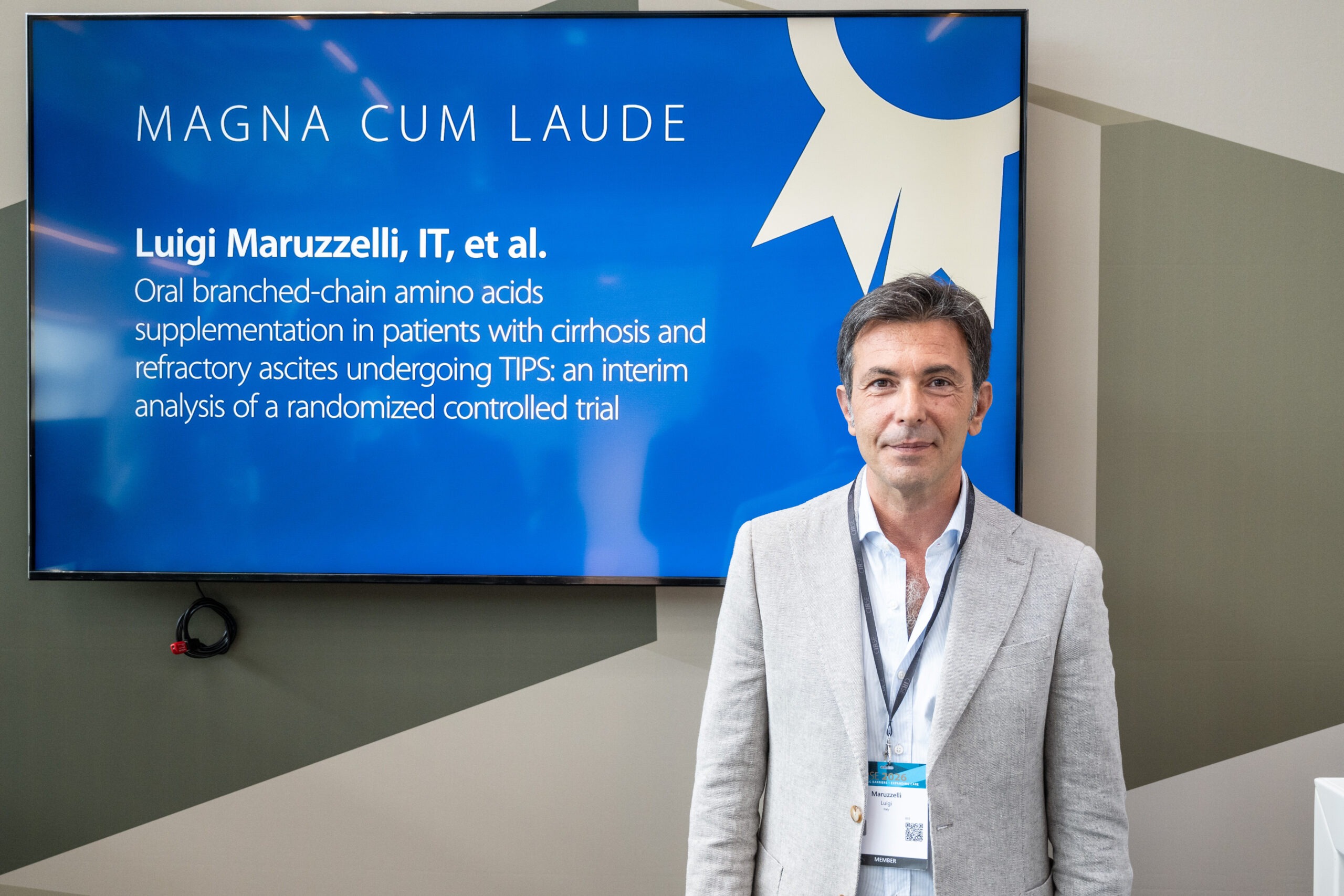
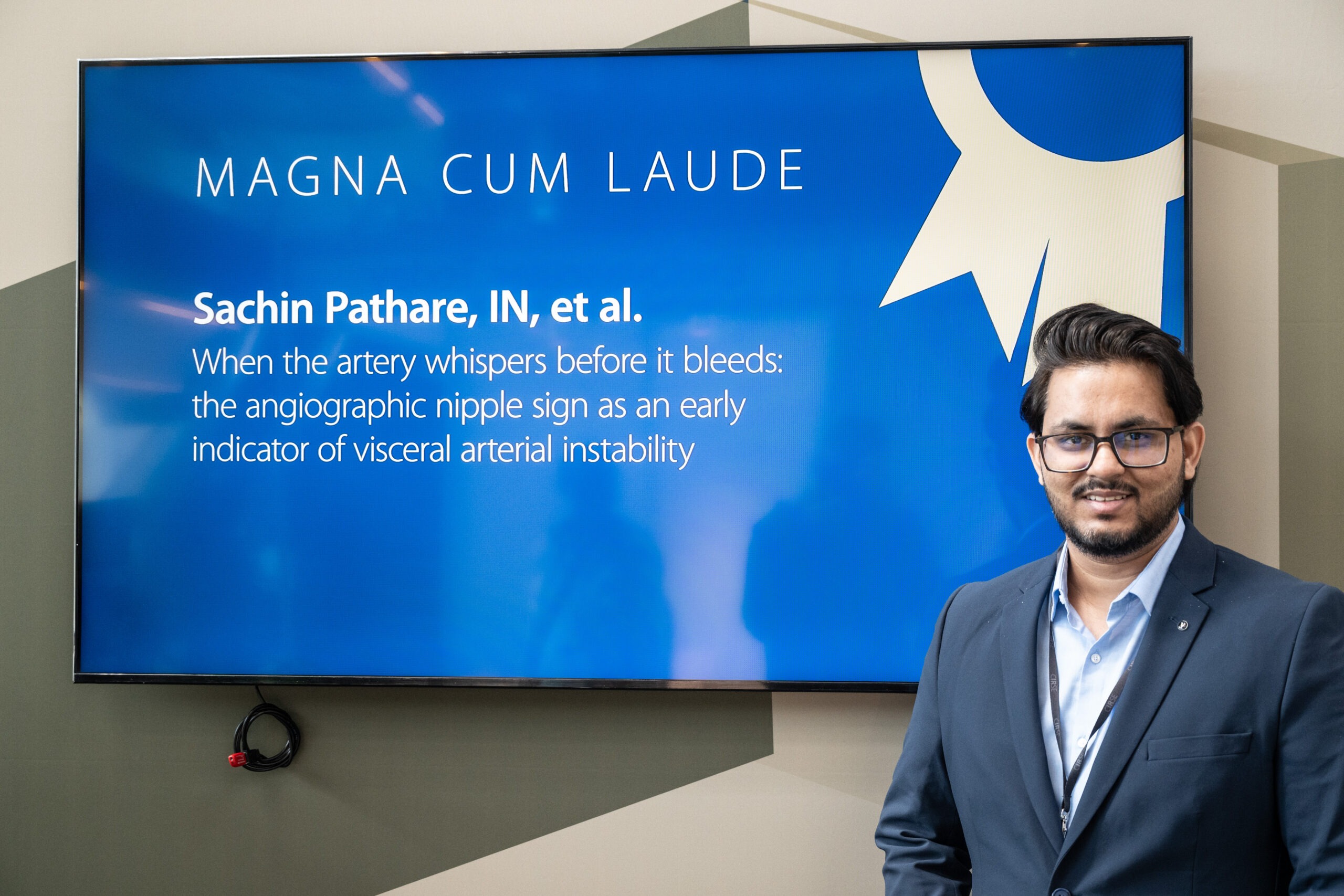
Out of hundreds of submissions, the CIRSE 2026 Scientific Programme committee selected two winning posters: Dr. Luigi Maruzzelli et al.’s “Oral branched-chain amino acids supplementation in patients with cirrhosis and refractory ascites undergoing TIPS: an interim analysis of a randomized controlled trial” and Dr. Sachin Pathare et al.’s “When the artery whispers before it bleeds: the angiographic nipple sign as an early indicator of visceral arterial instability.”


Dr. Luigi Maruzzelli at CIRSE 2026

CIRSE Insider: Can you tell us a little bit about your academic background?

Maruzzelli: I graduated in medicine at the University of Palermo in 2000 and trained in radiology there. I owe the direction of my career to Prof. Giuseppe Brancatelli, now Chair of Radiology at the University of Palermo, who encouraged me to spend time in abdominal imaging at the University of Pittsburgh Medical Center with Prof. Michael Federle; I then spent a residency year at Beaujon Hospital near Paris with Prof. Valérie Vilgrain. These experiences turned my interest towards IR for liver and biliopancreatic disease and transplantation.

I then moved to ISMETT, a transplant centre in Palermo, where I completed my fellowship under Prof. Angelo Luca, joined the staff in 2007, and have since worked alongside Dr. Roberto Miraglia, Head of Radiology Services and a CIRSE Fellow. I have been Chief of the Interventional Radiology Unit since 2024 and am also a Clinical Assistant Professor of Radiology at the University of Pittsburgh School of Medicine. My clinical and research work focuses largely on portal hypertension, liver cancer treatments, and IR in adult and paediatric transplant patients.

CIRSE Insider: Your research topic was on the impact of branched-chain amino acids (BCAAs) on patients with cirrhosis and refractory ascites undergoing TIPS. What was the motivation behind studying this topic?

Maruzzelli: Sarcopenia is extremely common in cirrhotic patients with refractory ascites, and it is one of the strongest predictors of a poor outcome after TIPS: mortality, hepatic encephalopathy and quality of life all track with it. What we see in daily practice is that the shunt alone may not be enough. TIPS controls the ascites very effectively, but it does not always reverse the muscle wasting and the chronic inflammation these patients carry, and it is very often the sarcopenia that drives the outcome.

Branched-chain amino acids are inexpensive, oral, and safe, with a solid biological rationale in both nutrition and systemic inflammation, yet nobody had tested a structured nutritional strategy in the window immediately after TIPS. So we designed a randomized trial around exactly that window, with a nutritionist-supervised regimen built on the EASL recommendations.

CIRSE Insider: Why did you choose to submit this poster to CIRSE 2026?

Maruzzelli: TIPS is our procedure, and I think its results should be discussed in front of the people who actually perform it. CIRSE brings together the highest concentration of experienced, high-volume TIPS operators in Europe, and it is the right audience for a message about what happens to the patient after the shunt is created, not only about technical success.

I also wanted to make the point that IRs can and should design and run randomised trials, and CIRSE is the natural place to make that argument. On a personal level, I am a CIRSE member, and being back in Copenhagen, where I attended the annual meeting in 2017, makes it particularly nice.

CIRSE Insider: As a CIRSE 2026 magna cum laude winner, what do you think made your poster stand out from other submissions?

Maruzzelli: I suspect two things. First, it is a randomized controlled trial, and prospective randomised data are still relatively rare in IR, particularly for a supportive treatment combined with a procedure.

Second, the design goes beyond the usual endpoints: alongside mortality, persistence of ascites and encephalopathy, we measured inflammatory biomarkers, and we characterized nutritional status with several objective tools. That combination gives a much fuller picture of what is actually happening to the patient and addresses a question that concerns everyone who performs TIPS, so I think it resonated with the reviewers.

CIRSE Insider: What is a key takeaway from the study?

Maruzzelli: Without giving too much away: in this interim analysis of 37 patients, oral BCAA supplementation after TIPS was safe and well tolerated, with comparable adverse events between arms, and the treated patients showed significant within-group improvements in both muscle mass and inflammatory markers. The between-group differences in clinical events did not reach statistical significance, which is exactly what one would expect at this stage: the trial is powered for 72 patients and we are looking at roughly half of them.

The honest takeaway is that the safety and the biological plausibility of the intervention are supported, while the clinical question remains genuinely open. Enrolment is continuing, and I would rather present an interim analysis honestly than overstate it.

CIRSE Insider: What impact do you hope your results will have on patient care?

Maruzzelli: If the final results confirm this signal, we would have a very simple, inexpensive and safe addition to standard post-TIPS care – a structured, nutritionist-supervised programme in the twelve weeks after the procedure – that improves muscle mass and reduces systemic inflammation. In a population whose six-month outcome is heavily influenced by sarcopenia, that could translate into better survival, fewer episodes of encephalopathy, better functional status, and a better chance of reaching transplantation in reasonable condition.

We are also working on a second part of the study, which should help us predict who is most at risk, by looking at whether CT body composition indexes and circulating biomarkers can identify the patients who need the intervention most.

But there is a broader point I hope the study makes, whatever the final result: the interventional radiologist’s responsibility does not end when the shunt is deployed. Structured nutritional assessment and follow-up should be part of the TIPS pathway, and we are very well placed to drive that.


Dr. Sachin Pathare at CIRSE 2026

CIRSE Insider: Can you tell us a little bit about your academic background?

Pathare: I am a radiologist from Mumbai, India, with a particular interest in vascular and interventional radiology. After completing my postgraduate training in radiodiagnosis, I moved towards dedicated training in IR. I am currently pursuing fellowship training in vascular and interventional radiology at Lokmanya Tilak Municipal Medical College and General Hospital under the guidance of Dr. Vivek Ukirde. Earlier, I had the opportunity to train at BYL Nair Hospital, Mumbai, under Dr. Kishor Rajpal. Both institutions are large tertiary public hospitals in Mumbai and have played an important role in shaping my clinical approach to IR.

What attracted me to IR is the combination of imaging, clinical decision-making and minimally invasive treatment, often in situations where decisions have to be made quickly. Training in these busy centres has exposed me to a wide spectrum of vascular and non-vascular emergencies, and many of my academic ideas have come from observations made during day-to-day clinical work.

CIRSE Insider: Your research objective was to identify the angiographic “nipple sign” as a marker of vascular instability in visceral arteries. What was the motivation behind studying this topic?

Pathare: The idea came from clinical observation rather than from a hypothesis we initially set out to test.

During angiography for visceral arterial bleeding, we are trained to look for active contrast extravasation. But not every unstable vessel is actively bleeding at the moment the angiogram is performed. Occasionally, there is a very subtle focal contour abnormality, what we describe as the “nipple sign”, which can be easy to overlook, particularly early in interventional training.

What interested me was the possibility that the artery gives us a warning before frank extravasation occurs. Our poster puts this forward as a finding worth recognizing and studying further, rather than as an established predictor.

CIRSE Insider: How does this topic relate to your own clinical experience at your institution in India?

Pathare: We encounter a substantial number of emergency bleeding cases, including gastrointestinal and other visceral arterial haemorrhages. In that environment, angiography is not simply about obtaining images. The operator has to interpret subtle findings and make treatment decisions in real time.

The nipple sign stayed with me because it is exactly the kind of finding that can be missed if an angiogram is reviewed too quickly, or if the operator is looking only for obvious extravasation.

A great deal of my learning has come from reviewing difficult angiograms with my guide and mentor, Dr. Vivek Ukirde. Those discussions, looking back at what we saw, what we may have missed, and what a subtle finding might mean clinically, shaped the way I approach angiography. Our experience with emergency embolization cases was a direct influence behind developing this observation into an educational poster.

CIRSE Insider: In total, you submitted seven posters to the congress. What was the submission process like for you?

Pathare: The process was intense but also a lot of fun. In total, seven of my abstracts were accepted for CIRSE 2026, and seeing all of them selected was already a very special moment for me.

What made it meaningful was that the ideas came directly from day-to-day IR practice. They were not created simply for a congress submission; they came from cases, technical difficulties, subtle imaging findings and questions that arose while treating patients.

Each abstract represents a different part of my learning in IR. Receiving this award for one of them made the experience even more memorable. For me, it felt like recognition of something I value a lot in clinical practice: observing carefully, questioning what I see, and trying to learn from every case.

CIRSE Insider: What is a key takeaway from the study?

Pathare: “Listen when the artery whispers — don’t wait for it to scream.”

An angiogram without active extravasation should not automatically reassure us. A subtle focal abnormality may still indicate an unstable vessel, particularly when it corresponds to the suspected bleeding site and to the clinical picture.

For trainees especially, I hope the poster encourages them to slow down and interrogate the angiogram carefully before concluding that there is no treatable abnormality.

CIRSE Insider: What are your future research plans?

Pathare: At this stage of my training, my first priority is developing sound clinical judgement — knowing which patient needs an intervention, choosing the right approach, recognizing when to stop, and being able to make reliable decisions under pressure. Good research in IR often grows naturally out of those clinical questions.

Clinically, I am particularly drawn to peripheral arterial disease and limb salvage. I am interested not only in whether we can open a vessel, but also in which patients benefit and whether imaging can help us predict that. Embolization and acute bleeding are my other interests, and the nipple sign work grew directly from it. I would like to study that observation more systematically, in larger datasets and across different operators.

I also want to explore artificial intelligence in IR, especially its applications to the IR workflow. That interest began with something very practical: our own procedural reports. Reviewing how IR procedures had been documented in our department over the years led me to develop a structured reporting system for our unit. Once clinical information is structured, it becomes far more useful for audit, research and, in time, decision-support tools.