


CIRSE Fellowship report: Giada Antonina Galvano
During my fellowship, for the first time, I had the opportunity to experience an Interventional Radiology department with dedicated inpatient beds and exceptional patient care. This completely changed my perspective on the role of the interventional radiologist, who becomes not only a proceduralist, but a true clinician. Patients are fully managed by the IR team: consultations are discussed internally, patients are examined daily, clinical charts are compiled, families are involved in the decision-making process, and admissions and discharges are independently organized by the department
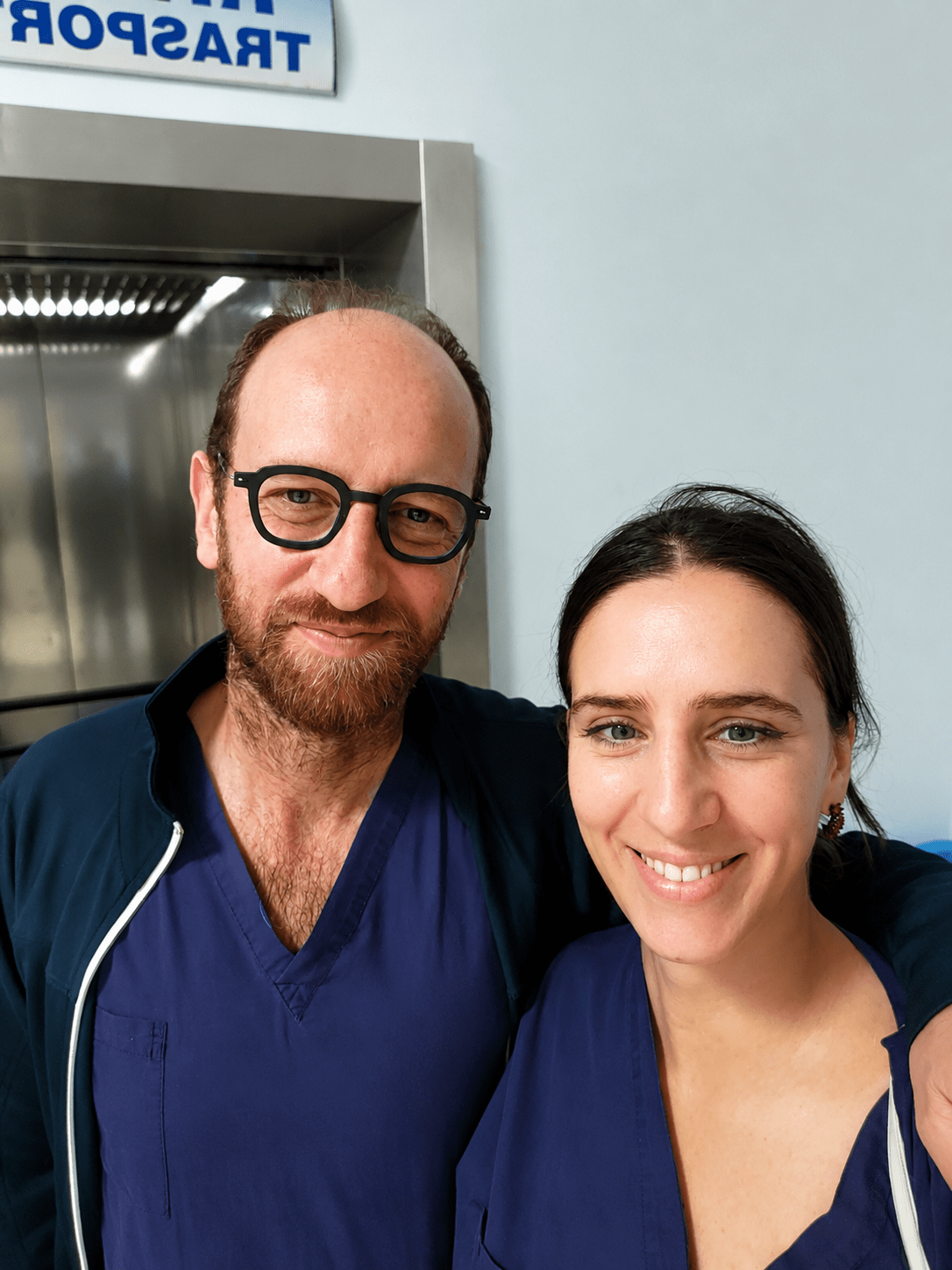
With Dr. Riccardo Inchingolo
I was particularly impressed by the organization and efficiency of the unit. The daily workflow was made possible by the remarkable professionalism and coordination skills of the ward nurse, Anna, whose role was essential in the management of admissions, procedures, and patient care.
Every Monday morning, I attended the hepatobiliary multidisciplinary tumor board, where I learned the importance of proper patient selection and treatment indication. This experience helped me better understand how essential multidisciplinary collaboration is in modern oncologic Interventional Radiology.
My practical activity focused mainly on oncologic and hepatobiliary interventions, including both endovascular and percutaneous procedures such as liver biopsies, microwave ablations, renal cryoablations, TIPS, DEB-TACE, SIRT, PVE, TIPS, biliary drainages, AV fistula procedures, visceral aneurysm embolizations, carotid stenting, lower limb angioplasty with intravascular lithotripsy, and UFE.
I observed my first Balloon-Occluded Transarterial Chemoembolization (B-TACE) and learned how balloon occlusion, by reducing distal vascular resistance, may improve drug distribution and allow treatment of larger lesions with the same chemotherapy dose.
I also greatly appreciated the strong collaboration and excellent relationship with both surgeons and nuclear medicine physicians, and I learned how important it is to tailor interventional procedures according to the type of surgery or combined treatment strategy planned for the patient, especially in hepatobiliary disease.
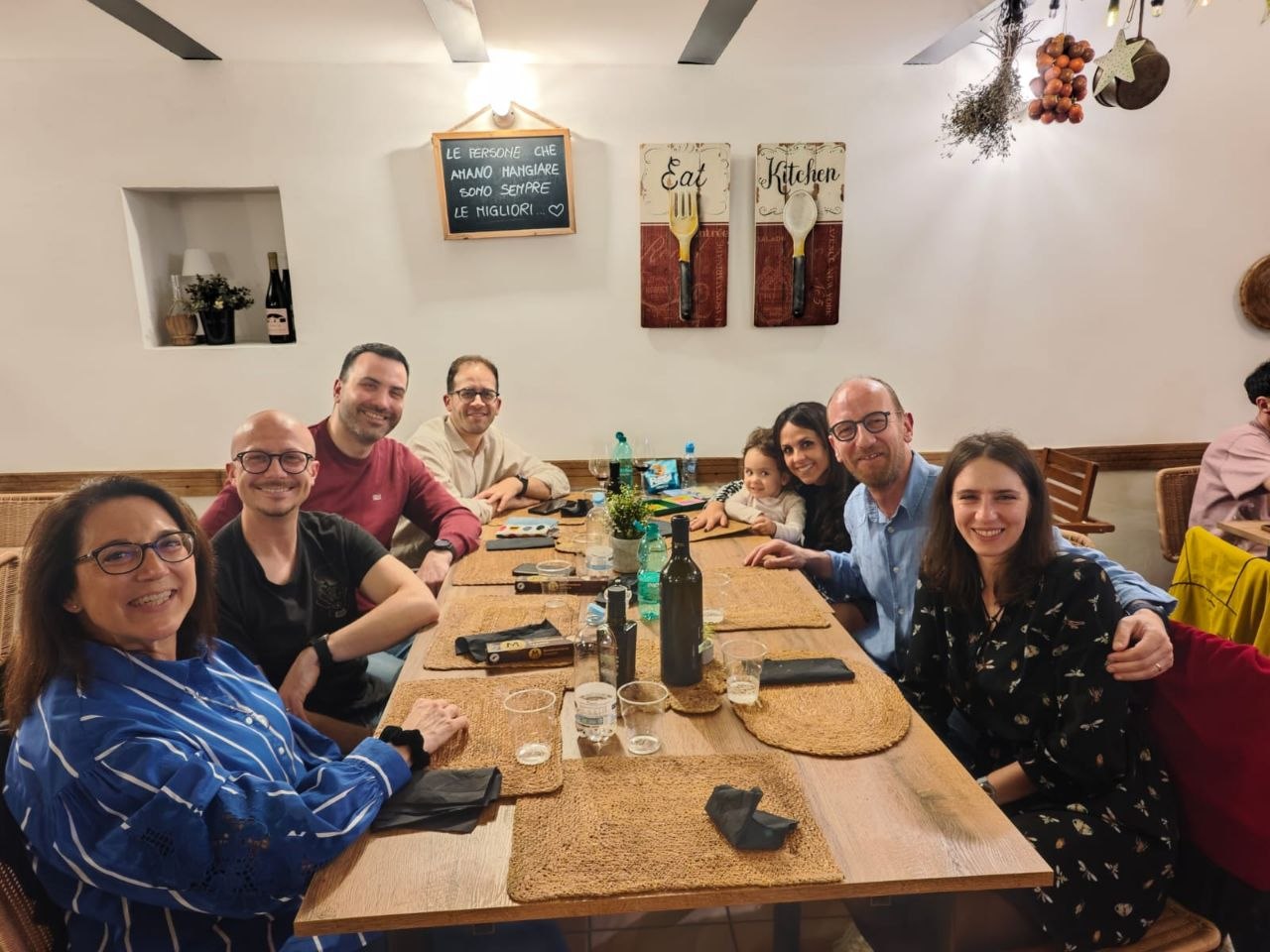
Preparing glue with the team
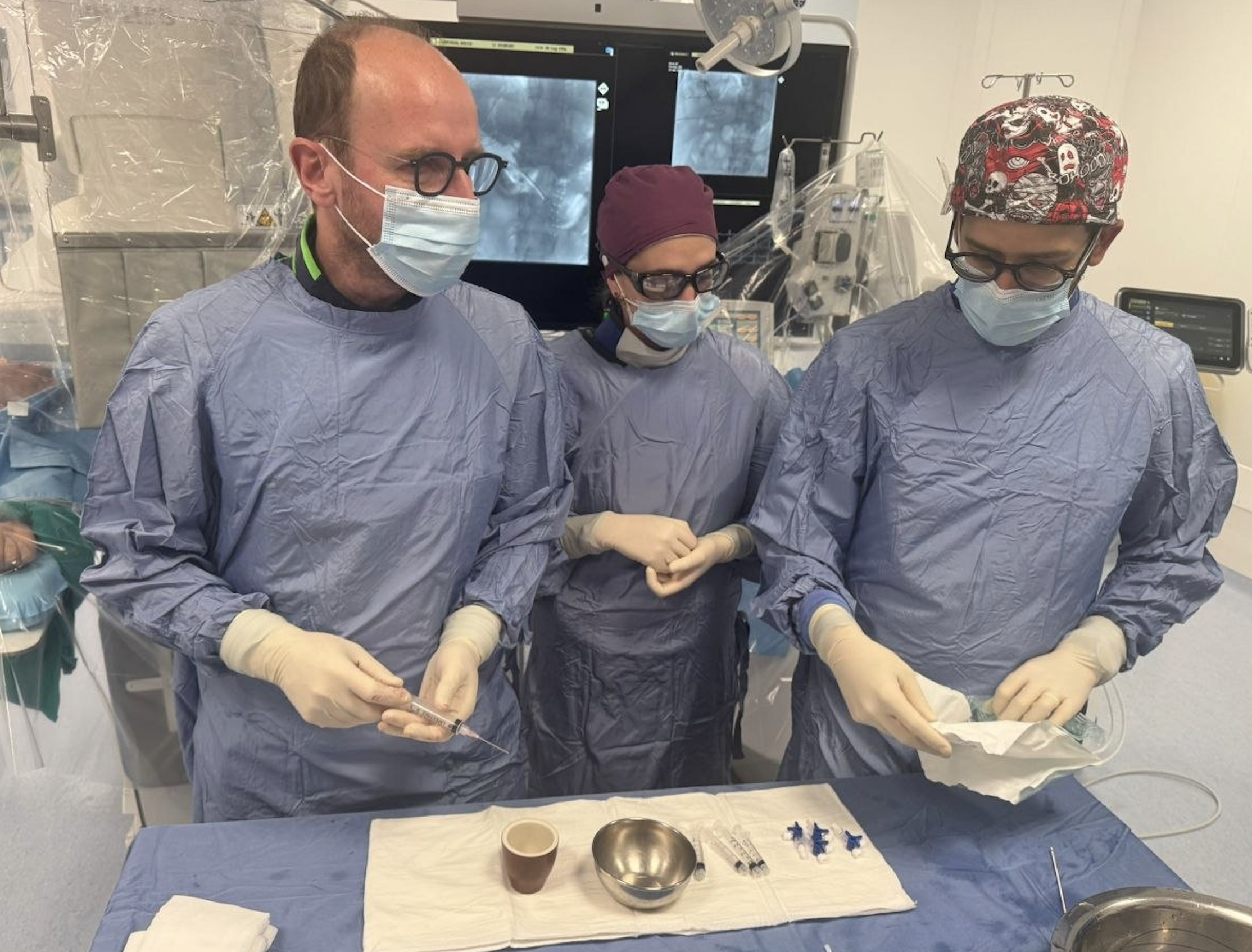
Another aspect that impressed me was the minimally invasive and efficient procedural workflow. Most procedures were performed under local anesthesia or mild sedation (such as small liver lesions), with the valuable support of the nurse anesthetist, Claudio, and only rarely required the presence of an anesthesiologist. This approach made the procedures faster, simpler, and better tolerated by patients, fully reflecting the concept of minimal invasiveness that is central to Interventional Radiology.
I also observed my first lung biopsy performed using a cone-beam CT navigation software integrated into the angiography suite that allows real-time three-dimensional guidance for percutaneous procedures.
The entire staff showed constant attention to radiation protection principles. For example, angiographic acquisitions performed from inside the room were extremely rare and only carried out after the rest of the staff had left the angiography suite.
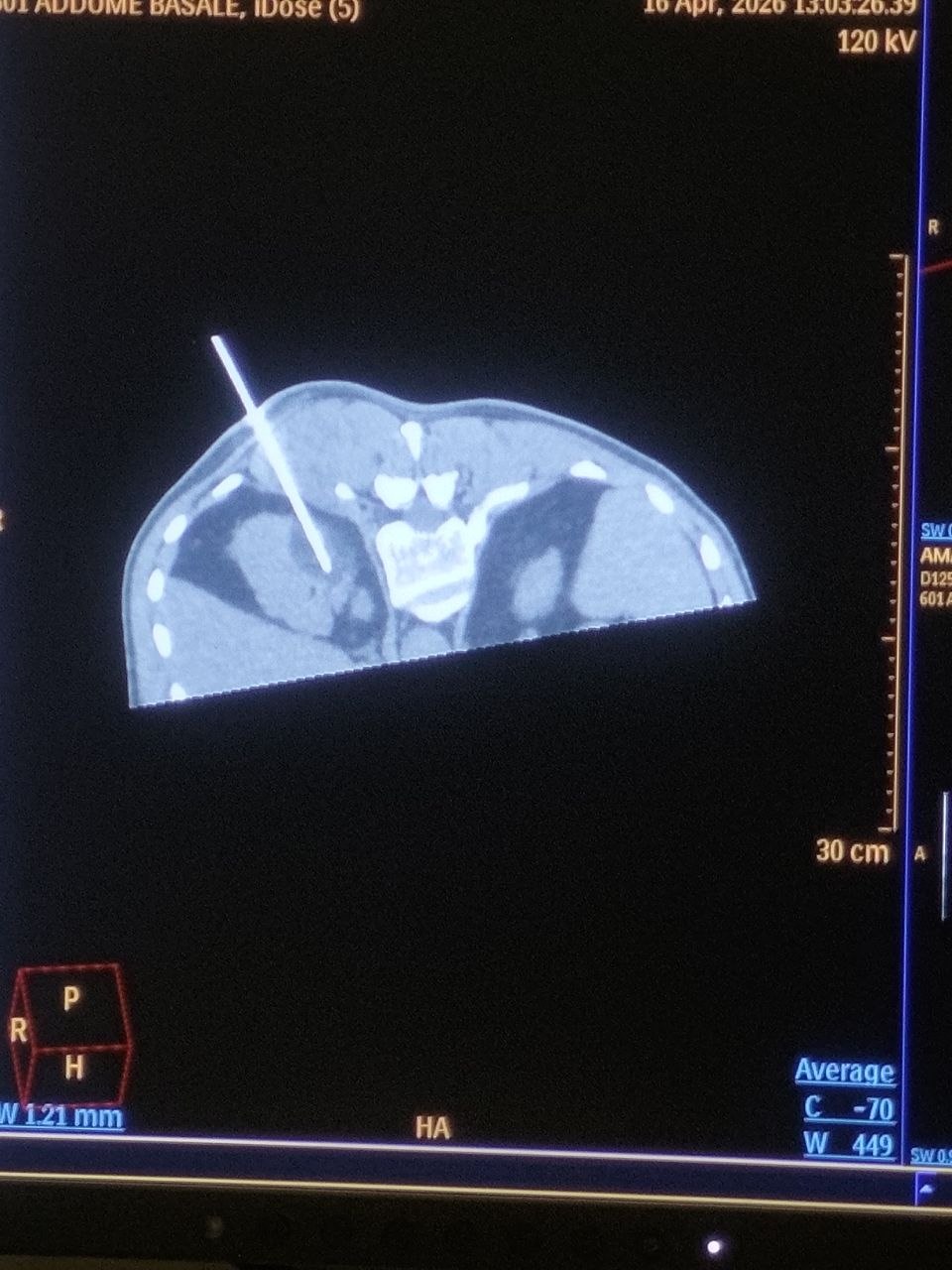
Renal cryoablation
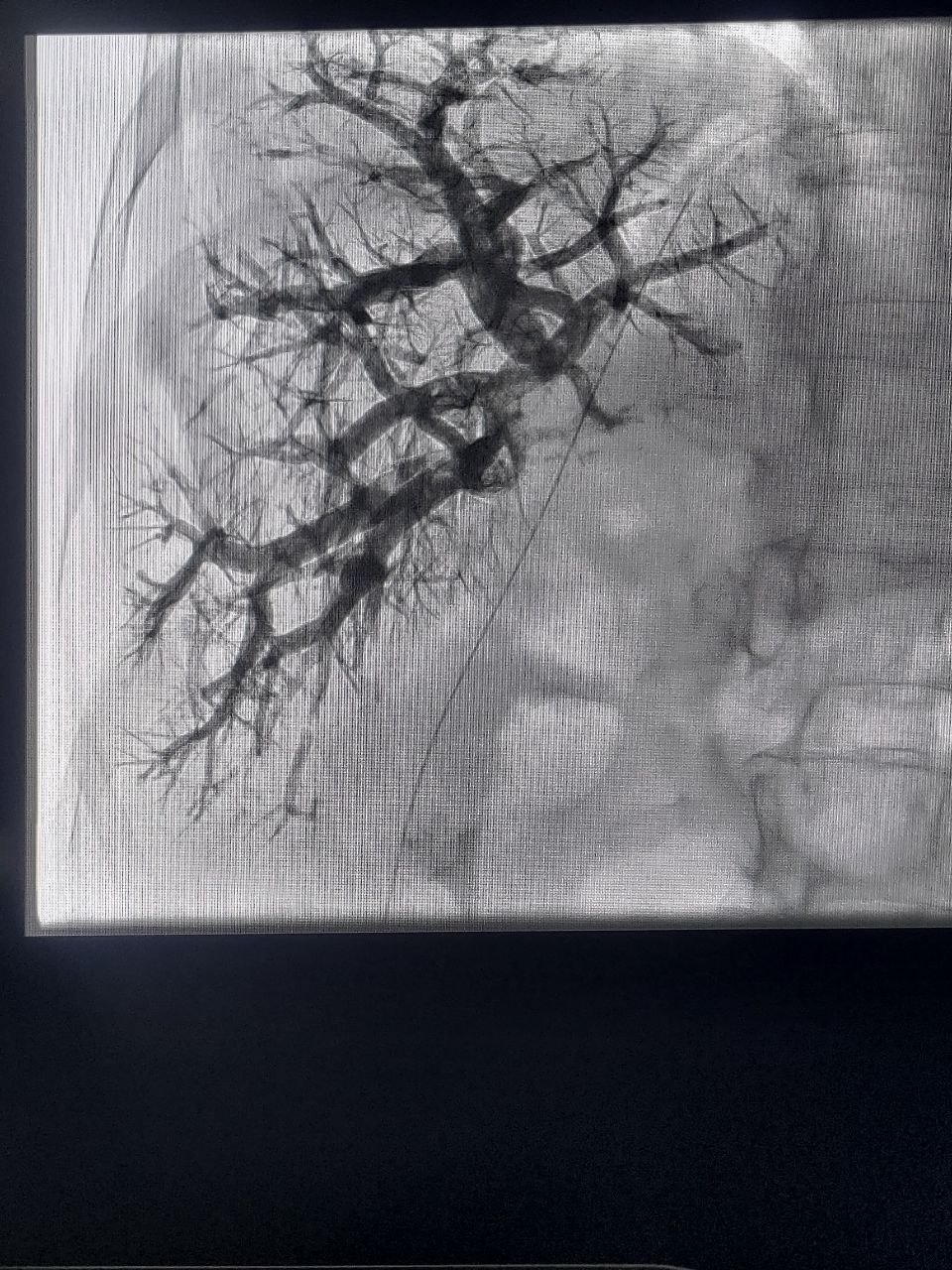
PVE
During this short fellowship, I learned many new technical aspects and different ways of approaching Interventional Radiology. More importantly, however, I learned how essential it is to be good human beings in order to become good physicians. I found both a professional and human example in every member of the team, and I am extremely grateful to have met these colleagues during my professional journey.
At this institution, I experienced an excellent model of patient-centered care, where for the first time the patient truly becomes our patient, and not someone else’s.
My fellowship at Ospedale Generale Regionale F. Miulli largely exceeded my expectations and proved to be extremely formative both professionally and personally. Riccardo Inchingolo and his team combined outstanding professionalism with remarkable kindness and hospitality, making this fellowship an experience that truly exceeded all my expectations. They genuinely left a mark on me, both professionally and personally.
My advice to other interventional radiologists considering a fellowship is simple: absolutely do it. Exchanging ideas, observing different approaches, and confronting ourselves with other teams is essential to remain humble, and humility is the key to growing together as physicians and as people.