


CIRSE Fellowship report: Elvira Kresic
I am an interventional radiologist at University Hospital Centre Zagreb (UHC Zagreb), Croatia, and I had the opportunity to undertake a CIRSE Fellowship at the Nouvel Hôpital Civil (NHC), Hôpitaux Universitaires de Strasbourg, under the supervision of Professor Afshin Gangi and Dr. Roberto Luigi Cazzato.
The main objective of my fellowship was to gain insight into expert practice in interventional oncology, particularly image-guided tumour ablation, with a focus on patient selection, procedural planning, clinical decision-making, and the technical aspects of complex cases.
During my stay, I observed a wide range of oncological interventions. One of the main highlights was cryoablation of large tumours in challenging anatomical locations, particularly the use of hydrodissection and CO₂ dissection to protect adjacent critical structures. Observing how these techniques were applied in complex cases provided valuable practical knowledge that I can transfer to my own practice.
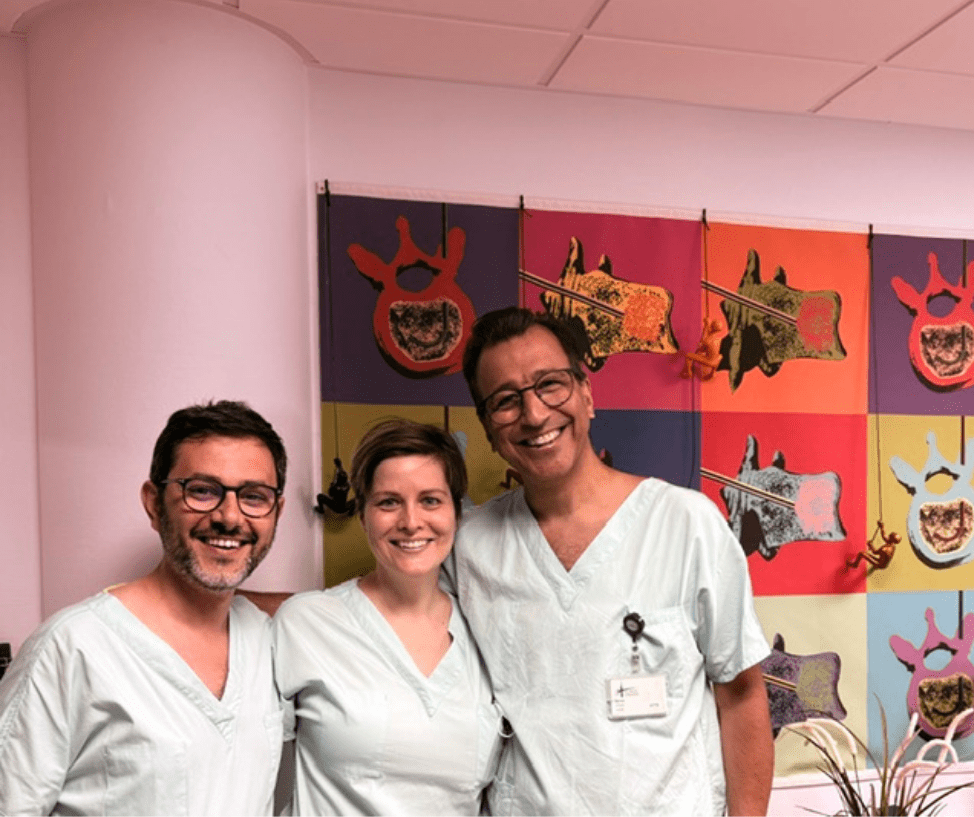
With Gigi and Prof. Gangi—two outstanding experts in interventional radiology, whose excellence is matched by remarkable humility, approachability, and kindness.
Another important highlight was the opportunity to observe TARE (transarterial radioembolization). This was particularly relevant because we are planning to introduce TARE at UHC Zagreb. Seeing an established programme gave me valuable insight into patient selection, pre-procedural planning, technical execution and the organisation of the overall treatment pathway. I am especially excited to bring this experience back to Zagreb and contribute to the implementation of TARE at our institution.
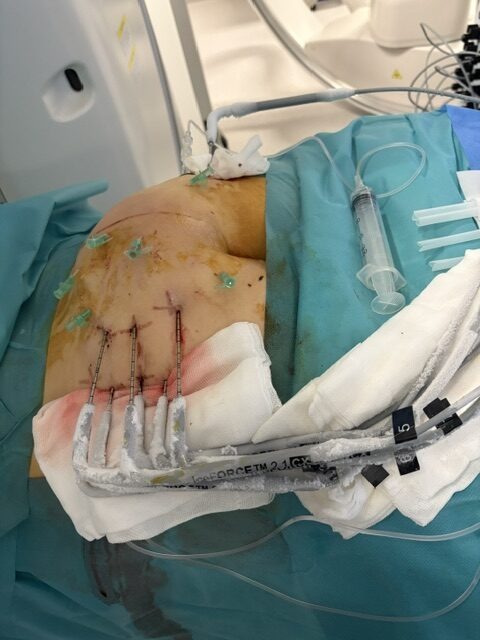
A different kind of sightseeing in Strasbourg playing “count the needles” — spotting the tools of our everyday craft.
The fellowship also gave me an opportunity to compare the organisation and workflow of the hosting institution with our centre. One of the most interesting differences was that the interventional radiologists at NHC are involved not only in performing procedures, but also in dedicated clinical consultations with patients. This represents a more comprehensive model of clinical interventional radiology, in which the interventional radiologist is directly involved in patient assessment, discussing treatment options, explaining procedures and follow-up. At UHC Zagreb, we currently have a day-hospital model, but we do not yet have dedicated interventional radiology consultations in the same way. I believe that establishing such a model would be a valuable step for the future and could become an important part of our routine clinical practice.
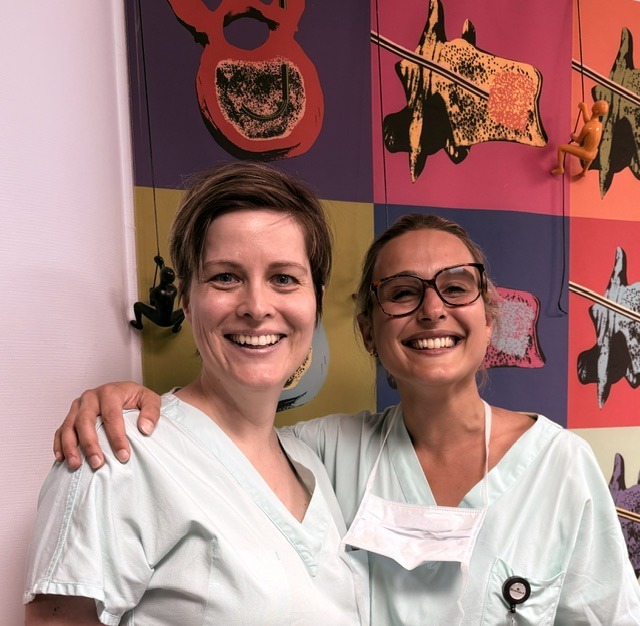
A memorable moment with Matilde, whose kindness, support, and hospitality made my fellowship experience in Strasbourg even more special.
NHC also has a highly established interventional oncology programme, with a large volume of complex cases and well-developed multidisciplinary pathways. At UHC Zagreb, our interventional oncology service is continuously developing, and some of the advanced procedures observed in Strasbourg are still being introduced or expanded. The fellowship therefore provided useful ideas not only regarding individual techniques, but also regarding the organisation and further development of our service.
The learning experience also included important aspects of clinical practice. I was able to observe patient selection, treatment planning, intra-procedural decision-making and post-procedural management. This reinforced the importance of combining technical expertise with careful clinical judgement, patient safety and a multidisciplinary approach.
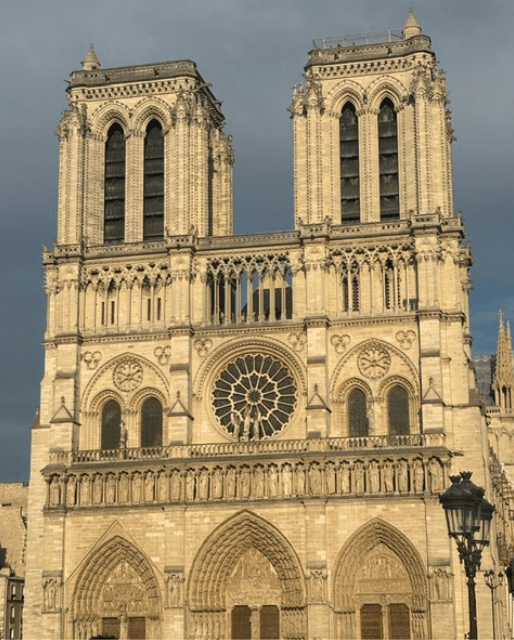
The Strasbourg experience comes with an extra perk: Paris is only a weekend away. A perfect excuse for a Notre-Dame comparison — because interventional radiologists appreciate comparisons, even outside the angio suite.
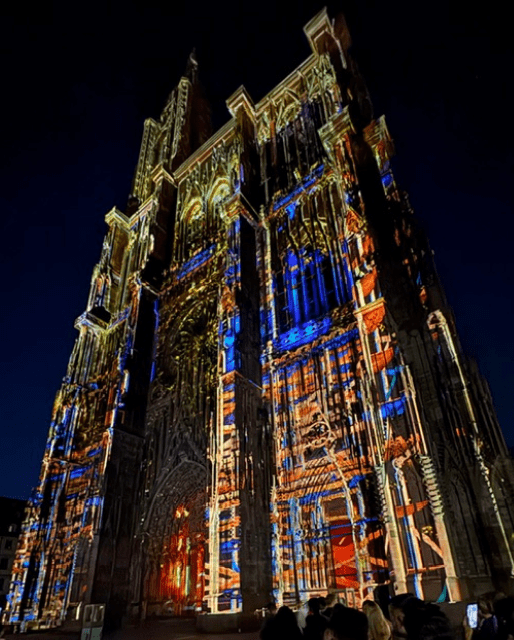
Notre-Dame de Strasbourg illuminated by a spectacular light show — a magical evening experience in one of the city’s most iconic landmarks.
One of the most inspiring aspects of the fellowship was working with Professor Gangi and Dr. Cazzato. Their exceptional technical expertise and clinical judgement were matched by their humility, openness and willingness to share their knowledge. They created a very supportive learning environment, making the fellowship both professionally valuable and personally inspiring.
The fellowship was also a wonderful personal experience. Strasbourg is a beautiful city with a unique combination of historic architecture, canals and European cultural influences, which made my stay particularly enjoyable.
I am sincerely grateful to CIRSE for supporting this fellowship and to Professor Gangi, Dr. Cazzato and the entire team at Nouvel Hôpital Civil for their hospitality and generosity.
I returned to Zagreb with new knowledge, practical insights and renewed motivation to further develop interventional oncology at UHC Zagreb, particularly in complex tumour ablation, the introduction of TARE, and the future development of a more comprehensive clinical interventional radiology service.