


CIRSE Fellowship report: Dr. Janne Larkio
My name is Janne Larkio, and I am currently working at HUS Helsinki University Hospital in Finland. During April 2026, I had the privilege of visiting the Interventional Radiology department at St George’s University Hospitals NHS Foundation Trust through the generous support of a CIRSE Fellowship Grant. My host supervisor was Dr. Adelola Oseni, whom I would sincerely like to thank for making my stay both educational and personally memorable.
The primary objective of my fellowship was to gain broader exposure to general interventional radiology practice in a large tertiary referral centre and possibly deepen my understanding of prostate artery embolization (PAE). In addition, I was interested in observing differences in workflow, patient management, multidisciplinary collaboration, and departmental culture compared with my home institution in Finland.
From the very first day, I was welcomed warmly by the entire IR team. One of the highlights of my stay was the exceptionally open and friendly atmosphere within the department. Despite the high workload and busy schedule, the consultants, radiographers, nurses, and trainees consistently made time to discuss cases, explain decision-making, and involve me in daily activities. This collegial environment created an excellent learning experience and made me feel genuinely included as part of the team rather than simply an observer.
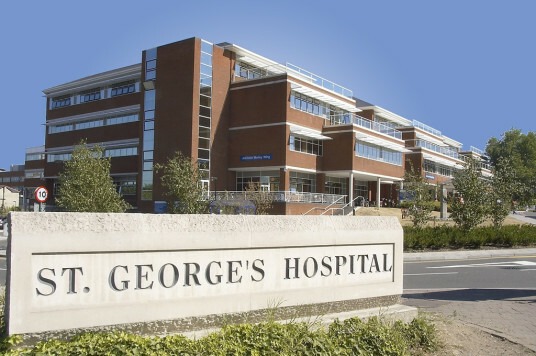
Photo courtesy of St George’s University Hospitals NHS Foundation Trust
During my fellowship, I had the opportunity to observe a wide variety of procedures. A particular focus was prostate artery embolization, for which I am super grateful to Dr. Raj Das for showing me his tips and tricks. I would also like to specifically mention and thank Dr. Mike Gonsalves for showing me new and intuitive ways of doing interventional oncology, and Dr. Lakshmi Ratnam for inviting me to attend her cases in novel treatments for vascular malformations.
In addition to PAE, I observed genicular artery embolization (GAE), sclerotherapy procedures, electrosclerotherapy, various vascular IR, and IO. It was also interesting to see everyday procedures and reassuring that things are done similarly in our institutes. I appreciated the opportunity to discuss technical approaches, embolic selection, catheter techniques, and complication management with the consultants throughout the cases.
One aspect that particularly stood out to me was the strong clinical role of the interventional radiologists at St George’s. My learning experience extended well beyond the angiography suite itself. I participated in multidisciplinary team meetings, patient discharge planning, and clinical discussions regarding treatment indications and follow-up. It was inspiring to see how integrated the IR team was within the broader clinical pathways of the hospital.
This experience reinforced the importance of interventional radiology not only as a procedural specialty but also as a patient-facing clinical discipline. I was impressed by the amount of direct communication between physicians and patients before and after procedures. The consultants took time to ensure that patients fully understood their treatment options, expected outcomes, and possible risks. This open communication created a strong sense of trust and continuity of care.
One of the most interesting observations during my stay was actually how similar the workflow and overall setup were compared with my own institution at HUS. Before arriving in London, I expected larger differences between healthcare systems and departmental organization. However, many aspects of daily practice, teamwork, and procedural planning were surprisingly familiar. This similarity was reassuring and also highlighted the shared standards and goals within European interventional radiology.
At the same time, there were several smaller practical differences that I found interesting. One example was the role of the radiographers in controlling the angiography table and imaging equipment during procedures. This workflow differed somewhat from what I am accustomed to in Finland and demonstrated another effective way of organizing teamwork within the interventional suite. Observing these variations in practice encouraged me to reflect on how efficiency and communication can be optimized within different clinical environments.
Beyond the technical learning, the fellowship was personally very motivating. Spending a month in a new environment allowed me to step outside my routine clinical practice and reflect on my own development as an interventional radiologist. The experience strengthened my enthusiasm for the specialty and increased my confidence in pursuing a more clinically active role in patient management.
One of the key ideas I hope to bring back to my own practice is a stronger emphasis on direct patient communication and longitudinal clinical involvement. Observing how naturally the team at St George’s incorporated patient interaction into everyday IR practice encouraged me to think about ways to further develop this aspect in my own department. I believe that interventional radiologists have an important opportunity to build closer relationships with patients and contribute more actively to clinical decision-making and follow-up care.
Another important takeaway from my fellowship was the value of departmental culture. The welcoming atmosphere at St George’s created an environment where questions and discussion were encouraged, making learning both enjoyable and highly effective. I was reminded that excellent training does not depend only on procedural volume or technical expertise, but also on openness, mentorship, and teamwork.
London itself also contributed positively to the experience. Living in such an international and vibrant city for a month was exciting both professionally and personally. Outside the hospital, I enjoyed exploring the city and meeting colleagues from different backgrounds and training systems, which further broadened my perspective on interventional radiology practice across Europe. Also, April happened to be one of the sunniest and warmest in years!
Overall, my expectations for the fellowship were fully met and even exceeded. I gained valuable exposure to advanced interventional procedures, observed a highly functional and clinically integrated IR service, and developed new ideas that I hope to apply in my own institution. Most importantly, I returned home inspired and motivated to continue developing both my technical skills and my clinical role as an interventional radiologist.
I would like to sincerely thank CIRSE for supporting this fellowship opportunity, as well as the entire team at St George’s University Hospitals NHS Foundation Trust for their generosity, kindness, and willingness to teach. I am especially grateful to Adelola Oseni for hosting me and ensuring that my stay was both educational and enjoyable. I strongly encourage future CIRSE fellowship recipients to take full advantage of these opportunities for professional growth, collaboration, and international exchange.