


CIRSE Fellowship report: Eva Nabawanuka
My name is Dr. Eva Nabawanuka, an Interventional Radiologist from Uganda and a beneficiary of the 2026 CIRSE Fellowship Grant Programme. I recently completed an elective placement within the Interventional Radiology (IR) Department at The Royal Marsden Hospital, Chelsea, under the mentorship of Professor Nicos Fotiadis.
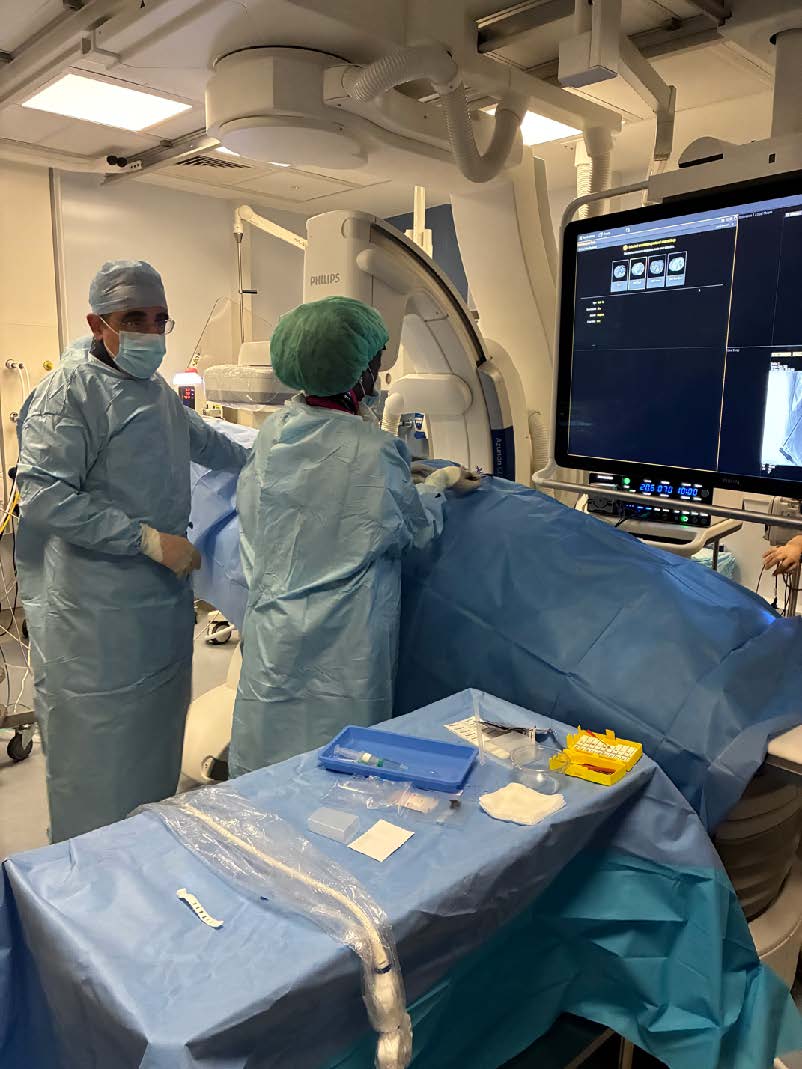
Eva with professor Fontiadis at the Royal Marsden hospital
My experience at The Royal Marsden was truly exceptional. From my first day, I was warmly welcomed by the entire IR team, including radiologists, radiographers, nurses, fellows, and residents. My primary objective in applying for the CIRSE Fellowship was to gain exposure to interventional oncology within a highly specialised and well-resourced environment, and The Royal Marsden proved to be the ideal setting in which to achieve this goal.
During my placement, I observed a broad spectrum of interventional radiology procedures, ranging from routine image-guided interventions to highly complex oncological treatments. I gained valuable insight into advanced loco-regional therapies, including thermal ablation techniques, and witnessed the integration of robotic systems to improve procedural accuracy and precision. I was also exposed to innovative clinical research and ongoing trials that are helping to shape the future of cancer care.
This experience significantly broadened my understanding of advanced IR techniques that are not yet widely available in my region. One of the most memorable moments of the fellowship was observing robotic-assisted biopsy procedures, which provided an inspiring demonstration of how technological innovation can enhance patient care and procedural outcomes.
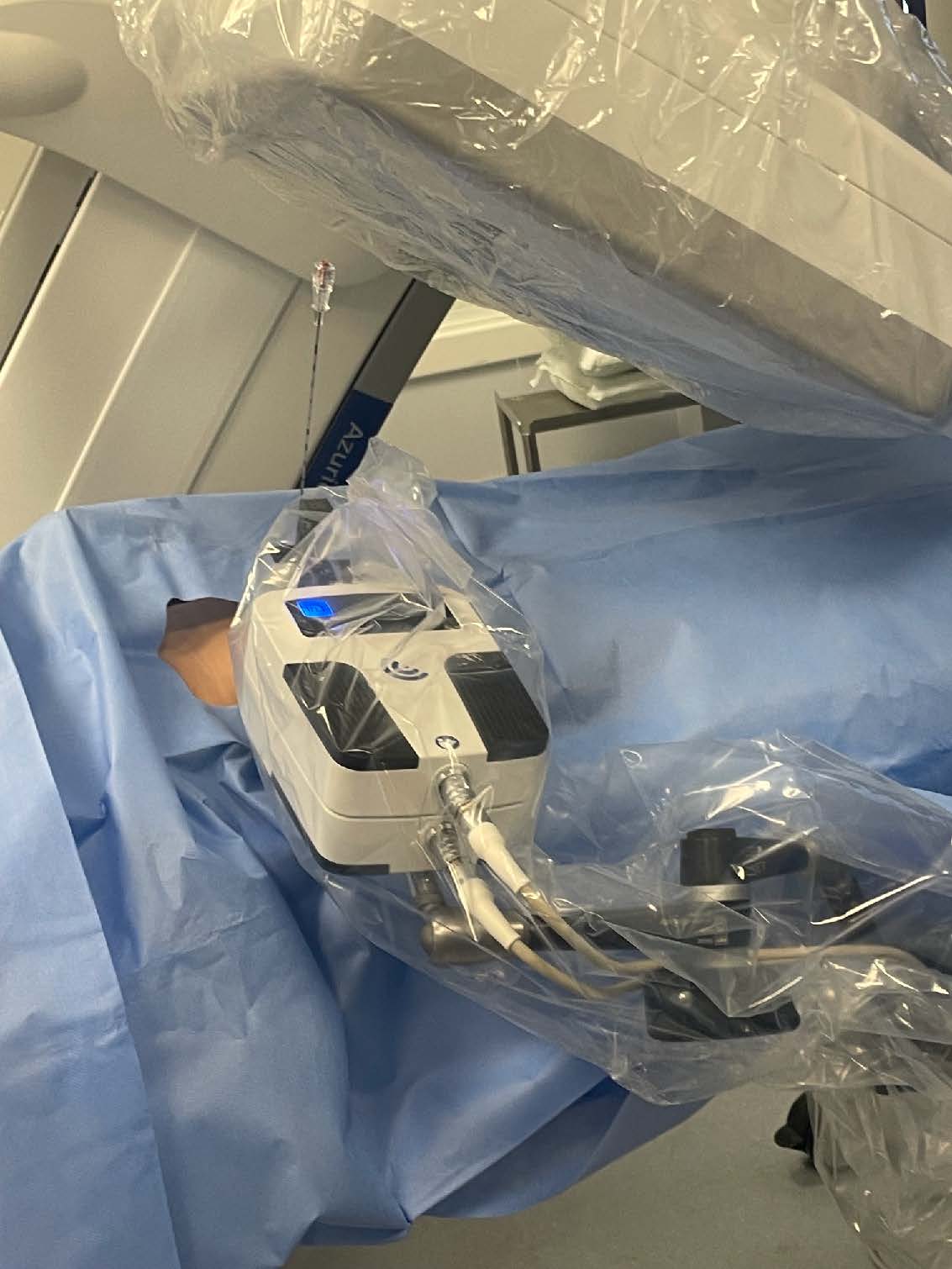
The robotic system in guiding biopsy needle placement.
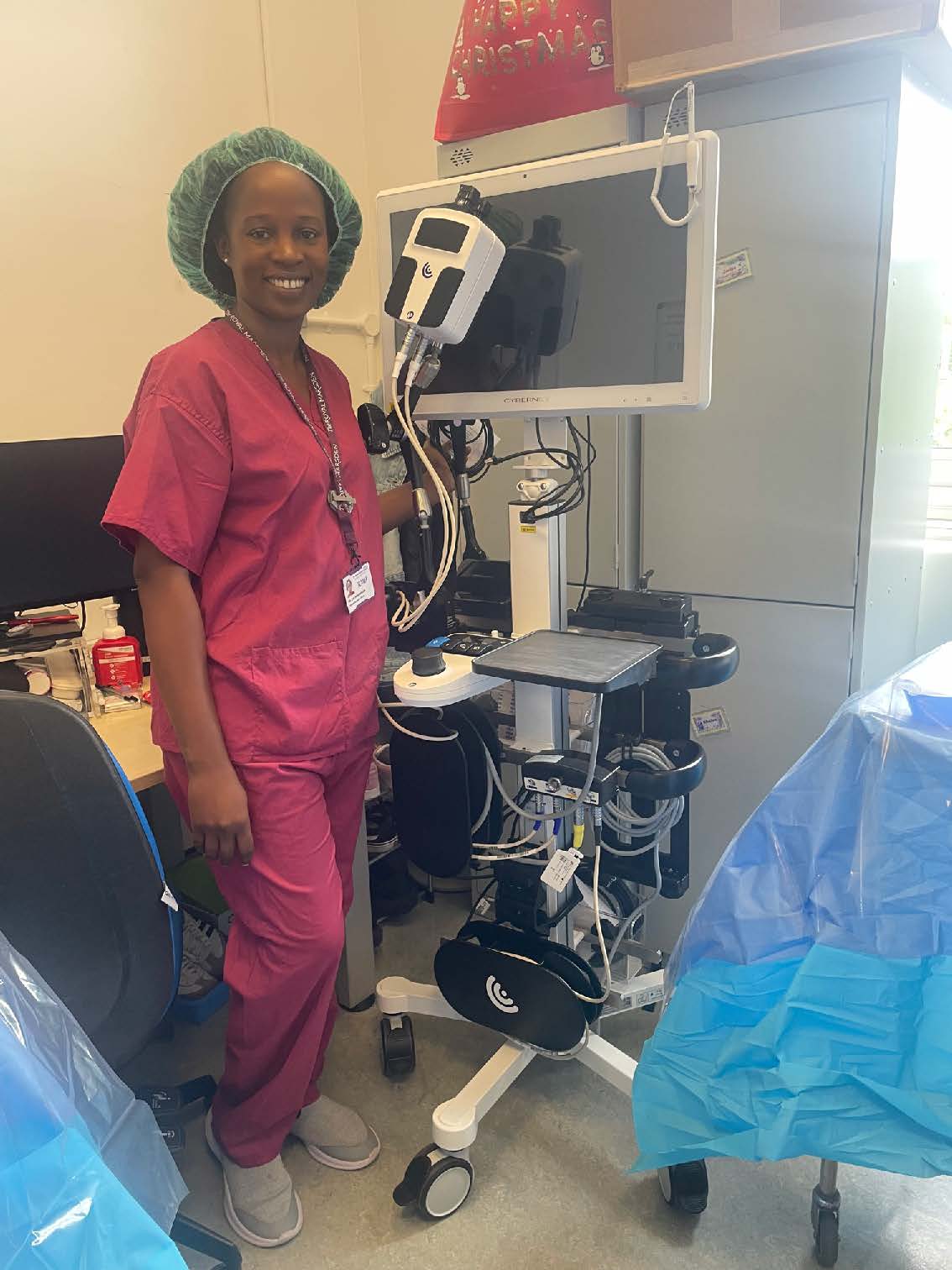
Dr. Eva Nabawanuka standing with a robotic system from cybernet.
I was particularly impressed by the culture of multidisciplinary collaboration within the department. Each day began with a comprehensive team briefing that reviewed both the scheduled procedures and the clinical status of patients. The coordinated efforts of radiologists, nurses, radiographers, clinical and administrative staff created a seamless and highly efficient workflow. Interventional radiologists were actively involved in multidisciplinary team meetings, ensuring that procedure indications were carefully assessed and that treatment decisions were patient-centered. The real-time exchange of expertise and the collective commitment to optimising patient outcomes were evident throughout my stay.
Another striking aspect of the department was its efficiency. From punctual patient scheduling to streamlined procedural pathways and rapid turnover between cases, every stage of the patient journey reflected a well-organised and highly functional service.
A special highlight of my fellowship was the opportunity to participate in The Royal Marsden Hospital’s 175th anniversary celebrations. Learning about the institution’s history, achievements, and continued commitment to innovation was both inspiring and memorable. As someone who is actively involved in developing image-guided, minimally invasive therapies in Uganda, witnessing the evolution of such a renowned center reinforced my determination to contribute to similar progress and service development within my own healthcare system.
Beyond the technical and clinical knowledge gained, the fellowship provided valuable insights into service organisation, multidisciplinary working, clinical governance, research integration, and patient-centered care. These lessons will undoubtedly influence my practice and help strengthen interventional radiology services in Uganda. I am excited to apply the knowledge, skills, and experiences gained during my time at The Royal Marsden to improve patient care, support training initiatives, and contribute to the continued growth of interventional radiology in my home institution. I would like to express my sincere gratitude to Professor Nicos Fotiadis and the entire Interventional Radiology team at The Royal Marsden Hospital for providing such an enriching, educational, and welcoming learning environment. I am equally grateful to Mulago National Referral Hospital for supporting my professional development and enabling me to participate in this fellowship.
Finally, I extend my heartfelt appreciation to the Cardiovascular and Interventional Radiological Society of Europe (CIRSE) for making this invaluable opportunity possible.