Cardiovascular and Interventional Radiological Society of Europe
CIRSE insider - NEW - animated
PublicationsCIRSE InsiderCIRSE and Next Research publish first results from the CIEMAR study

CIRSE and Next Research publish first results from the CIEMAR study

November 16, 2026

CIRSE and Next Research have published first results from the CIEMAR study. To learn more, CIRSE Insider spoke to CIEMAR Steering Committee members Philippe L. Pereira, Coordinating and Principal Investigator, and Martijn Meijerink, Principal Investigator.


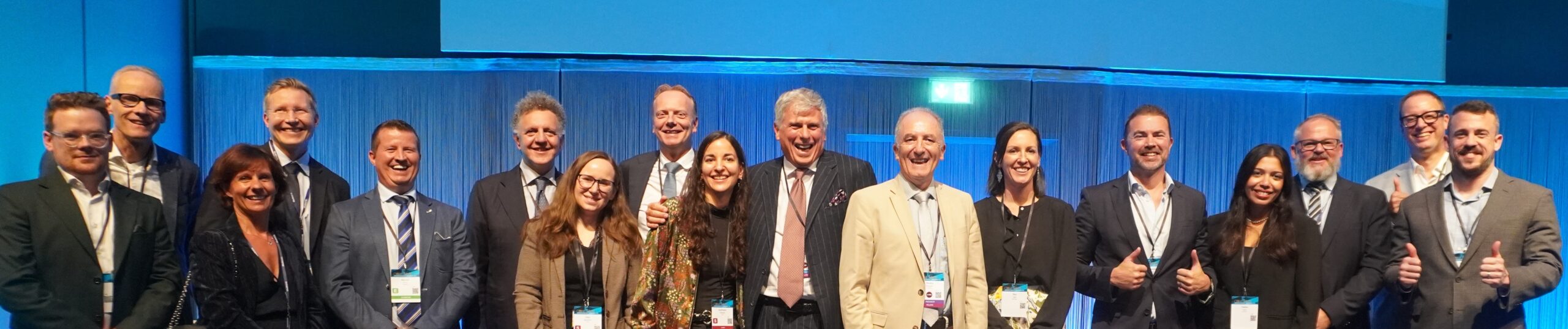
Celebrating the presentation of CIEMAR final results at CIRSE 2026

The CIRSE Emprint Microwave Ablation Registry (CIEMAR), a prospective, multicentre observational study launched in 2019 to evaluate the real-world effectiveness of microwave ablation (MWA) for the treatment of colorectal liver metastases (CRLM) with curative intent, has reached an important milestone with the first publication of its results in CardioVascular and Interventional Radiology (CVIR).  

The publication reports on the study’s primary endpoint, the local tumour control rate at one year following the last MWA treatment, assessed per lesion. The study explores associations between ablation margins, confirmation software use, and treatment outcomes. 

The analysis included 491 treated patients with 1,083 colorectal liver metastases across 30 centres in 11 European countries. At 12 months, the local tumour control rate was 88.9% per lesion and 81.2% per patient, demonstrating high rates of local tumour control in routine clinical practice.  

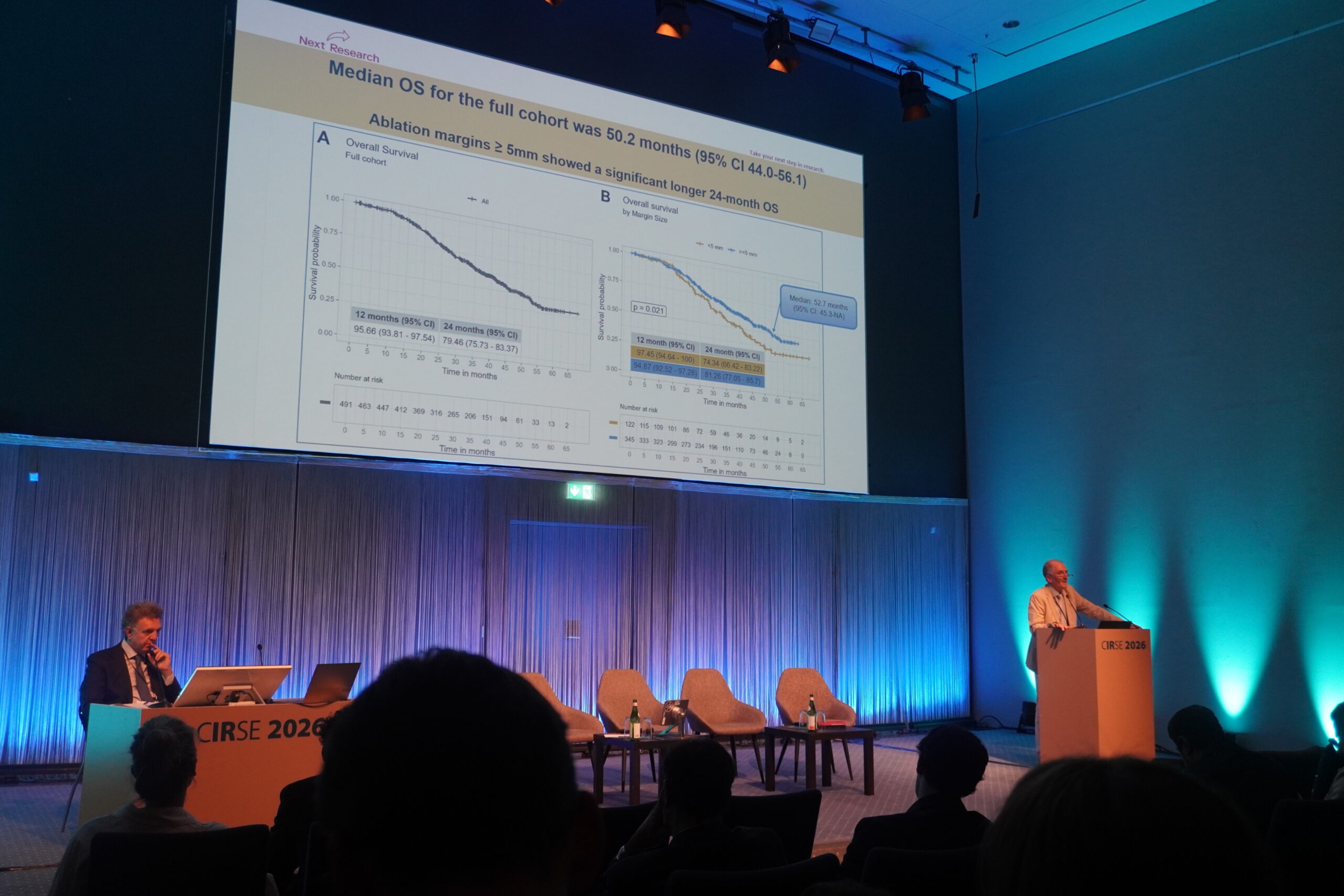
One of the key findings was the association between ablation margin size and local tumour control. Larger margins were independently associated with a lower risk of local failure, highlighting the importance of achieving and verifying adequate margins during treatment. 

The analysis also reports on the role of confirmation software in assessing ablation margins. Lesions treated with confirmation software were more frequently reported to have wider margins and showed higher MWA-assisted local tumour progression-free survival.  

Read the full publication here. 

Beyond the results: A conversation with the CIEMAR investigators 

CIEMAR Steering Committee members Philippe L. Pereira, Coordinating and Principal Investigator, and Martijn Meijerink, Principal Investigator, share their perspectives on the study’s key findings, its clinical implications, and future directions for MWA. 

What do you see as the main contribution of CIEMAR to the evidence base for MWA of CRLM? Were you expecting to see these results in CIEMAR?  

Pereira: CIEMAR’s main contribution is the prospective multicentre validation of MWA for CRLM, with particular emphasis on local tumour control and the importance of ablation margins. The association between larger margins and better local control is biologically and technically intuitive, but demonstrating it prospectively and at scale is highly valuable. The results are encouraging rather than unexpected as they confirm that excellent outcomes depend on different aspects such as technique, treatment planning, and quality assurance. 

Meijerink: The outcomes of CIEMAR are excellent, with 88.9% local tumour control in one year, confirming the results of the COLLISION trial and the retrospective series in literature. CIEMAR also shows that there are certain factors directly influencing local recurrence and are associated with superior overall survival. Interestingly, but not surprising, one of these factors is the use of confirmation software. Sites that confirm their margins appear to have less risk of local tumour progression.   

Heterogeneity between centres is also interesting as some centres have excellent results, near to 100% local tumour control, and others probably need to think about how they can improve their outcomes. We also found that when using only US guidance and not CT, which means margins cannot be confirmed, results are inferior compared to using CT or cone beam CT guidance. Therefore, outcomes are much better when using cross-sectional imaging and confirmation software. 

Prof. Philippe L. Pereira presents on CIEMAR at CIRSE 2026.

How does CIEMAR complement the evidence from randomized clinical trials, particularly COLLISION? 

Meijerink: COLLISION is a randomized controlled trial comparing surgical resection to thermal ablation. It brings us hard evidence on what we should prefer, and what we should prefer is thermal ablation, because it proved to be a much safer option. In that trial, there were only 300 patients, and half of them received resection. Therefore, we only have data from 150 patients treated with ablation, making it difficult to conduct subgroup analysis and look at results such as local control rates and results between centres like image guidance techniques used and the use of confirmation software. 

A very large prospective registry like CIEMAR, with nearly 500 patients and over 1,000 colorectal liver metastases, provides better results as we could conduct subgroup analysis and see what approach gives the best local outcomes.  

Pereira: CIEMAR perfectly complements randomized trial evidence by showing whether MWA can achieve reliable results in routine practice across multiple centres, operators and patient profiles. Whereas randomized trials establish comparative efficacy under controlled conditions, CIEMAR provides reassurance about feasibility, reproducibility, safety, and external validity in everyday multidisciplinary care. 

Have the findings influenced your perspective on MWA or the way it should be performed in clinical practice? 

Pereira: CIEMAR reinforces that MWA should not be viewed simply as a salvage option for patients unsuitable for surgery. It supports its use as a curative-intent, liver-sparing treatment in appropriately selected patients with small colorectal liver metastases. Importantly, it has strengthened the focus on procedure quality, particularly careful planning, image guidance, documented ablation margins and structured imaging follow-up. 

Looking ahead, how will the forthcoming analysis of longer-term clinical outcomes build on these findings? 

Meijerink:  Local tumour control is mainly of interest to IRs, who want to do the best job at locally controlling the tumour. But for patients and medical and surgical oncologists – people who longitudinally follow patients – overall survival, disease-free survival, and chemotherapy-free survival may be way more interesting.  

I hope that CIEMAR will confirm that we can achieve full cure in a subset of patients. Ablation in the liver is, first and foremost, a curative intent treatment. Second, we can really help with reducing the amount of chemotherapy regimens and increasing chemotherapy-free survival if we as IRs do a good job with our ablations.