Cardiovascular and Interventional Radiological Society of Europe
CIRSE insider - NEW - animated
PublicationsCIRSE InsiderArtificial intelligence and emerging technologies at CIRSE 2026

Artificial intelligence and emerging technologies at CIRSE 2026

October 27, 2026

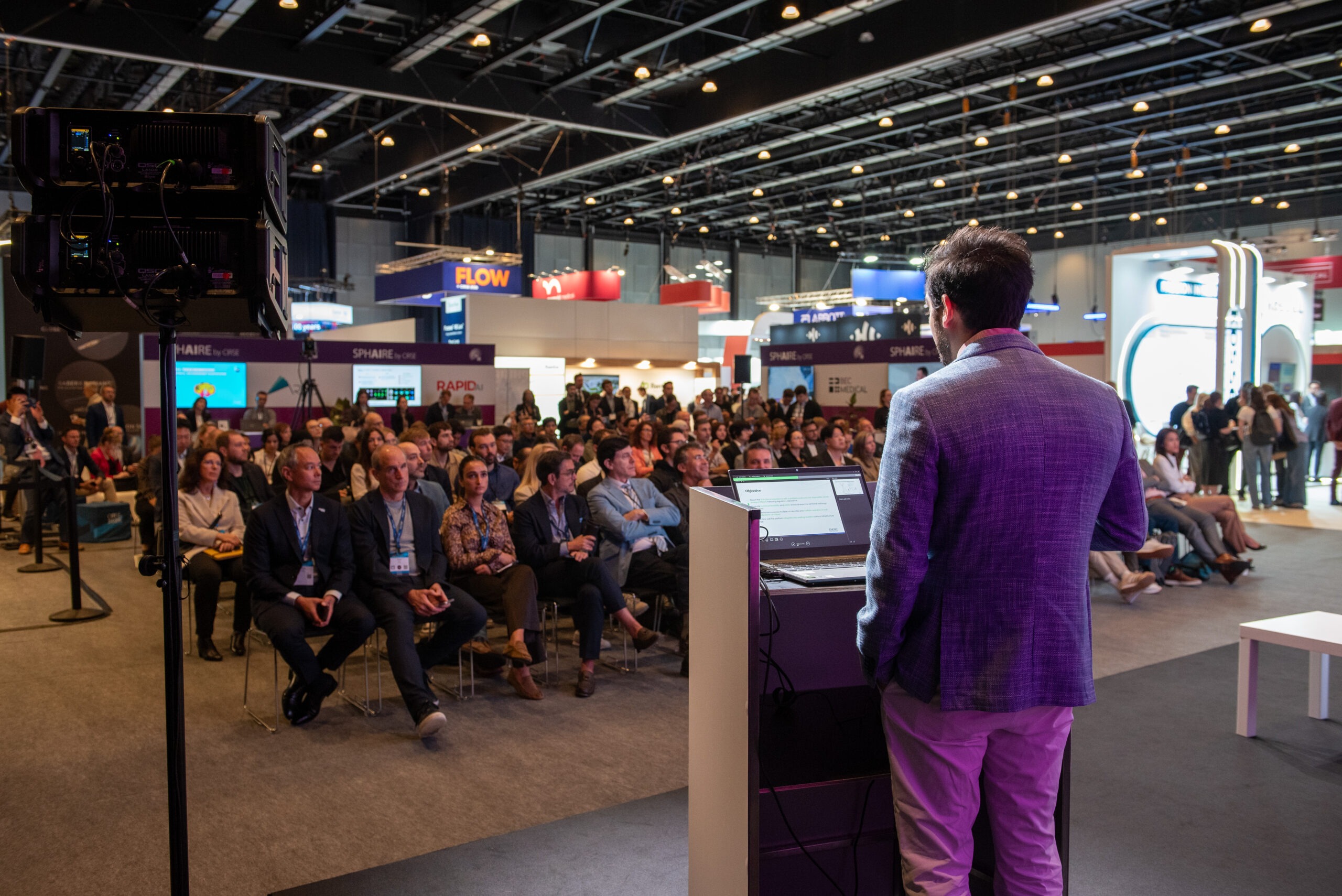
SPHAIRE made its mark at CIRSE 2026, bringing timely discussions on AI and emerging technologies directly to the exhibition floor. With outstanding faculty and corporate partner engagement, SPHAIRE’s six sessions fostered a lively forum to explore the opportunities, challenges, and questions shaping the present and future of IR.


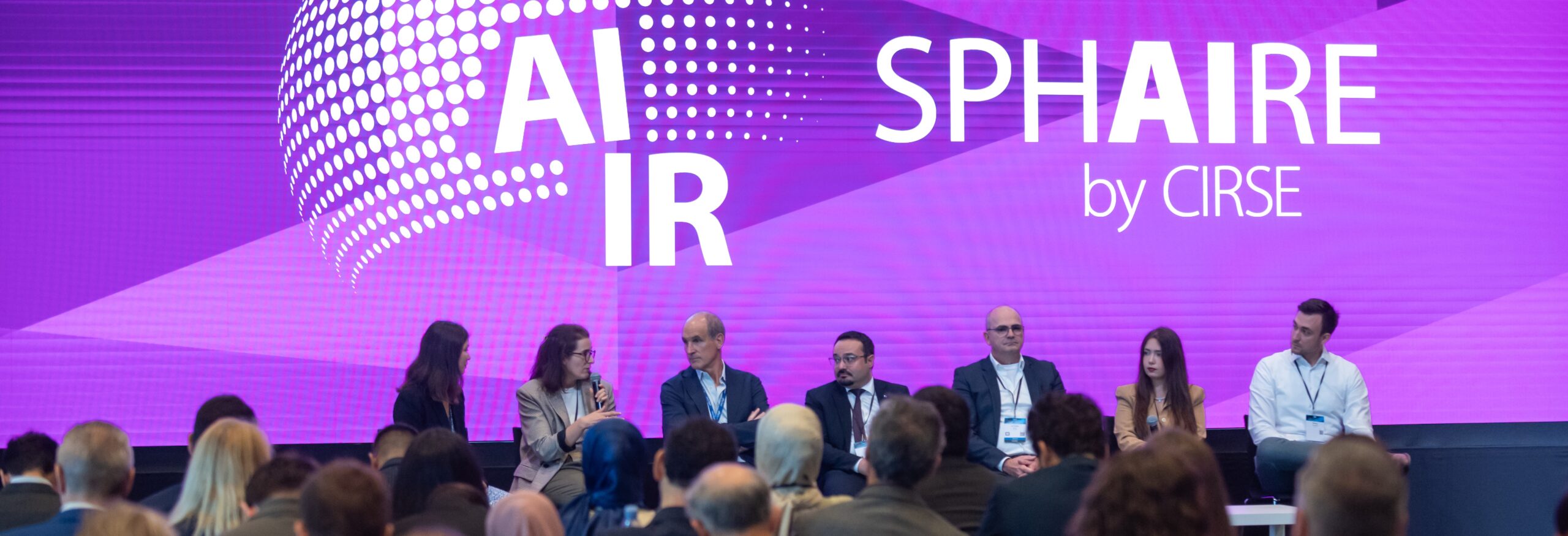
The discussion panel during the session AI in current IR practice – what is already implemented?.

Artificial intelligence took centre stage at CIRSE 2026 as SPHAIRE (Spotlight on AI and emerging technologies in IR) returned to the exhibition floor for six dedicated sessions. SPHAIRE has become a fixture of the CIRSE Annual Congress and brings together expert clinicians, researchers, and corporate partners to discuss how AI is shaping interventional radiology.

The programme tackled both the opportunities and the questions surrounding AI’s growing role in the specialty. Sessions explored what AI is already doing in current IR practice, how it could make clinicians’ working lives easier, and how the next generation of interventional radiologists should be trained for an increasingly AI-supported future. Other discussions addressed ethical grey zones and responsibility when algorithms make mistakes.

For sixth-year medical student Jonas Guldberg (Aarhus /DK), the sessions offered an opportunity to learn more about a subject that future doctors can no longer ignore. “It’s a very hot topic. I have some worries, but I know the potential, and I wanted to see what the hype is about and hear from the experts,” he said.

From research projects to real-world applications

The SPHAIRE area encompassed more than a lecture space. Research projects and industry partners were also present, giving delegates the chance to discover AI initiatives and to discuss their potential applications directly with the people behind them.

“The discussions at SPHAIRE confirmed that artificial intelligence and robotic assistance are moving from concept to clinical reality. As developers of image-guided robotic technologies, we were encouraged by the strong interest from clinicians and industry alike,” said Andreas Rothfuss, Head of Innovation at BEC Robotics. “Events such as SPHAIRE play a vital role in bringing together the expertise needed to translate innovation into tangible benefits for patients and healthcare systems.”

Alongside these projects, the sessions featured a range of presentations on how AI could support everyday clinical work.

Drs. Sara Lojo Lendoiro, SPHAIRE Coordinator, and Kevin Fung, SPHAIRE Scientific Programme Committee member.

AI applications to support patients and clinicians

Some of the work focused on communication and education. Mr. Chun Wai Lee (Kowloon/HK) presented an interactive AI chatbot developed to support patient and caregiver education in paediatric interventional radiology. The tool aims to make information about procedures more accessible and easier to understand, showing how AI could support communication and education beyond the clinical team itself.

Other presentations looked at how AI might support clinicians more directly, and large language models (LLMs), such as those developed by OpenAI and Google, were a recurring topic of discussion. Dr. Umit Mustak (Sakarya/TR) presented research on LLMs’ ability to apply standardized assessment criteria for thyroid nodule biopsy. The team wanted to assess whether the models could reliably support clinicians, and the findings so far are encouraging.

“The good thing about LLMs is that they really stick to the prompt, and physicians can incorporate their own experience and their own guidelines into the prompt easily,” he said. “I want to thank the SPHAIRE organizers and CIRSE for providing the opportunity to present,” he added. “It was great to get feedback on the project.”

AI is also being explored for diagnosis and patient selection. Dr. Chiara Zerbato (Padova/IT) presented a retrospective study on whether a deep learning model could help distinguish benign from clinically significant type II endoleaks after EVAR using preoperative 3D CTA imaging. By extracting latent imaging biomarkers from the CTA volumes, the model could support more targeted patient selection and help avoid overtreatment.

Dr. Chiara Zerbato speaks during a panel discussion.
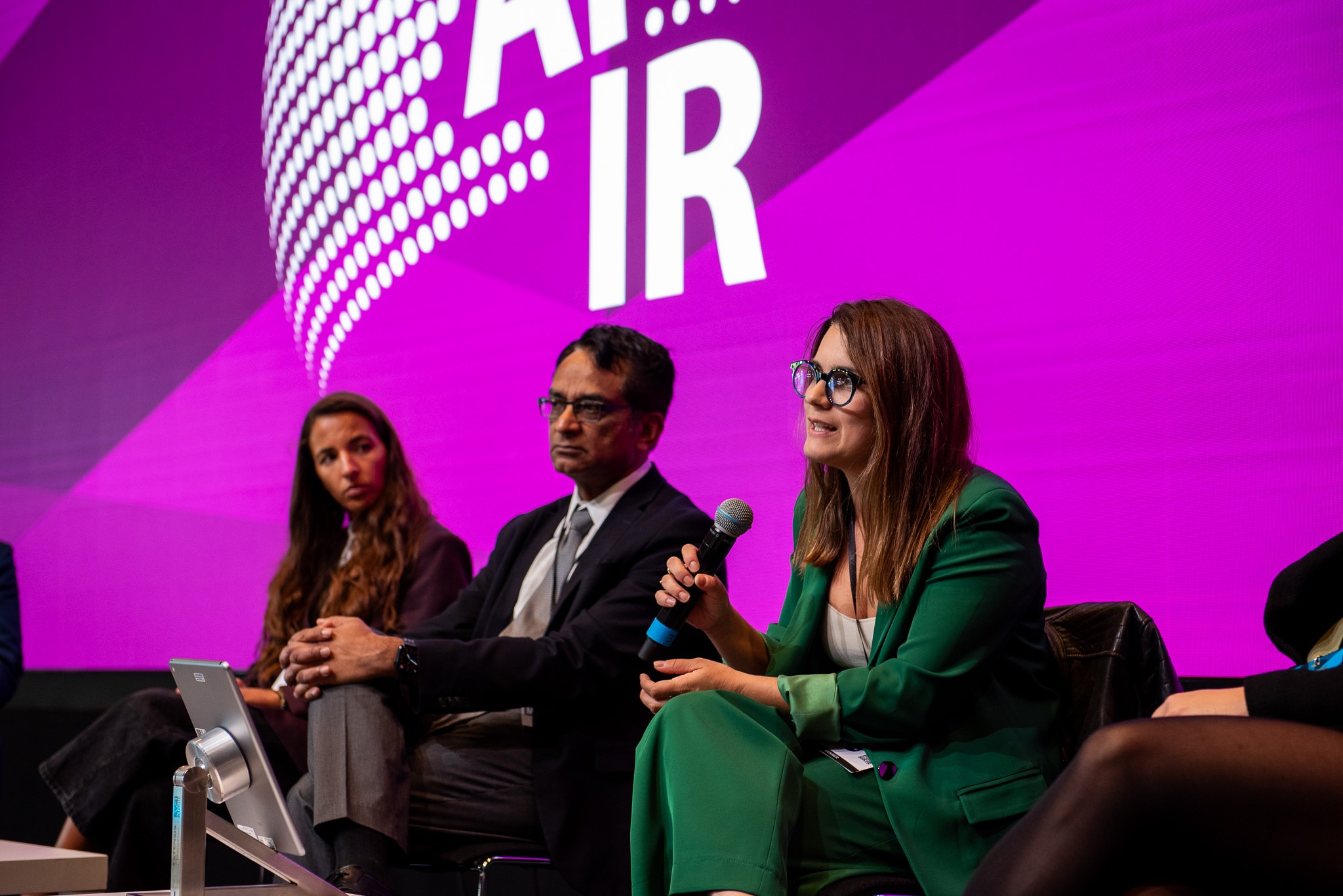
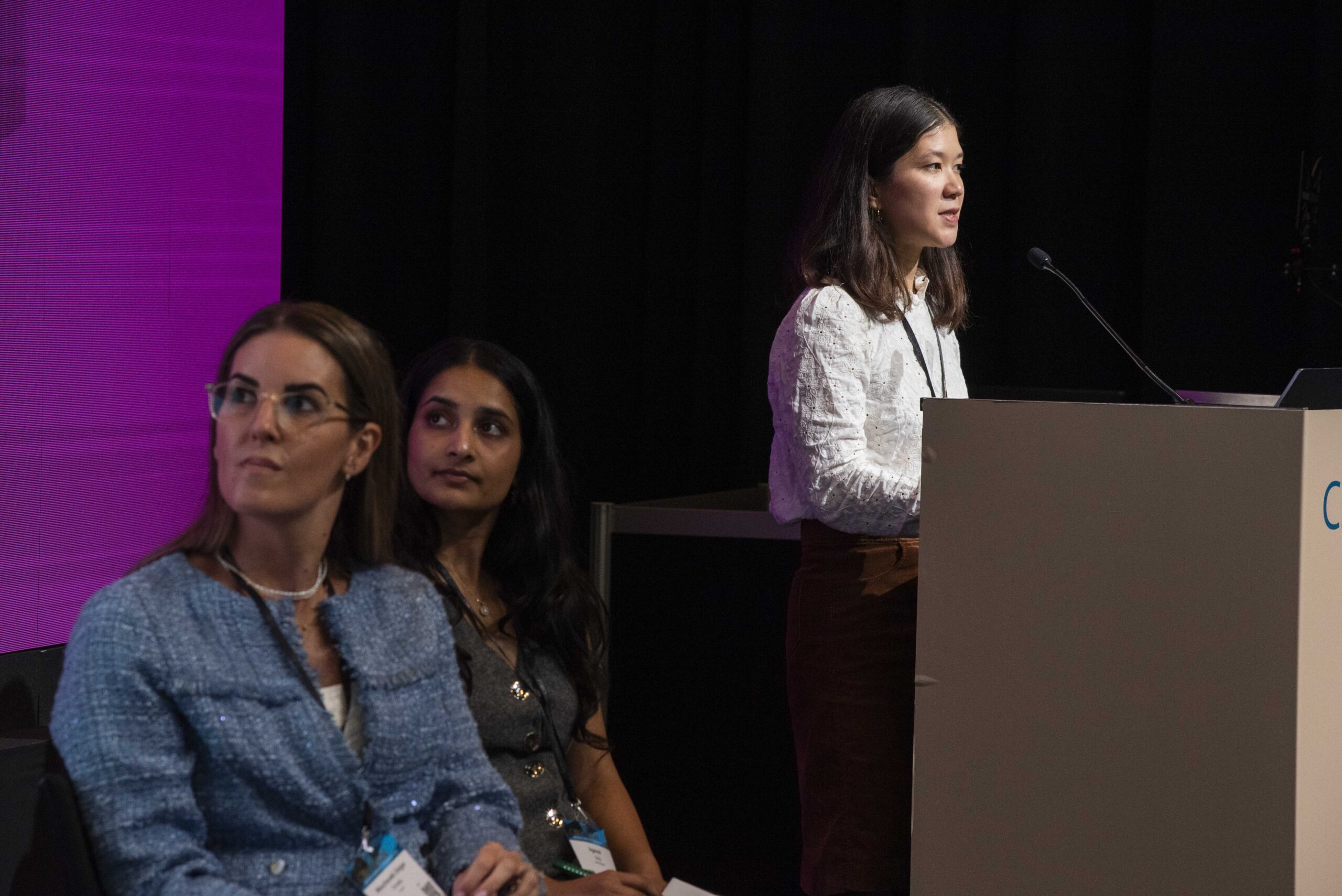
Dr. Laetitia Saccenti, a SPHAIRE Scientific Programme Committee member, presents as fellow committee member Dr. Girija Agarwal (right) and Dr. Ornella Moschovaki-Zeiger (left) look on.

Navigating the grey zones

As AI moves closer to clinical decision-making, questions about its limits become harder to avoid. The session on ethical grey zones examined how emerging tools could support clinical decisions without replacing physician judgement.

Dr. Lucia Soresini (Genova/IT) illustrated this with a retrospective study using AI to analyse post-embolization uterine artery DSA and identify the risk of residual undertreatment following uterine artery embolization. Dynamic perfusion features proved more informative than static anatomical parameters, and the model achieved 76.9% accuracy. The results highlight both the potential of AI-assisted quantitative assessment and the importance of keeping such tools firmly in a decision-support role.

Dr. Tariq Ali (Norwich/GB) addressed the legal questions surrounding AI in IR, emphasizing the need for calibrated trust rather than either blind acceptance or rejection of AI. While clinical accountability remains with the physician, he noted that distributed liability is an emerging concept in the legal field, reflecting the involvement of multiple stakeholders in the development and use of AI systems. “We can’t be better than computers, but computers can’t replace human judgement,” he said.

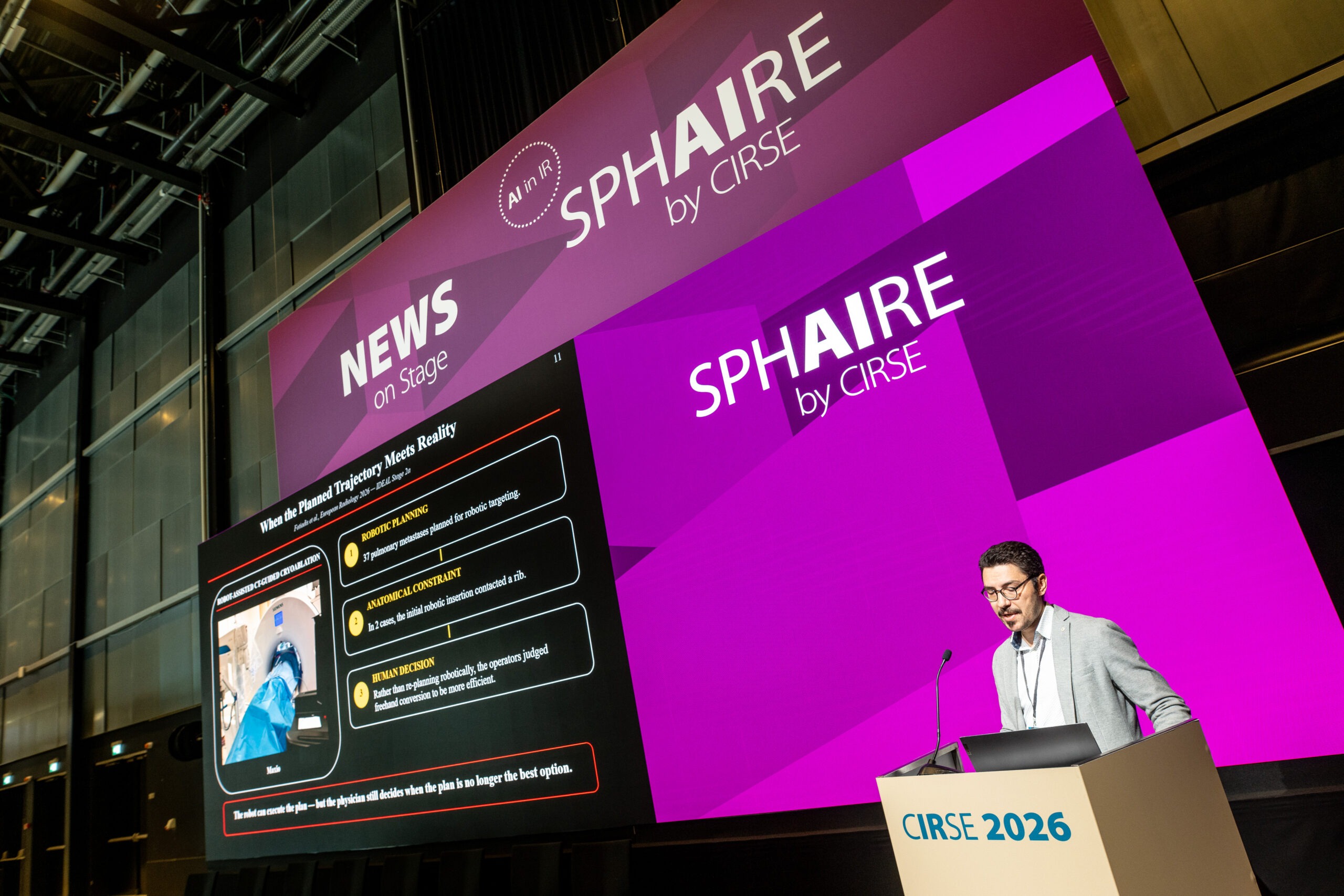
Dr. Ural Koç presents on robotics.

Robotics and human-machine interaction

Prof. Laurent Milot (Lyon/FR) explored the role of robotics in interventional oncology, moving from basic to more complex percutaneous procedures and considering both their theoretical workflow advantages and their current limitations. Questions remain around issues such as accuracy and whether robotic assistance ultimately translates into improved outcomes, but Milot stressed that the technology is already moving into clinical practice: “Robotics are here. It’s not just a dream. We are actually doing it.”

Dr. Yann Le Meur (Montpellier/FR) presented on various control approaches in robotic models, from teleoperation and automated systems to shared or collaborative control. Using video examples, he showed how shared control can combine robotic precision with the adaptability needed for different clinical scenarios.

A forum for exploring AI’s role in IR

By bringing discussions, research projects, and industry developments together directly on the exhibition floor, SPHAIRE 2026 gave congress attendees the opportunity to learn about and critically examine developments in AI, consider their limitations, and understand where they could fit into everyday IR practice.