How did you prepare for the exam?
Narcise: I made a conscious effort to integrate what I learned through the CIRSE Academy into my daily clinical practice. Whenever I performed a procedure, such as a biopsy or a vascular intervention, I would revisit the relevant learning materials to reinforce my knowledge and apply it directly to patient care. Having hands-on clinical experience was also invaluable when preparing for the exam. However, it is not just about knowing how to perform procedures, it is equally important to stay up to date with the latest evidence and clinical guidelines.
For example, cryoablation is not yet available in the Philippines, but we expect it to be introduced soon. We currently perform thermal ablation, which shares some similarities with cryoablation. Reviewing these topics made me realise that this technology could soon become available in our country, and I want to be prepared when it does. Since no one is currently performing these procedures here, I see an opportunity to help pioneer their use. As an IR, I believe it is essential to continuously learn, expand my knowledge and stay up to date with new developments.
It is great to see that you were able to pass the exam, even though many of the procedures covered are not yet available in the Philippines.
Narcise: I think the exam is designed to assess your understanding of IR procedures, regardless of the technology available in your country. It is not just about knowing how to perform an intervention from a technical perspective, but also about understanding the clinical aspects involved. This means that the exam is manageable even if you have limited hands-on experience with certain procedures.
How did it feel to pass the exam and to obtain this qualification?
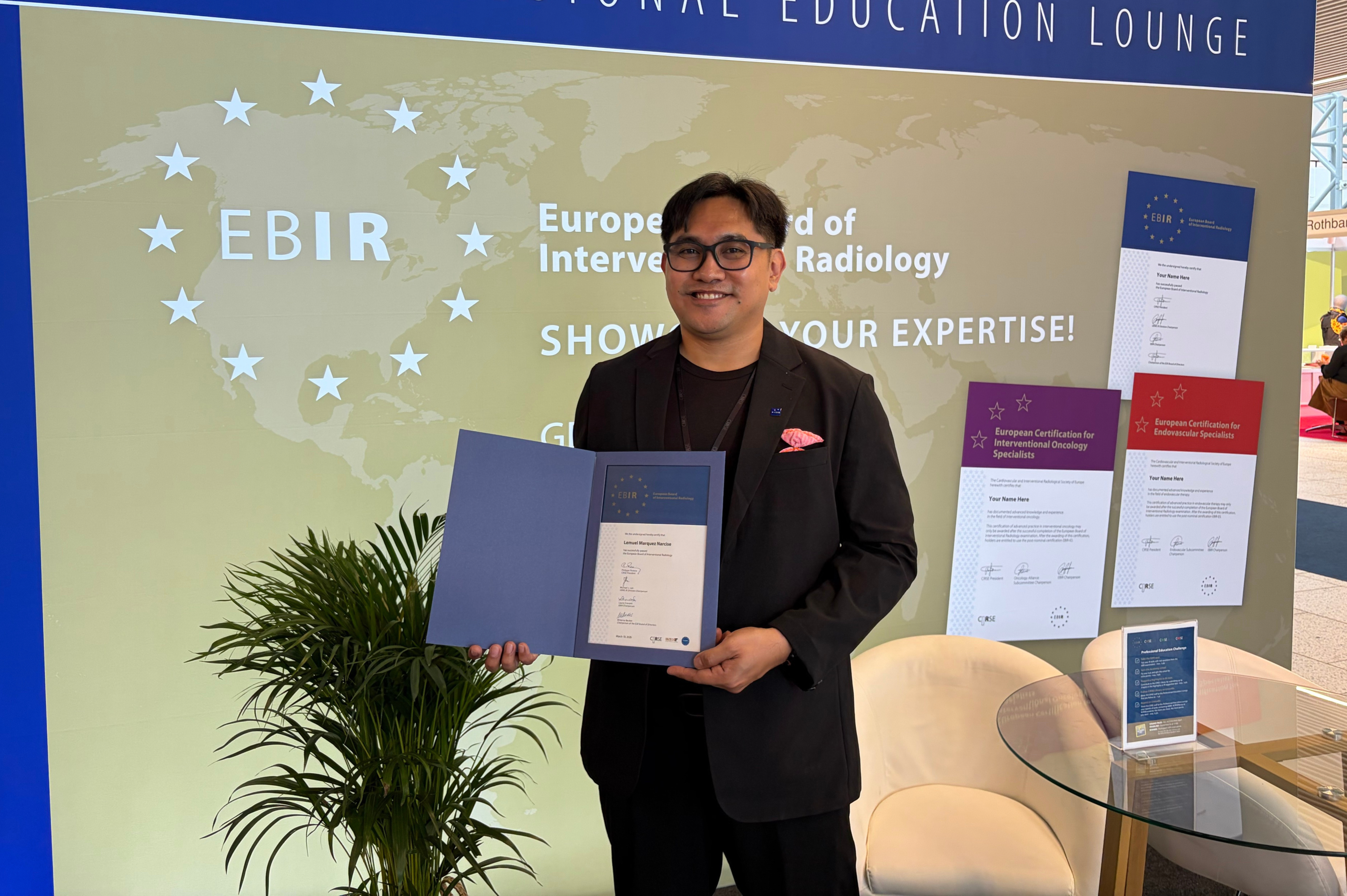
Narcise: When I received the email confirming that I had passed, I felt relief, but knowing that I am the first EBIR holder from the Philippines made this achievement even more meaningful. As mentioned earlier, it’s not just a personal achievement but a milestone for the Philippine Society of Vascular and Interventional Radiology. It shows that if can do it, others can do it as well. Passing the exam has also motivated me to continue learning, maintain high standards of practice, and share my knowledge with colleagues.
Would you recommend other IRs in the Philippines to take the exam?
Narcise: Absolutely. I would strongly encourage my fellow IRs in the Philippines to take the EBIR. By strengthening our specialty at a national level, we can raise standards of clinical practice and improve access to specialized IR procedures for patients across the country, not only in major urban centres but also in the provinces.