How does CIEMAR complement the evidence from randomized clinical trials, particularly COLLISION?
Meijerink: COLLISION is a randomized controlled trial comparing surgical resection to thermal ablation. It brings us hard evidence on what we should prefer, and what we should prefer is thermal ablation, because it proved to be a much safer option. In that trial, there were only 300 patients, and half of them received resection. Therefore, we only have data from 150 patients treated with ablation, making it difficult to conduct subgroup analysis and look at results such as local control rates and results between centres like image guidance techniques used and the use of confirmation software.
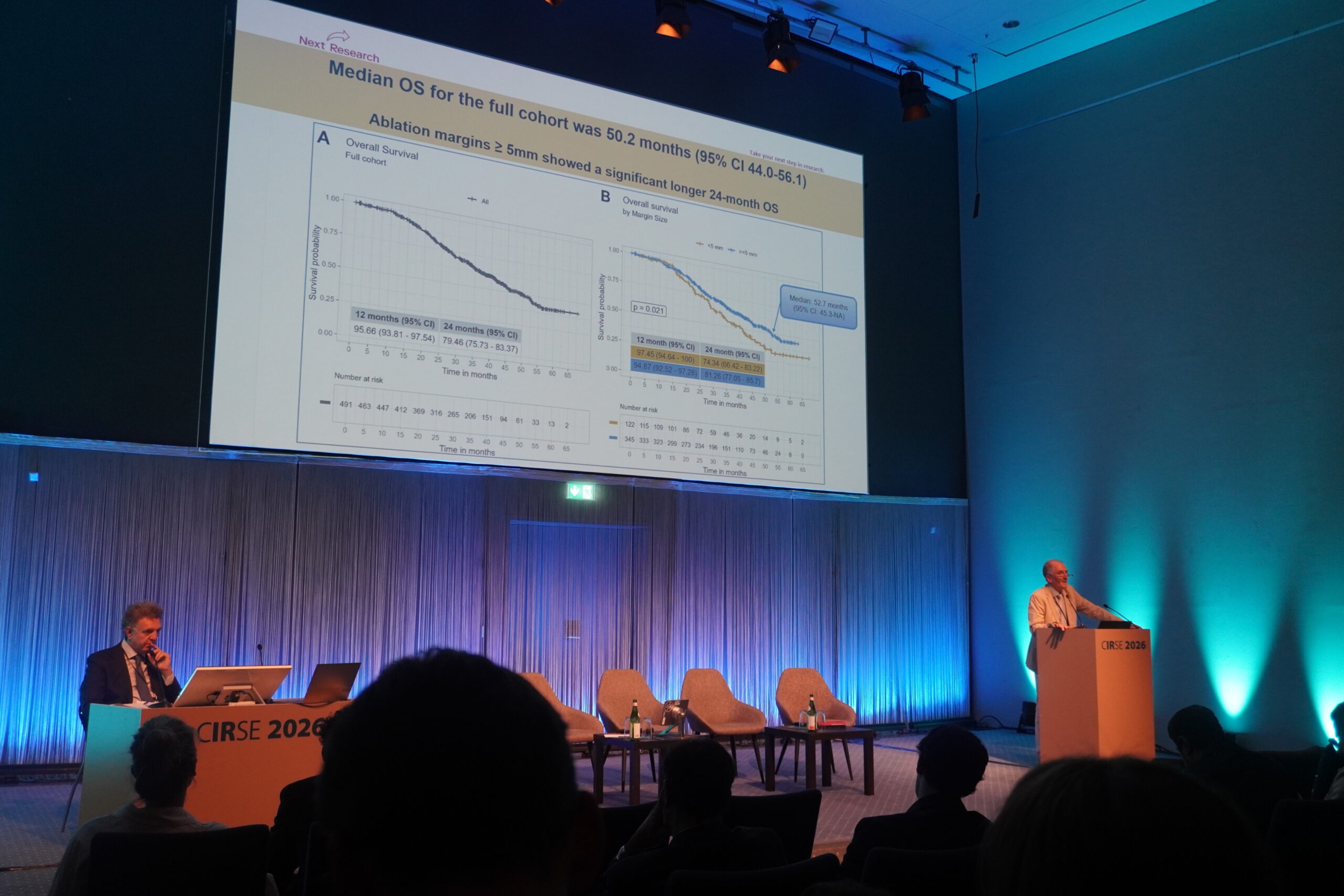
A very large prospective registry like CIEMAR, with nearly 500 patients and over 1,000 colorectal liver metastases, provides better results as we could conduct subgroup analysis and see what approach gives the best local outcomes.
Pereira: CIEMAR perfectly complements randomized trial evidence by showing whether MWA can achieve reliable results in routine practice across multiple centres, operators and patient profiles. Whereas randomized trials establish comparative efficacy under controlled conditions, CIEMAR provides reassurance about feasibility, reproducibility, safety, and external validity in everyday multidisciplinary care.
Have the findings influenced your perspective on MWA or the way it should be performed in clinical practice?
Pereira: CIEMAR reinforces that MWA should not be viewed simply as a salvage option for patients unsuitable for surgery. It supports its use as a curative-intent, liver-sparing treatment in appropriately selected patients with small colorectal liver metastases. Importantly, it has strengthened the focus on procedure quality, particularly careful planning, image guidance, documented ablation margins and structured imaging follow-up.
Looking ahead, how will the forthcoming analysis of longer-term clinical outcomes build on these findings?
Meijerink: Local tumour control is mainly of interest to IRs, who want to do the best job at locally controlling the tumour. But for patients and medical and surgical oncologists – people who longitudinally follow patients – overall survival, disease-free survival, and chemotherapy-free survival may be way more interesting.
I hope that CIEMAR will confirm that we can achieve full cure in a subset of patients. Ablation in the liver is, first and foremost, a curative intent treatment. Second, we can really help with reducing the amount of chemotherapy regimens and increasing chemotherapy-free survival if we as IRs do a good job with our ablations.