Cardiovascular and Interventional Radiological Society of Europe
CIRSE insider - NEW - animated
PublicationsCIRSE InsiderA Q&A with new CIRSE EBIR Committee Chairperson Colin Cantwell

A Q&A with new CIRSE EBIR Committee Chairperson Colin Cantwell

November 12, 2026

CIRSE EBIR Committee Chairperson Prof. Colin Cantwell reflects on his involvement with CIRSE and shares his goals for supporting IR training and professional recognition through the European Board of Interventional Radiology (EBIR) examination.


Colin Cantwell

How did you first become involved with CIRSE?

Cantwell: I first became involved with CIRSE when I returned to Ireland in 2008 from interventional radiology training at Massachusetts General Hospital. Then, I joined the Irish Society of Interventional Radiologists, which was a group member of CIRSE.

What motivated you to volunteer to join the EBIR Committee?

Cantwell: I wanted to improve my IR knowledge, and I was looking for a professional exam that tested my readiness for clinical practice and was a capstone for my IR training, so I completed the EBIR exam in Glasgow in 2014. I also wanted to give back to CIRSE, develop my academic involvement, and learn more about the exam process. So, in 2015, at the CIRSE Annual Congress in Lisbon, I took the opportunity to train as an exam contributor.

You helped bring the EBIR examination into Ireland’s national IR training pathway. What was that process like? Why was that an important step for Ireland?

Cantwell: The process to bring EBIR into our national training pathway was very easy. Like many countries, Ireland has a radiology training program that is well established and incorporates, at most, one year of IR training. I understood first-hand that two years of training is required to acquire the knowledge and skills to practice IR.

In pursuit of specialty recognition for IR, the IR community in Ireland formed a short-lived committee within our professional society of radiology to formalize the CIRSE curriculum-based IR training. As part of the new “IR training pathway,” we needed a summative assessment of IR knowledge and skills that would satisfy our medical council and our training needs. The EBIR is the standardized, globally recognized benchmark that we chose to assess trainees.

We are a small IR faculty of 50 part-time interventional radiologists, and we are all limited on time. The EBIR provided us with a complete assessment that is available online twice a year and that aligns with the teaching resources provided by CIRSE. Using the EBIR has preserved the IR faculty’s time for mentorship and provision of training in the IR suite.

It is important that IR training is visible to the government, hospital employers, and trainees. This new IR training pathway gives IR a professional training profile for the first time in Ireland. The structured two-year minimum higher specialist training is the framework that medical students, interns, and radiology trainees can aspire to enter. For the first time, Irish trainees can complete their IR training to a professional level in Ireland.

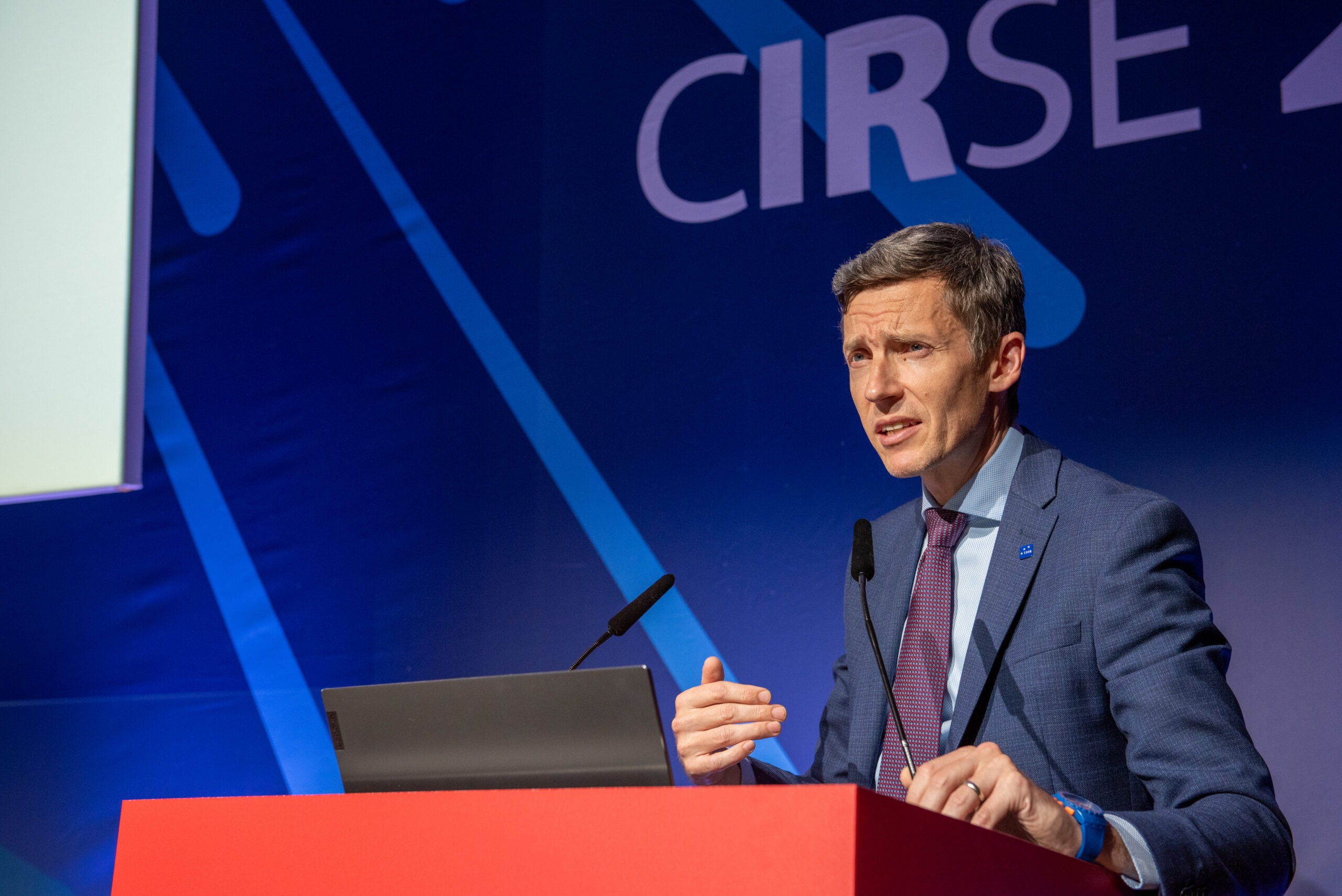
Prof. Cantwell speaks at CIRSE 2025.
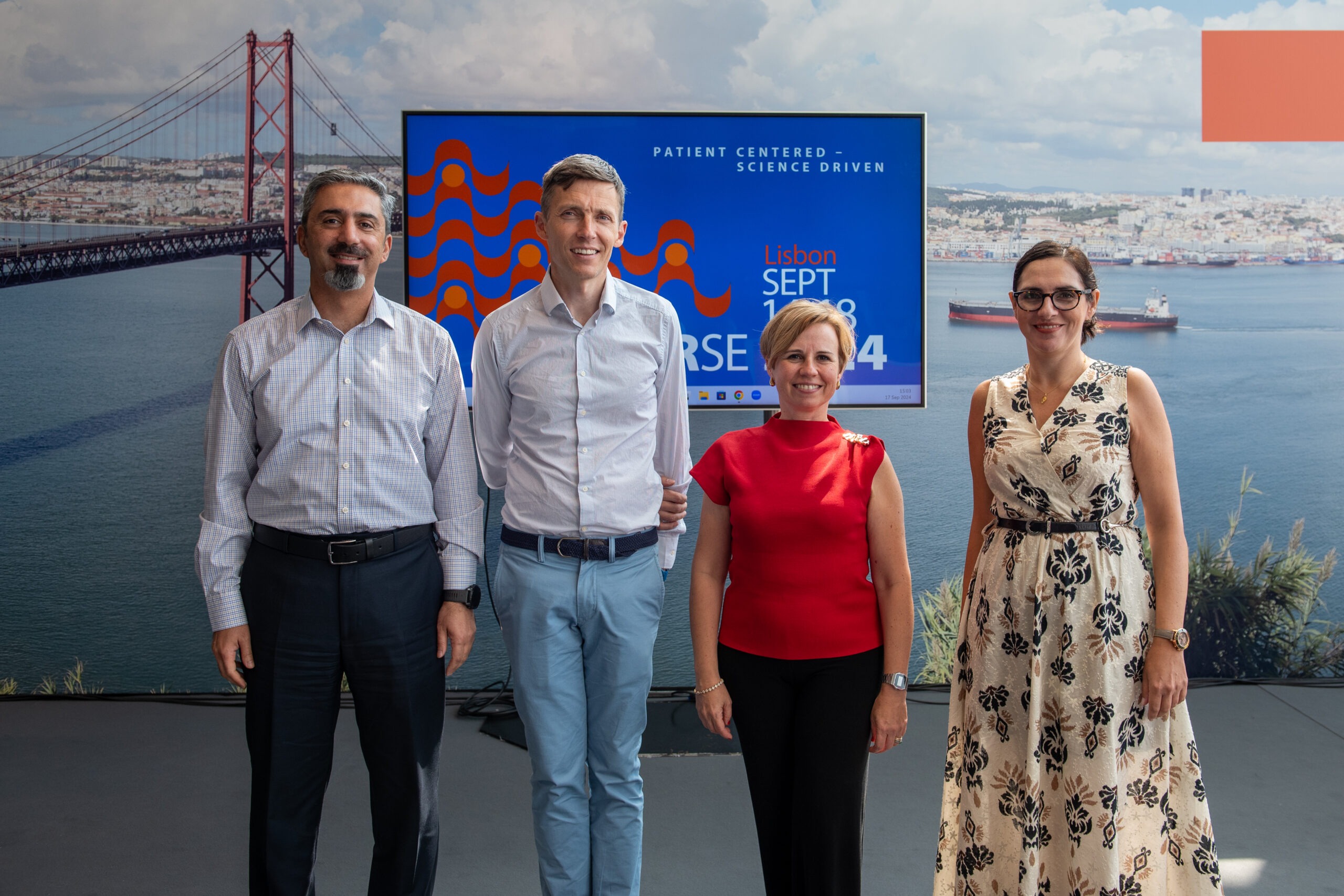
Prof. Cantwell with the then EBIR Council at CIRSE 2024.

What have you learned from the Irish experience that could help IRs seeking stronger training pathways or recognition in other countries? Could you see the EBIR becoming commonplace in other national IR training pathways?

Cantwell: The development of training structures is an important part of the development of IR as a specialty. I have learned that developing a national IR training pathway is important for the identity of IR and legitimizes the investment of hospitals in training posts. The development of IR and provision of an appropriate number of IR training posts was further supported by initiatives such as a national IR workforce analysis and the Model of Care for Interventional Radiology framework.

I have also learned that there are many resources to support this work. CIRSE has consciously developed the EBIR, the curricula, and educational resources aligned to each other to assist national IR societies who want to develop their training IR training pathway.

The EBIR is uniquely positioned to become the global gold standard for IR qualification. Because it functions as a highly objective, standardized, and globally recognized benchmark, more national training pathways will inevitably adopt it to harmonize their standards and facilitate international mobility for qualified interventional radiologists.

The European Curriculum and Syllabus for IR, which serves as the basis for the EBIR examination, is due to be revised in 2027 with publication planned for 2028. What should the revision address to reflect how IR is practiced today?

Cantwell: The 2028 revision must incorporate rapid developments in interventional oncology, complex endovascular stroke care, and advanced artificial intelligence integrations. The revised curriculum needs to reflect the increasing scope of clinical practice of interventional radiologists, new treatments, and science in the field of pain management, musculoskeletal and prostate embolization, new technologies, and their application, such as drug-eluting technology and biodegradable scaffolds.

Furthermore, the updated syllabus should place a heavier emphasis on peri-procedural clinical care and outpatient management, accurately reflecting the modern interventional radiologist’s role as a primary clinical specialist.

As EBIR Committee Chairperson, what goals would you like to achieve during your term?

Cantwell: I have two goals for my term. First, I want to continue to deliver a meaningful exam experience for trainees and maintain the high standards that the EBIR has progressively defined. Second, I would like the EBIR to reach out to national training bodies that are developing IR training, support them in advancing specialty recognition, and assist them with using the EBIR in their training development.