Cardiovascular and Interventional Radiological Society of Europe
CIRSE insider - NEW - animated
PublicationsCIRSE InsiderBeyond accreditation: Five IASIOS Centres of Excellence share their experiences

Beyond accreditation: Five IASIOS Centres of Excellence share their experiences

October 19, 2026

What motivates centres to pursue Centre of Excellence status, and what changes along the way? CIRSE Insider spoke with representatives of five newly recognized Centres of Excellence to explore the impact on clinical practice, multidisciplinary collaboration, and patient care.


Following Strasbourg University Hospital’s pioneering achievement as the first IASIOS Centre of Excellence, five additional interventional oncology services have attained this distinction. The highest level of IASIOS recognition, Centre of Excellence status, is awarded to centres that have completed their initial four-year accreditation cycle and demonstrated compliance with both the core and extended criteria of the CIRSE Standards of Quality Assurance in Interventional Oncology.

Contributors:

  • Dr. Mark Burgmans – Leiden University Medical Centre, the Netherlands
  • Prof. Kiang Hiong Tay – Singapore General Hospital, Singapore
  • PD Dr. med. Arash Najafi – Kantonsspital Winterthur, Switzerland
  • Prof. Dr. Philippe L. Pereira – SLK-Kliniken Heilbronn, Germany
  • Dr. Jean Palussière – Institut Bergonié, France

What motivated your department to pursue IASIOS Centre of Excellence status?

Burgmans: We saw completing the initial four-year IASIOS accreditation cycle as a foundation rather than an endpoint, using it to standardize processes, formalize governance structures, and strengthen multidisciplinary collaboration. As our service matured, establishing the Leiden Image Guided Therapy Centre with five procedure rooms equipped with state-of-the-art imaging, expanding clinical indications, increasing case complexity, and enhancing research activities, we wanted to benchmark ourselves against the highest international expectations in interventional oncology. The extended IASIOS criteria aligned well with the level our service had reached, making Centre of Excellence recognition a natural progression in our quality journey.

Pereira: While academic and university hospitals hold various accreditations, few address patient management as a whole. IASIOS focuses on the entire patient pathway, specifically the quality of communication between clinical departments and the interdisciplinary aspects of care essential for cancer patients. Achieving Centre of Excellence recognition was something our colleagues wanted to pursue to distinguish ourselves through a qualification centred on quality rather than quantity.

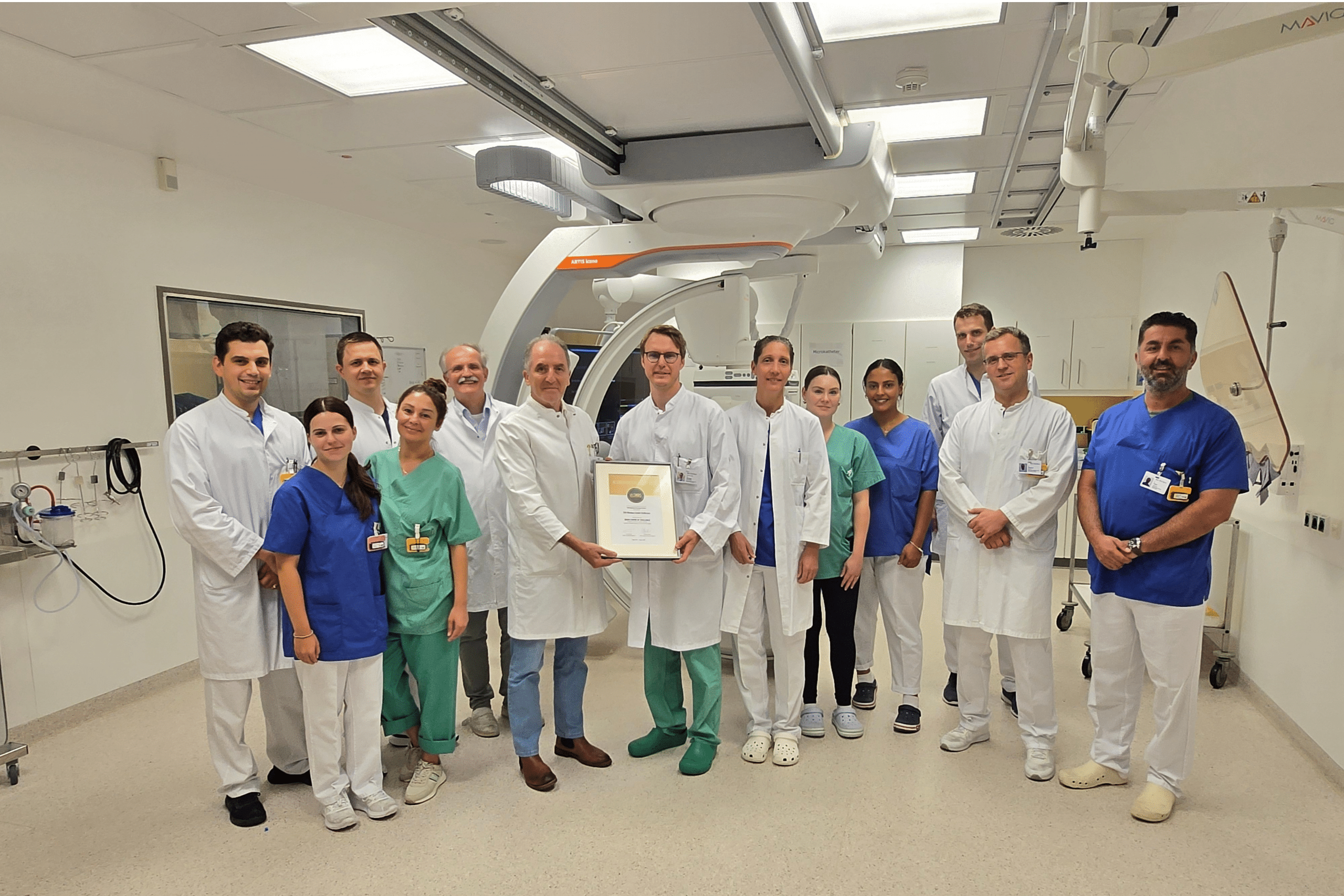
SLK-Kliniken Heilbronn
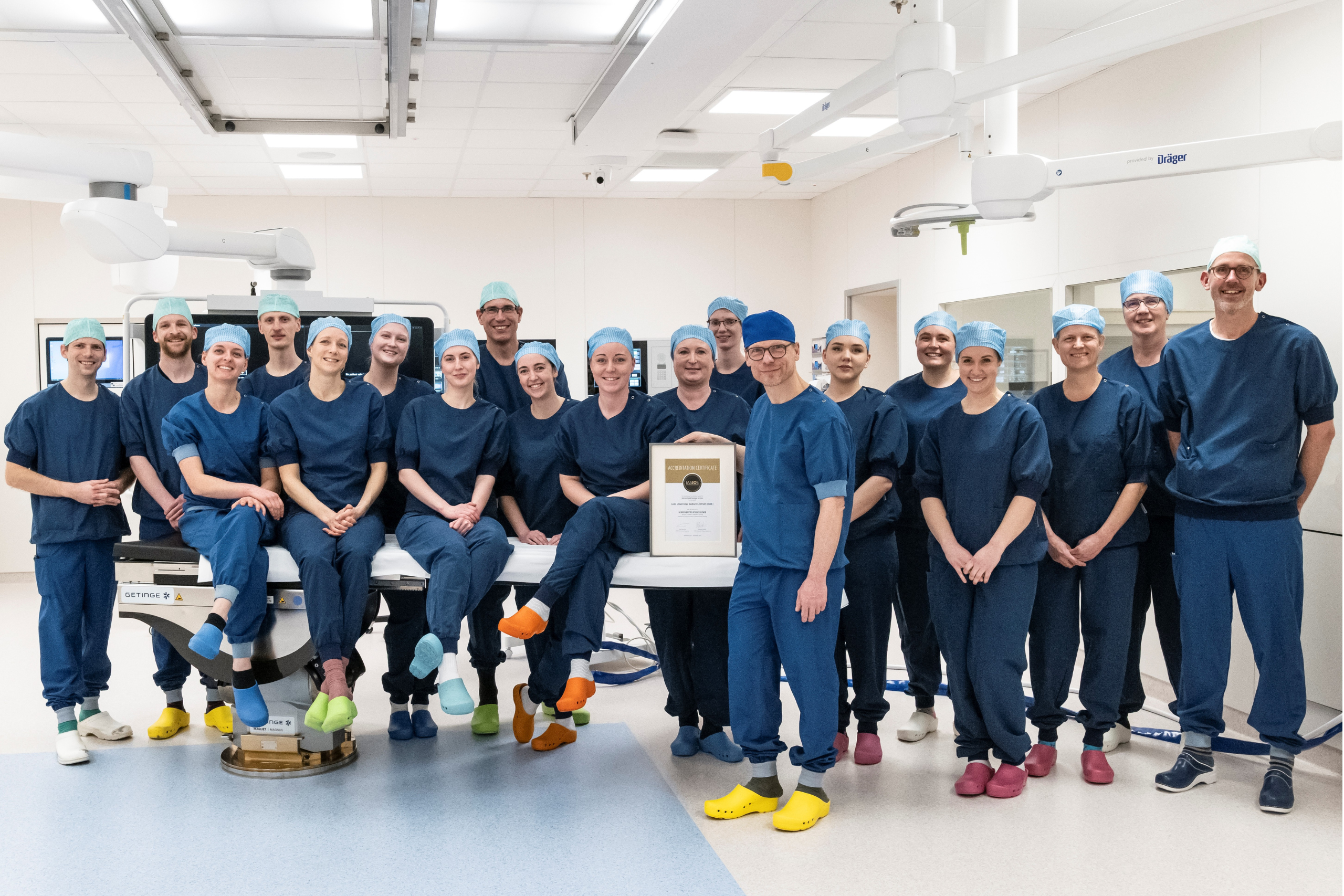
 Leiden University Medical Centre

Which extended criteria had the greatest impact on your team’s clinical practice?

Tay: The extended criteria relating to clinical governance were particularly important for us, reinforcing clinical ownership and responsibility for patients alongside a structured quality assurance framework. We strongly believe that interventional radiologists need to be directly involved in pre- and post-procedural evaluation and longitudinal patient care to ensure consistently high-quality outcomes. We have applied these same principles to all IR procedures, not just interventional oncology, which has helped elevate our entire IR service.

Burgmans: For us, one of the most significant developments was moving from retrospective audits to continuous, prospective data collection, building on the extended criteria for monitoring clinical outcomes and quality improvement. This improved transparency and helped us refine our clinical practice. The emphasis on education, research, and service development also encouraged us to formalize training for fellows, residents, and nursing staff while strengthening our commitment to innovation. Overall, the process helped us evolve from technically strong operators into a comprehensive and accountable oncological service.

Can you share a concrete improvement that has resulted from this process?

Tay: Building on the extended criteria for quality improvement and outcome benchmarking, we introduced additional registries to track and audit our clinical outcomes, such as our Value Driven Care project on locoregional treatments for hepatocellular carcinoma. Started in 2022, it tracks outcomes and costs for Y-90 radioembolization, TACE, and thermal ablation, helping us identify improvements from system level down to individual operators and generate a Clinical Quality Index for institutional benchmarking. Expansion to sister institutions is planned alongside a similar project for renal ablation. We also established dedicated focus groups of four or five IRs for selected low-volume, high-risk procedures to consolidate expertise, drive innovation, and improve service across our 24 full-time consultants.

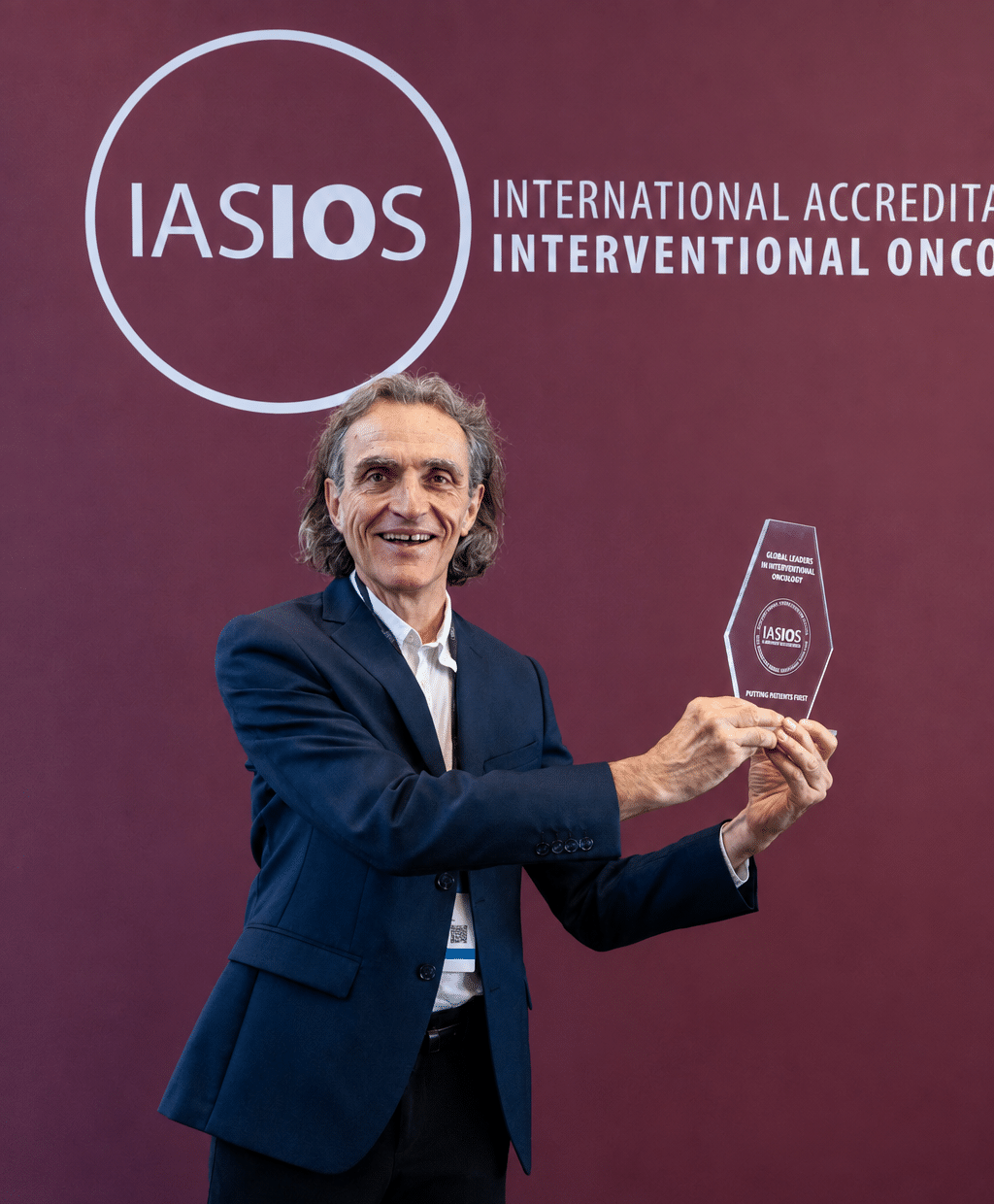
Dr. Jean Palussière of Institut Bergonié
Kantonsspital Winterthur

How has Centre of Excellence accreditation influenced collaboration across departments?

Najafi: Over the past four years, our service has evolved from establishing a high-quality interventional oncology service to embedding it as a core component of comprehensive cancer care. Pursuing Centre of Excellence status encouraged greater alignment between interventional radiology, oncology, nursing, and administrative teams, with clearer responsibilities and shared goals. Regular interprofessional discussions, structured documentation, and transparent reviews of both positive and negative events have become more deeply embedded in daily practice. This shared objective also fostered a sense of pride within the team, reinforcing collaboration and accountability.

Palussière: One important aspect of our experience at Institut Bergonié has been the close collaboration between the interventional radiology service and the hospital’s quality department. Quality assurance cannot depend solely on the physicians performing procedures, as it requires coordinated efforts from the entire team, including those responsible for documenting processes, monitoring compliance, and evaluating how care is delivered. Working towards IASIOS accreditation and Centre of Excellence designation has given us a common framework for these activities, helping make quality assurance a more structured and shared responsibility within our institution.

Has accreditation strengthened your position within the hospital?

Burgmans: Yes, the impact has been substantial. Accreditation provided objective, internationally recognized validation of quality and safety, strengthening our position during strategic planning discussions and resource allocation processes with hospital leadership. Formal accreditation also increased confidence in our service among referring clinicians, particularly medical oncologists and oncological surgeons. We also believe it has enhanced our credibility in multicentre research collaborations and regional referral networks. Perhaps most importantly, the IASIOS framework helped clarify the identity of interventional oncology as a clinical specialty rather than a purely technical subspecialty, influencing how stakeholders perceive our role in comprehensive cancer care.

Pereira: Our interventional radiology service already enjoys a strong reputation, but because IR covers such a broad field, IASIOS helps demonstrate our expertise specifically in caring for cancer patients and highlights how closely we work with all disciplines involved in cancer care. The accreditation process has also encouraged us to improve communication with general practitioners, physicians in private institutions, and our patients.

For hospital management, Centre of Excellence recognition connects quality with financial sustainability, as fewer complications, optimized patient pathways, potentially shorter hospital stays, and more efficient use of advanced treatments can all contribute to this goal. Rather than simply reacting to benchmarks, we should be setting them, and this level of recognition gives interventional oncology a stronger position at the decision-making table where it belongs.

Singapore General Hospital

What does Centre of Excellence recognition mean for patients?

Pereira: To be honest, patients may not always understand the significance of IASIOS or other certifications a cancer centre may hold, so the designation is often of greater immediate interest to referring physicians. Nevertheless, some patients do recognize differences in how their care is organized and ask why things work so well at our centre. For patients, the real value lies in standardized clinical pathways, guideline-adherent multidisciplinary treatment, subspecialty expertise, and continuous outcome measurement, all aimed at improving clinical outcomes and quality of life.

Tay: Recognition as a Centre of Excellence by an international body such as IASIOS demonstrates that our facilities, personnel, treatments, and patient care fulfil demanding international quality requirements. To maintain this status, we must continue to meet the accreditation criteria, which drives ongoing improvements and ensures that exceptional care is not an occasional achievement, but a measurable and sustained routine.

What advice would you give Accredited Centres considering Centre of Excellence status?

Palussière: Achieving accreditation is not the end of the process. Maintaining high standards requires continuous evaluation of clinical practice and a willingness to identify areas for improvement. For centres considering the next step, I would emphasize the importance of making quality assurance part of everyday clinical work, rather than treating it simply as a requirement for accreditation.

Najafi: My main advice would be to view the Centre of Excellence process not as a burdensome administrative exercise, but rather as an opportunity for meaningful service development. Early engagement of all stakeholders, including clinical, nursing, and administrative colleagues, is essential. Consistent data collection, honest self-assessment, and openness to adapting workflows are equally important, as is allowing sufficient time for changes to become part of routine practice. Ultimately, the process is most rewarding when it aligns with the department’s long-term vision of delivering high-quality, patient-centred interventional oncology care.