Cardiovascular and Interventional Radiological Society of Europe
CIRSE insider - NEW - static
PublicationsCIRSE InsiderECIO 2026: Awards and honours

ECIO 2026: Awards and honours

May 8, 2026

The European Conference on Interventional Oncology (ECIO) brings together some of the most innovative minds in interventional oncology and neighbouring disciplines. Each year, ECIO celebrates outstanding contributions from the IO community with a range of awards and honours: the Thierry de Baère honorary lecture, the Magna Cum Laude Poster Award, and the Best Scientific Paper Award.


The Thierry de Baère Lecture

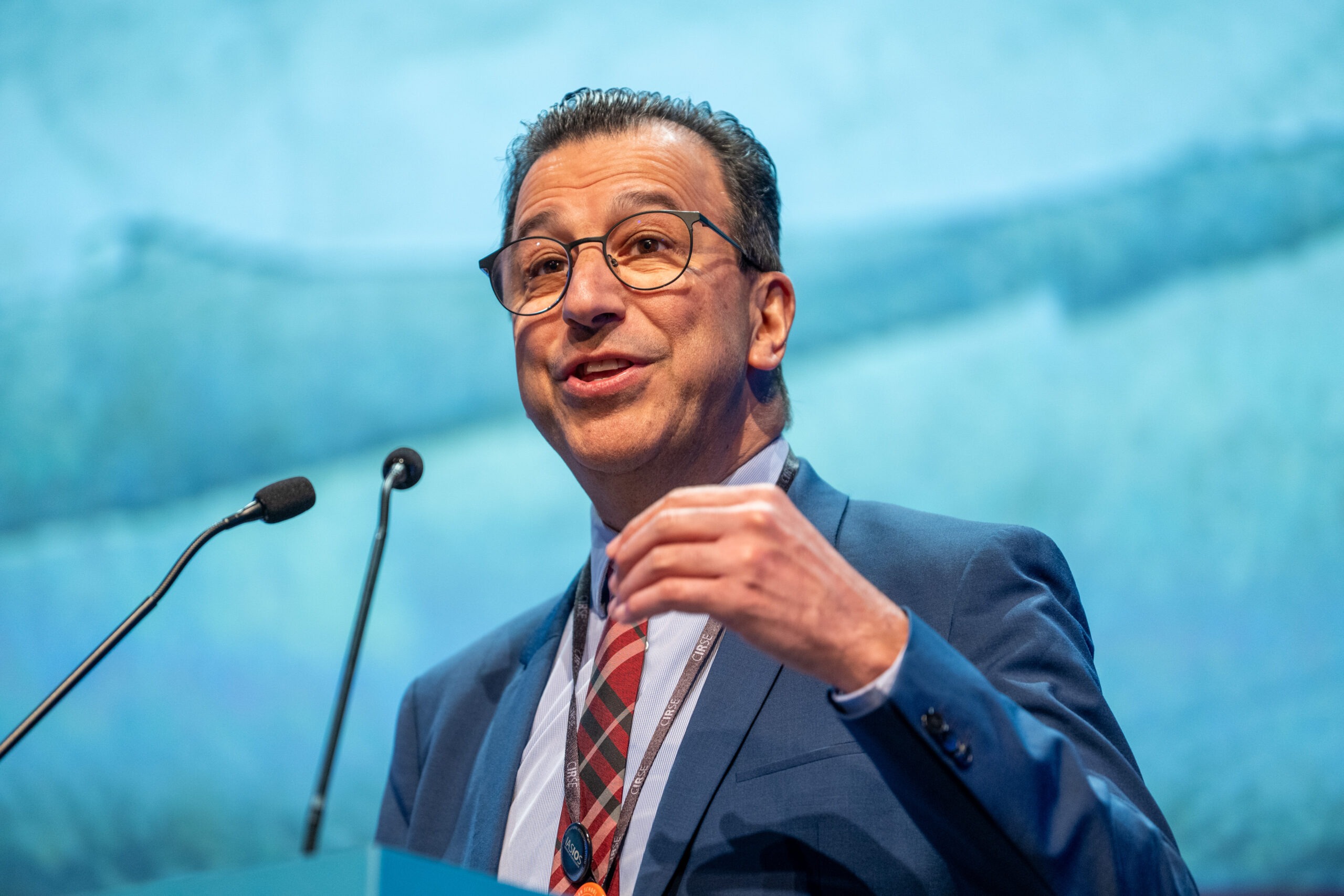
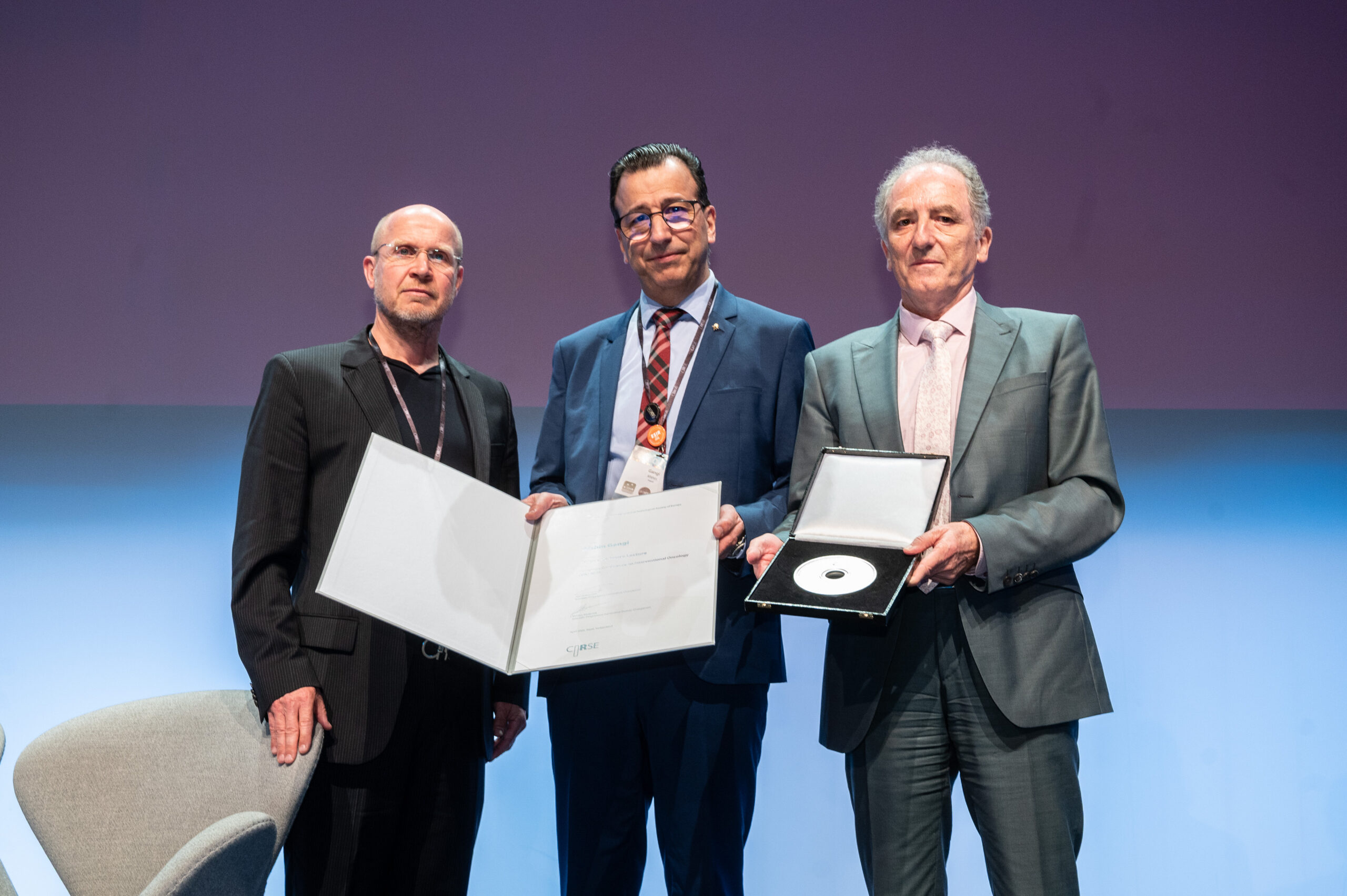
Prof. Afshin Gangi delivered the honourary lecture.
Prof. Gangi stands with Prof. Philippe Pereira (right), CIRSE President, and Prof. Christoph Zech (left), Chairperson of the ECIO 2026 Local Host Committee.

Each year, a physician who exemplifies the dedicated spirit of IO practice and research is invited to give the ECIO Honorary Lecture, which was re-named this year to the Thierry de Baère Lecture in honour of the late Prof. Thierry de Baère.

This year, one of his best friends and colleagues, Prof. Afshin Gangi, delivered the honorary lecture entitled “Interventional oncology 2030: challenges and opportunities for the next generation” to a full auditorium. Prof. Jean Palussière, also a close friend and colleague of Prof. de Baère, gave the laudation. Speaking to Prof. Gangi’s character, Prof. Palussière said, “Concern for others is one of your core values, and they always get a smile and a joke from you.” Prof. Palussière also shared memories of Prof. de Baère, looking back at his life and career and highlighting not only his exceptional expertise but also his sense of humour and the warmth he brought to his friendships.

In his engaging and inspiring presentation, Prof. Gangi’s highlighted the key technological, clinical, and educational advances that will shape interventional oncology in the coming decade. “There’s no doubt. We are the best,” he said to his fellow IOs. “It’s all about imaging. Who sees better, treats better.”

To hear more about his vision for the future of interventional oncology, you can watch the full lecture here.

Magna Cum Laude Poster Award

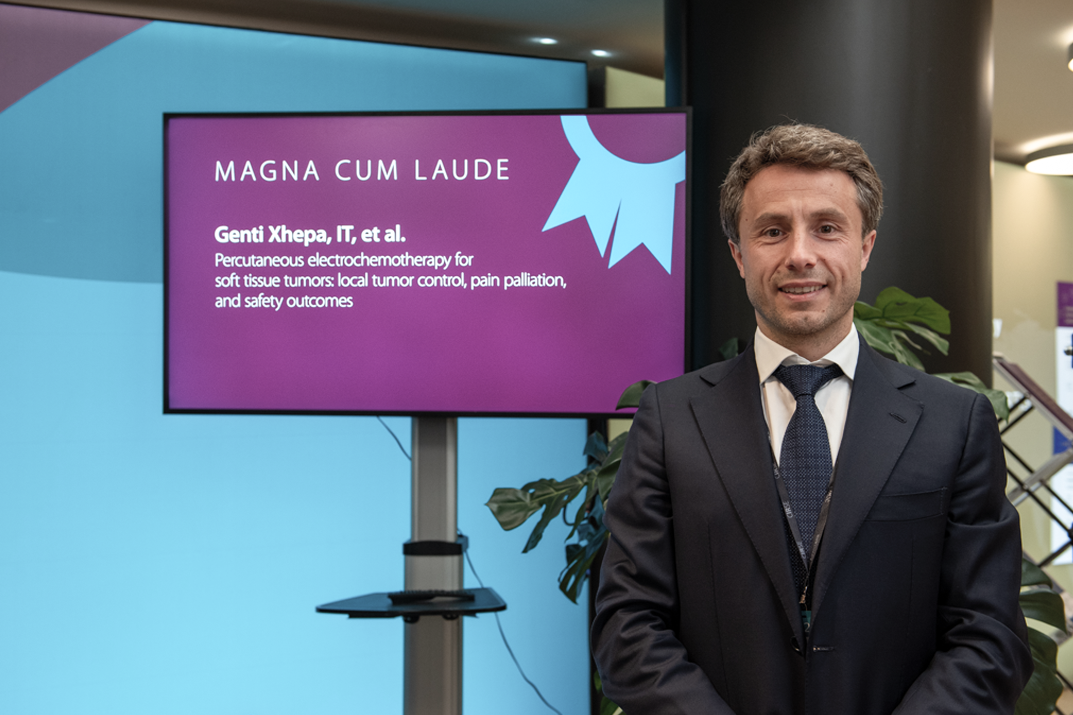
Dr. Genti Xhepa, Magna Cum Laude Poster winner, at ECIO.
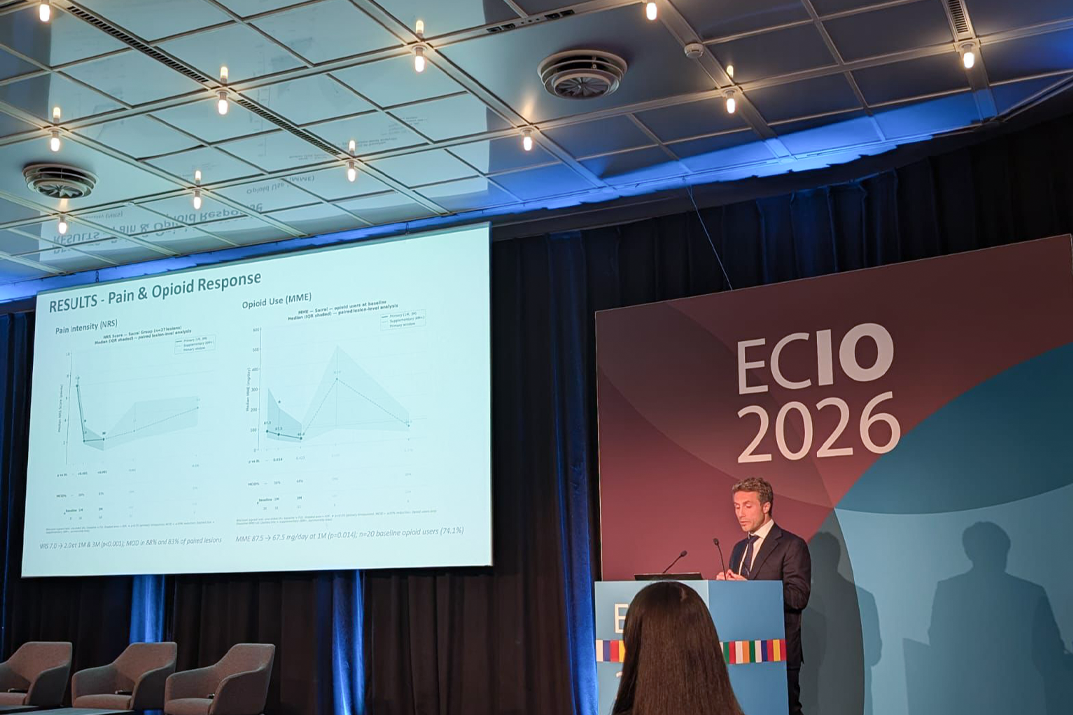
Dr. Xhepa presents on electrochemotherapy for sacral metastases during the IO from brain to pelvis session.

Dr. Genti Xhepa (Varese/CH) et al. were awarded this year’s Magna Cum Laude Poster Award for their research on Percutaneous electrochemotherapy for soft tissue tumors: local tumor control, pain palliation, and safety outcomes.

CIRSE Insider: Can you tell us a little bit about your academic background?

Xhepa: My training started at the University of Insubria’s Varese Medical School, followed by a radiology residency with Prof. Gianpaolo Carrafiello, who introduced me to interventional radiology and oncology. After working as an interventional and abdominal radiologist at ASST Rhodense in Garbagnate Milanese for several years, I moved to Switzerland in 2021, continuing at EOC in Lugano and HUG in Geneva. In June 2025, I joined the Institut Gustave Roussy as a research fellow under Prof. Lambros Tselikas and Dr. Frédéric Deschamps, focusing on interventional oncology research, especially electrochemotherapy.

CIRSE Insider: Your research topic was on percutaneous electrochemotherapy for soft tissue tumors. What led you to study this topic?

Xhepa: This topic is one of the reasons I joined Gustave Roussy, a world-leading centre for electrochemotherapy (ECT), largely thanks to Prof. Lluis Mir’s long-standing work on electroporation. The technique is at a pivotal stage: for superficial metastases, evidence has been strong for over a decade through the standard operating procedures for electrochemotherapy and electrogenetherapy (ESOPE) protocol; for deep tissues, it’s still developing. ECT uses low-dose bleomycin and electric pulses to temporarily permeabilize cell membranes, boosting cytotoxicity up to 1000-fold while sparing nearby tissue. My clinical question was simple: which patients benefit, and for how long?

CIRSE Insider: What were the key findings of your study? How do you see these findings impacting care for cancer patients?

Xhepa: Our research examined the GRECT series’ soft-tissue cohort: 44 patients with 48 lesions, most treated after exhausting other options. The response rate was 87%, with a median local progression-free survival of 12.0 months and an overall survival of 29.3 months. Notably, the lesion’s vascular pattern on pre-procedural imaging was the strongest predictor of initial response, aiding patient selection. Prior immunotherapy exposure was the only predictor of shorter progression-free survival, likely related to sequencing rather than to ECT itself. This provides a local option in a primarily palliative setting.

CIRSE Insider: Why did you choose to present your findings at ECIO 2026?

Xhepa: ECIO is the natural home for this kind of research. It brings the interventional oncology community together at the very level where early clinical evidence is tested and, if it holds up, put into practice. That is what percutaneous ECT needs to move beyond a handful of expert centres.

CIRSE Insider: Anything else you’d like to mention?

Xhepa: None of this would have been possible without the entire IO team at Gustave Roussy. My thanks also go to CIRSE and the ECIO Scientific Committee for their recognition. Evidence for percutaneous ECT still largely relies on retrospective, single-centre cohorts. To define its proper place in an increasingly personalized treatment algorithm for soft tissue and bone metastases, spinal cord compression, vascular malformations, and beyond, we need prospective, randomized studies. That is the next step worth supporting.


The Best Scientific Paper Award

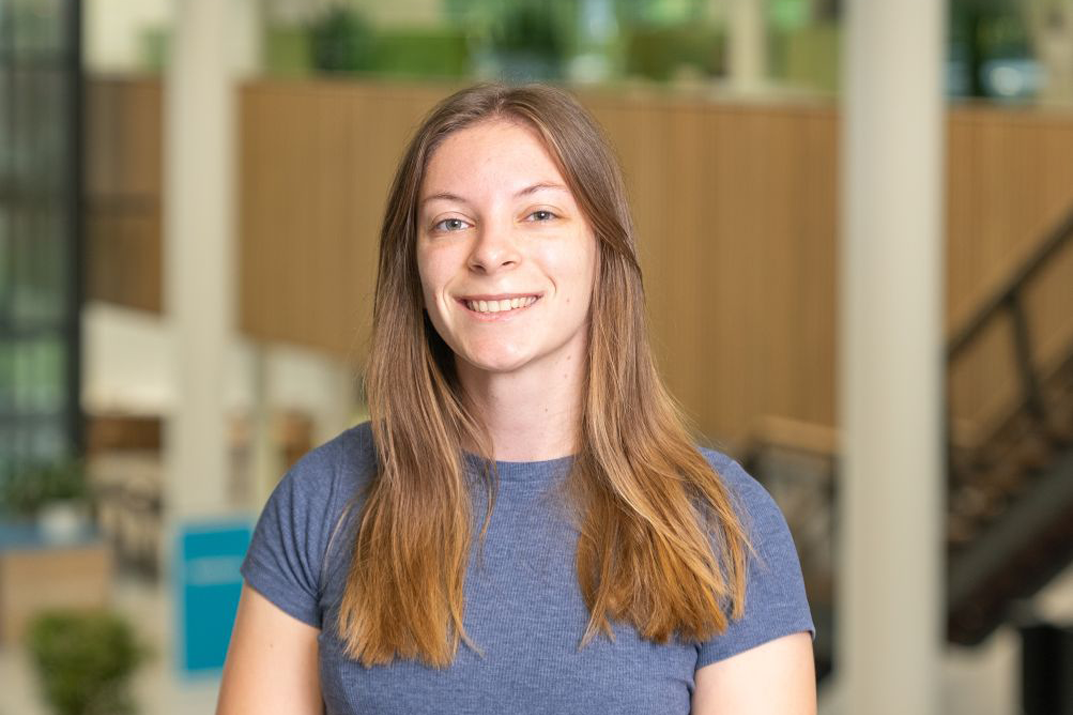
Marissa van Lente, PhD candidate, won this year’s Best Scientific Paper Award.
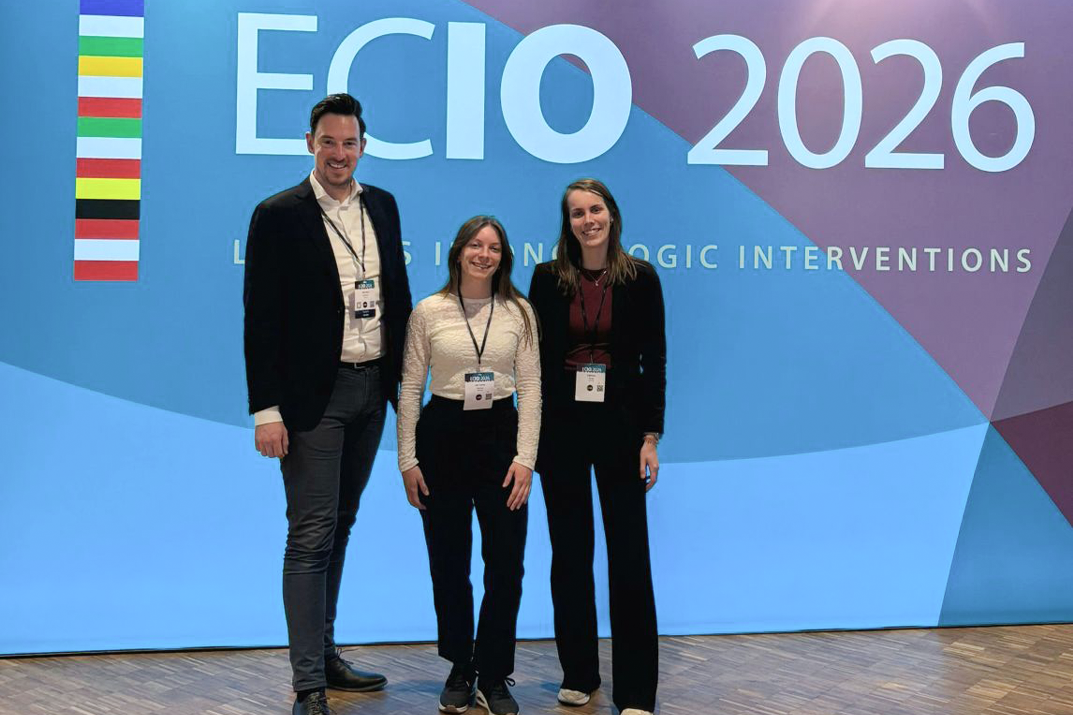
Marissa van Lente (centre) at ECIO with Kristan Overduin (left), technical physician and assistant professor, and Nynke Dijkhuis (right), PhD candidate.

Marissa van Lente (Nijmegen/NL) won this year’s Best Scientific Paper Award for the presentation “Feasibility and accuracy of AI-based segmentation for automated minimal ablation margin quantification.”

CIRSE Insider: Your research focused on the role of AI in segmenting colorectal liver metastases and ablation zones. What motivated the research behind your paper?

van Lente: Thermal ablation serves as a good alternative treatment for selected patients with colorectal liver metastases, but the associated local tumour progression is still relatively high. Consequently, repeat ablation is needed, which is both time-consuming and burdensome for the patient. Previous works have proven that the minimal ablation margin is an independent predictor of local tumour progression, so we should use this to our advantage. If we can quantify this margin during the procedure, we directly reveal any insufficient margins and can immediately adjust accordingly. However, previous literature about automating this intraprocedural margin quantification is limited. That is why we are focusing on an automated robust workflow, making it fast and user-independent with AI. For our submission to ECIO in particular, we focused on the segmentation tasks of margin quantification.

CIRSE Insider: Why did you decide to submit a paper for ECIO? What was presenting at ECIO like for you?

van Lente: ECIO is the most important congress for anyone doing research on thermal ablation. There are so many parts to the equation that can be optimized and analyzed to improve patient outcomes, and at ECIO, all our little islands of knowledge and research are brought together, so we can shape the land of thermal ablation. For me as a young researcher, attending and presenting at ECIO is so inspiring and motivating. Hearing how much progress is made in the field – even since last year’s edition of ECIO – and simultaneously becoming more aware of the hurdles we still have to overcome, both drive me forward.

CIRSE Insider: You were awarded the Best Scientific Paper Award based on feedback from attendees and the Scientific Programme Committee. What do you think made your work stand out from the rest?

van Lente: I thank everyone who showed interest in my research and those who attended my talk, and the Scientific Programme Committee for voting for me of course! I believe that our study about the feasibility and accuracy of automated margin analysis is relevant for a lot of ECIO attendees. Anyone performing image-based interventions wants to visualize and assess an intervention’s success.

CIRSE Insider: Anything else you’d like to mention?

van Lente: As a researcher who embraces the opportunities that artificial intelligence gives us in our field, I would like to ask the AI sceptics to remain open-minded. I understand that current developments in (generative) AI generally spark concerns (such as, “Was my article reviewed by a human reviewer or were they assisted by AI?” or “Can I trust that this photo is real?”) but this does not mean that we should avoid AI entirely! With responsible, ethical usage, we can, for example, use it as a pattern recognition tool to help radiologists.