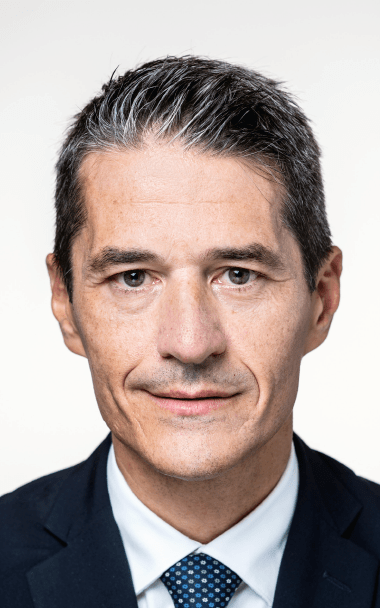
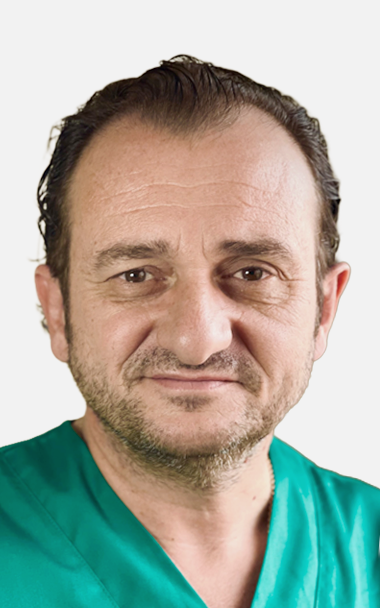
CIRSE Insider: What motivated the development of the BRIGHT study?
Bent: Haemorrhoidal bleeding is extremely common, but the evidence base for minimally invasive alternatives to surgery still lags behind clinical interest. Over recent years, haemorrhoid artery embolization (HAE) has shown real promise, particularly for patients whose dominant symptom is bleeding and who may wish to avoid or are unsuitable for more invasive surgery. What has been missing is robust, prospective, multicentre real-world data collected in a standardised way across Europe. BRIGHT was designed to obtain this data and to start defining where HAE fits in modern haemorrhoid care.
CIRSE Insider: How do you see BRIGHT advancing the clinical management of grade II–III haemorrhoidal bleeding?
Iezzi: BRIGHT has the potential to significantly strengthen the role of HAE in the management of haemorrhoidal bleeding. While traditional surgical treatments remain effective, there is a clear demand for less invasive options that are better tolerated by patients. By collecting prospective data from multiple centres, BRIGHT will provide valuable insights into the effectiveness, safety, and reproducibility of the procedure in real-world practice. This type of evidence is crucial to better position HAE within the current therapeutic algorithm and to increase awareness among clinicians about the potential of this minimally invasive approach.
Bent: BRIGHT can help shift the conversation from ‘Can this be done?’ to ‘For which patients should this be done, and with what expected outcomes?’ That is a very important step in the maturity of any treatment.
CIRSE Insider: Could you briefly explain the proven clinical benefits of haemorrhoid artery embolization (HAE) over surgical alternatives?
Vidal: HAE offers several key advantages over surgical approaches. It is a minimally invasive procedure performed under local anaesthesia, with a very low complication rate. Unlike surgery, it avoids tissue resection, significantly reducing postoperative pain and recovery time. Importantly, it provides effective control of bleeding while preserving anorectal anatomy and function, which is a major benefit for patient comfort and quality of life.
CIRSE Insider: What are some of the key outcomes you’re most interested in measuring? Why were these outcomes chosen over others?
Binkert: The primary endpoint of the study is the reduction of bleeding after 12 months, measured with the French Bleeding Score. Haemorrhoidal bleeding is typically the most common symptom that leads patients to seek treatment. As secondary endpoints, quality of life improvements and measuring of recovery time were chosen. Haemorrhoids aren’t cancer or life-threatening, but they can impact daily activities and wellbeing, so the improvement in quality of life plays an important role in understanding the benefit of the treatment.
Bent: I am particularly interested in recurrence, symptom burden, recovery time, and quality of life. Technical success in embolization is not enough on its own. What patients care about is whether the bleeding stays improved, whether they avoid pain and disruption, whether bowel function is preserved, and whether they return to normal life quickly. Including cost-effectiveness is also important, because if HAE is to become more widely adopted, it needs to demonstrate not only clinical value but health-system value as well.
CIRSE Insider: BRIGHT places a strong emphasis on patient-reported outcomes. Why was the collection of patient-reported outcomes included in the study design, and what challenges and opportunities might this present?
Vidal: Patient-reported outcomes are essential because they capture what truly matters: symptom relief and quality of life. In haemorrhoidal disease, the patient’s perception of bleeding and discomfort is the key driver for treatment.
Bent: In designing BRIGHT, we were conscious not only of what to measure, but also how much we ask of patients. One of the challenges in prospective studies is questionnaire fatigue, particularly with repeated follow-up over 24 months. For that reason, we made a deliberate decision to streamline the number of instruments used, focusing on those that are most clinically meaningful and validated, such as the French Bleeding Score, HEMO-FISS, and EQ-5D-5L. Importantly, this approach also allows alignment with existing surgical datasets, enabling meaningful retrospective comparisons with outcomes reported in trials such as HubBLe and ORION. This helps position BRIGHT within the broader haemorrhoid evidence landscape rather than in isolation.
CIRSE Insider: BRIGHT is a Europe-wide study. In your opinion, how does cross-border research benefit the interventional radiology (IR) community?
Iezzi: Collaboration across Europe is one of the strengths of the IR community. Multinational studies allow us to pool experience, increase patient numbers, and generate stronger and more generalisable evidence. At the same time, they promote the exchange of expertise and contribute to the standardisation of techniques and outcome reporting.
Binkert: From a policy perspective, multinational research is also important for local healthcare authorities as they prefer to see evidence that reflects their own population and clinical environment. This helps to foster stakeholder trust in IR radiology as a reliable and evidence-driven specialty within national healthcare systems.
Vidal: Simply put, a Europe-wide study like BRIGHT enhances external validity, fosters collaboration, and accelerates adoption of innovative interventional procedures such as HAE.
CIRSE Insider: How do you foresee the real-world data collected in BRIGHT influencing future evidence, guidelines, or reimbursement decisions for HAE?
Bent: Real-world data is exactly what is needed at this stage in the evolution of HAE. We already have encouraging single-centre and early prospective data, but guideline committees and payers are looking for consistent, reproducible outcomes across a broader population. BRIGHT is designed to address that gap. By prospectively collecting standardised data on bleeding reduction, recurrence, safety, recovery, quality of life, and economic impact in a defined cohort of 250 patients, we can begin to build a much clearer picture of both clinical effectiveness and value.
Iezzi: In this sense, BRIGHT could represent a very important step for the future of HAE. If the registry confirms the positive results that many centres are already observing in daily clinical practice, it will provide a strong scientific basis for the broader adoption of this procedure. Ultimately, the goal is to ensure that more patients can benefit from a minimally invasive treatment capable not only of controlling bleeding but also of significantly improving quality of life.