


CIRSE Fellowship report: Dr. Ali Dablan
I am Dr. Ali Dablan, an interventional radiologist at Başakşehir Çam & Sakura City Hospital, one of the largest tertiary centers in Istanbul. I completed a one-month CIRSE Fellowship at Ospedale Antonio Cardarelli in Naples, a major referral institution recognized for its high procedural volume, multidisciplinary structure, and continuous 24/7 interventional radiology service.
This fellowship provided an exceptional opportunity to enhance my technical skills, broaden my clinical judgment, and gain exposure to a diverse range of advanced IR procedures. It was a professionally transformative experience that also offered valuable personal and cultural insights.
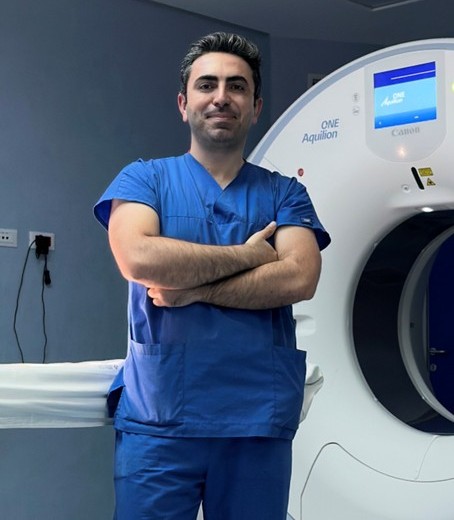
Me during my CIRSE Fellowship at Ospedale Antonio Cardarelli.
Educational Environment & Mentorship
From the first day, I was warmly welcomed by the entire IR team. I am truly grateful to Dr. Francesco Giurazza, my mentor, whose calm teaching style, procedural finesse, and analytical clinical reasoning were central to my learning. I also thank Prof. Raffaella Niola, Head of Department, for her guidance and for integrating me fully into the daily workflow.
The team demonstrated exemplary professionalism and collaboration throughout my stay. Their openness to teaching, explanation, and discussion created an outstanding educational environment that made the fellowship both productive and enjoyable.
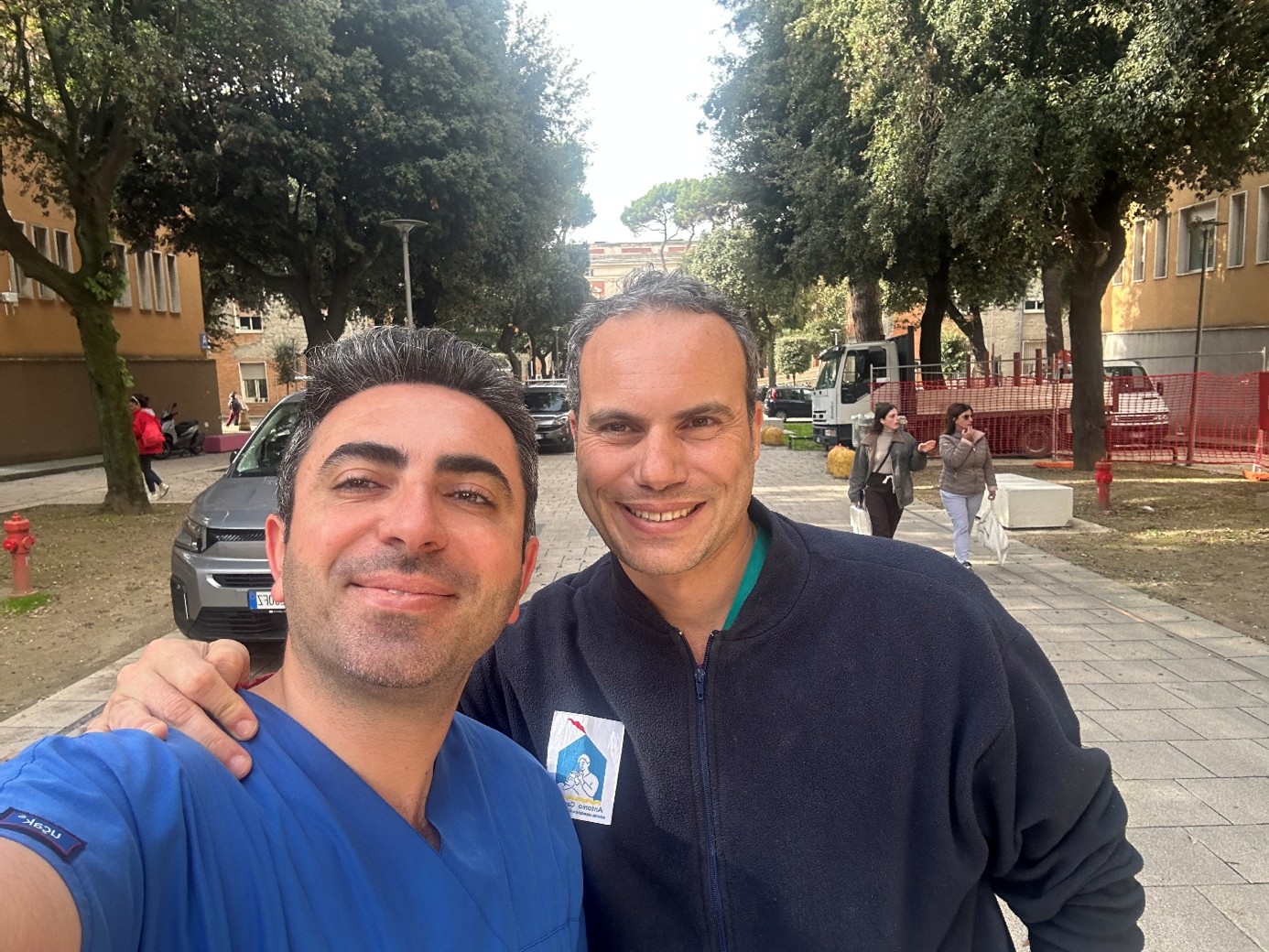
With my mentor, Dr. Francesco Giurazza, whose guidance and support were essential throughout my fellowship
Cardarelli IR Unit: Overview
The Cardarelli IR department is one of the busiest in southern Italy, managing a wide spectrum of oncologic, hepatobiliary, transplant-related, peripheral vascular, trauma, and emergency cases. The workflow is supported by close cooperation with oncology, hepatobiliary surgery, transplant surgery, gastroenterology, hepatology, and emergency medicine.
One of the unit’s greatest strengths is its hybrid angiography suite with a fully integrated 4D CT and DSA system, enabling seamless transitions between volumetric CT imaging and fluoroscopic guidance. This advanced setup significantly enhances the efficiency and precision of complex IR procedures.
Procedural Exposure & Technical Development
During the fellowship, I observed, assisted, and in several procedures served as a second operator. These hands-on opportunities greatly strengthened my technical confidence, procedural planning, and understanding of advanced interventional strategies.
My embolization experience expanded considerably through procedures such as uterine, varicocele, and hemorrhoid embolization; treatment of visceral and peripheral pseudoaneurysms; Y-90 preparatory angiography; emergency gastrointestinal bleeding control; trauma-related splenic and hepatic embolization; and targeted embolization of biliary leaks. These cases improved my understanding of individualized embolic material selection based on hemodynamics, anatomy, and therapeutic goals.
I also gained substantial experience in oncologic and hepatobiliary interventions, including transradial hepatic oncological procedures—an area in which I previously had limited experience—liver and lung cryoablation, MWA/RFA planning and follow-up imaging, transjugular liver biopsy, and complex portal vein interventions related to liver transplantation. These cases broadened my capability to manage advanced oncologic and hepatobiliary scenarios.
A key aspect of my training was the significant improvement in my contrast-enhanced ultrasound (CEUS) skills, particularly in lesion characterization, biopsy guidance, and oncologic surveillance.
Additionally, I developed a deeper understanding of device and embolic material selection, including absorbable microparticles, pushable coils, and liquid embolics, and learned how to tailor strategies for different vascular flow conditions. These technical insights have already begun to meaningfully improve my clinical practice at home.
I also gained meaningful exposure to peripheral vascular interventions, including iliac artery procedures, SFA recanalization and angioplasty, and below-the-knee revascularization for critical limb ischemia. These experiences allowed me to observe modern wire–catheter strategies, CTO-crossing techniques, and device selection for challenging peripheral cases.
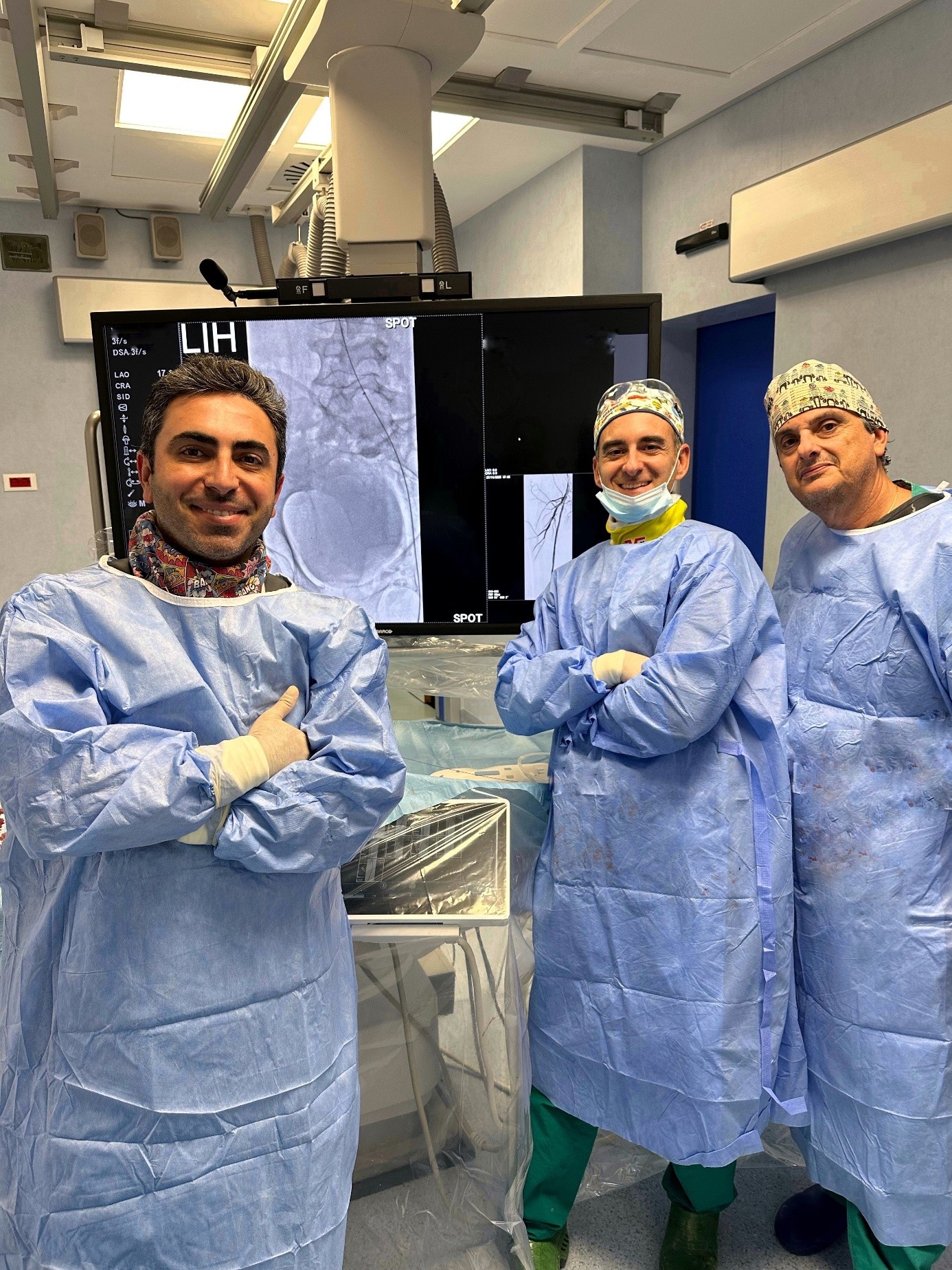
Post-procedure with Dr. Antonio Borzelli and Dr. Gianluca Cangiano—a great example of the teamwork and supportive atmosphere in the IR unit.
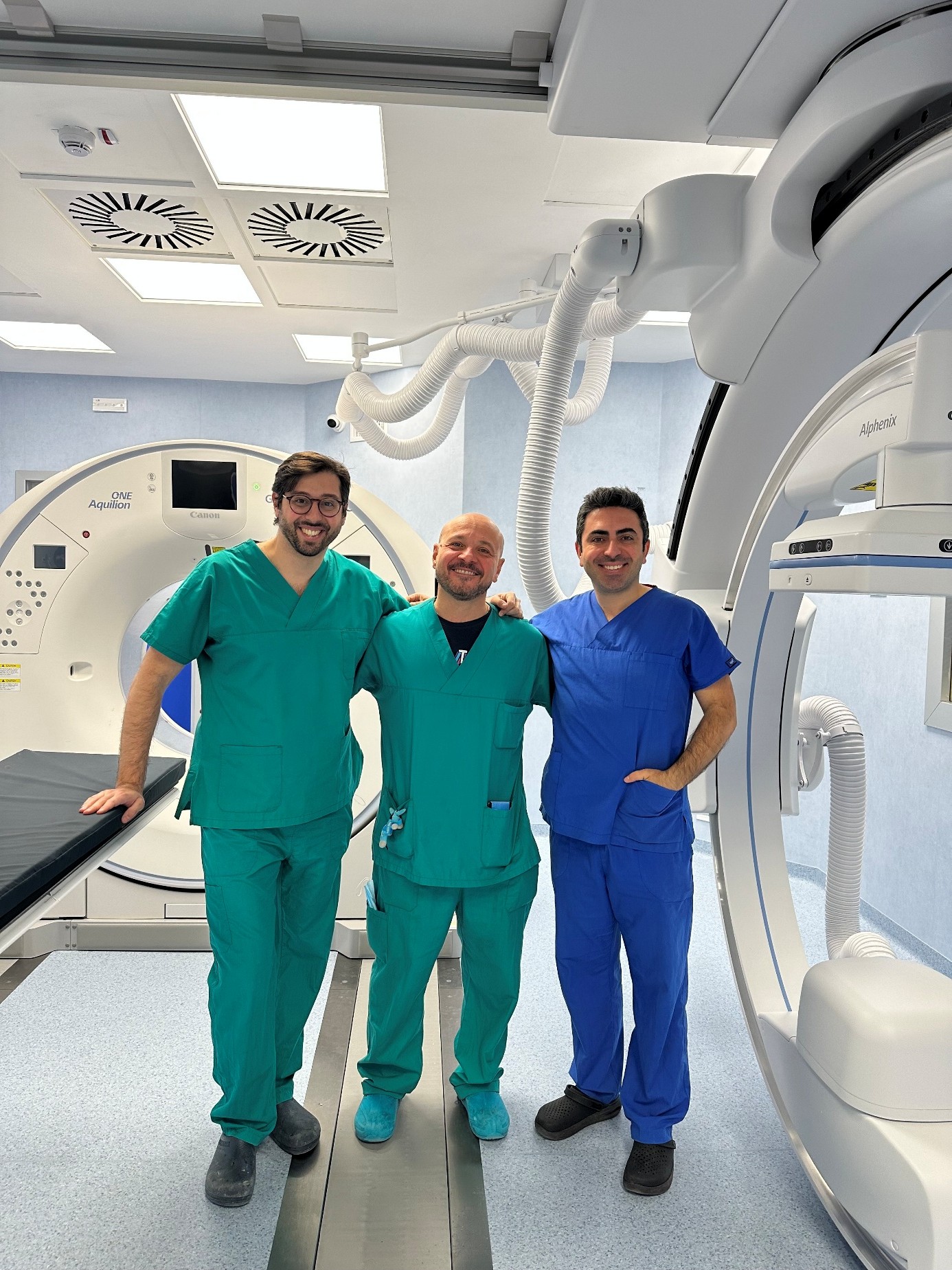
With Dr. Felice D’Antuono and nurse Lello Mango
Academic & Multidisciplinary Integration
I actively participated in multidisciplinary meetings involving oncology, transplant surgery, hepatobiliary surgery, gastroenterology, and hepatology. These discussions provided valuable insight into patient selection, long-term management, and coordinated treatment planning.
We exchanged perspectives on embolization techniques, oncologic IR approaches, management of postoperative complications, MRI-based assessment, and the potential use of machine-learning tools for risk prediction. These academic interactions enriched my understanding of research opportunities and may serve as a basis for future collaboration.
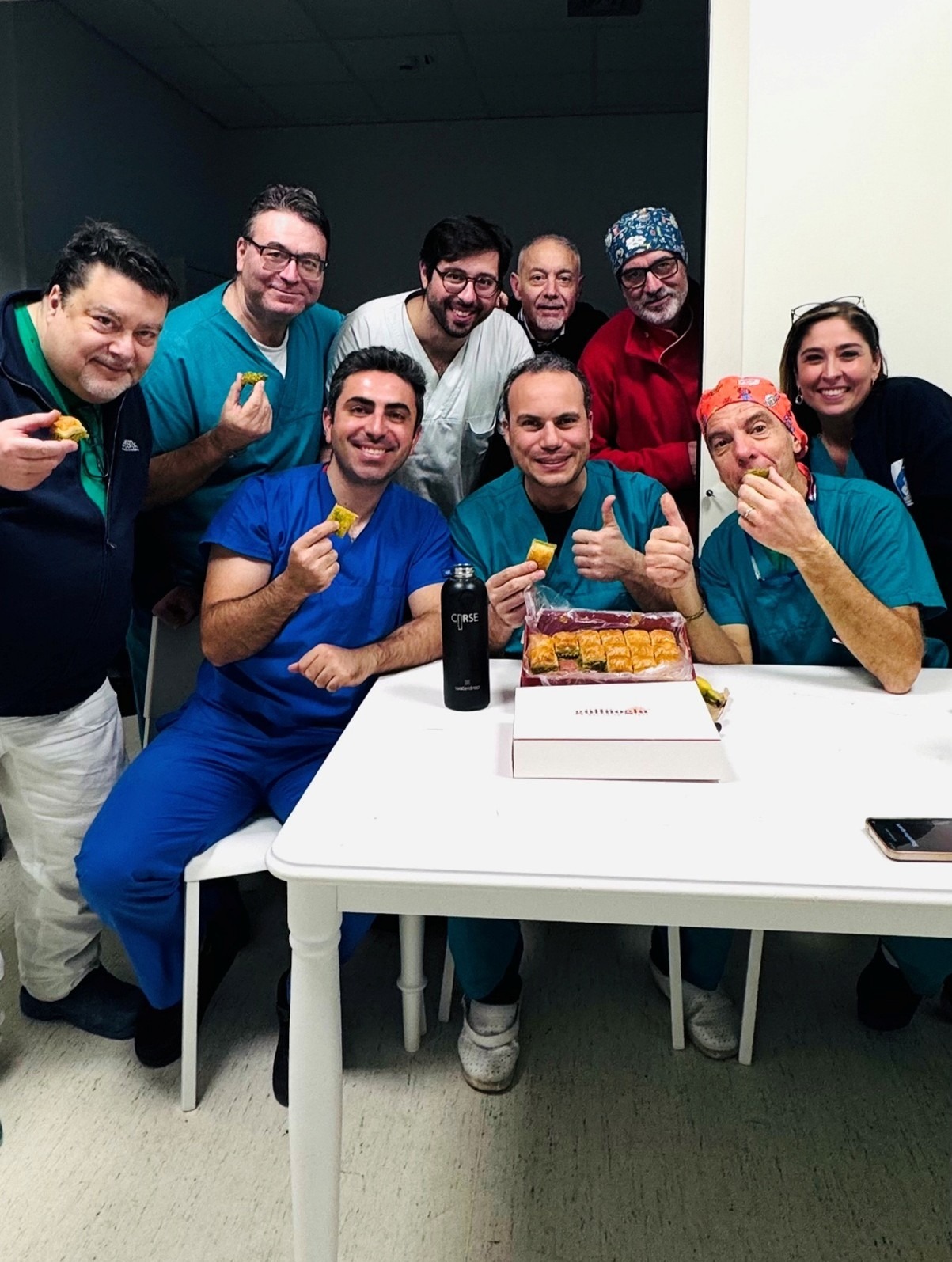
Sharing Turkish delight (baklava) with my Italian colleagues—a small cultural exchange and a memorable moment.
Personal Experience in Naples
Beyond the clinical environment, living in Naples for a month was a culturally rich and memorable experience. The city’s vibrant atmosphere, warm hospitality, and deep historical character made my stay highly enjoyable. My colleagues kindly included me in social activities, offered local recommendations, and helped me experience the cultural identity of Naples. I also had the opportunity to attend a football match and explore the city’s famous cuisine and traditions, making the fellowship meaningful both inside and outside the hospital.
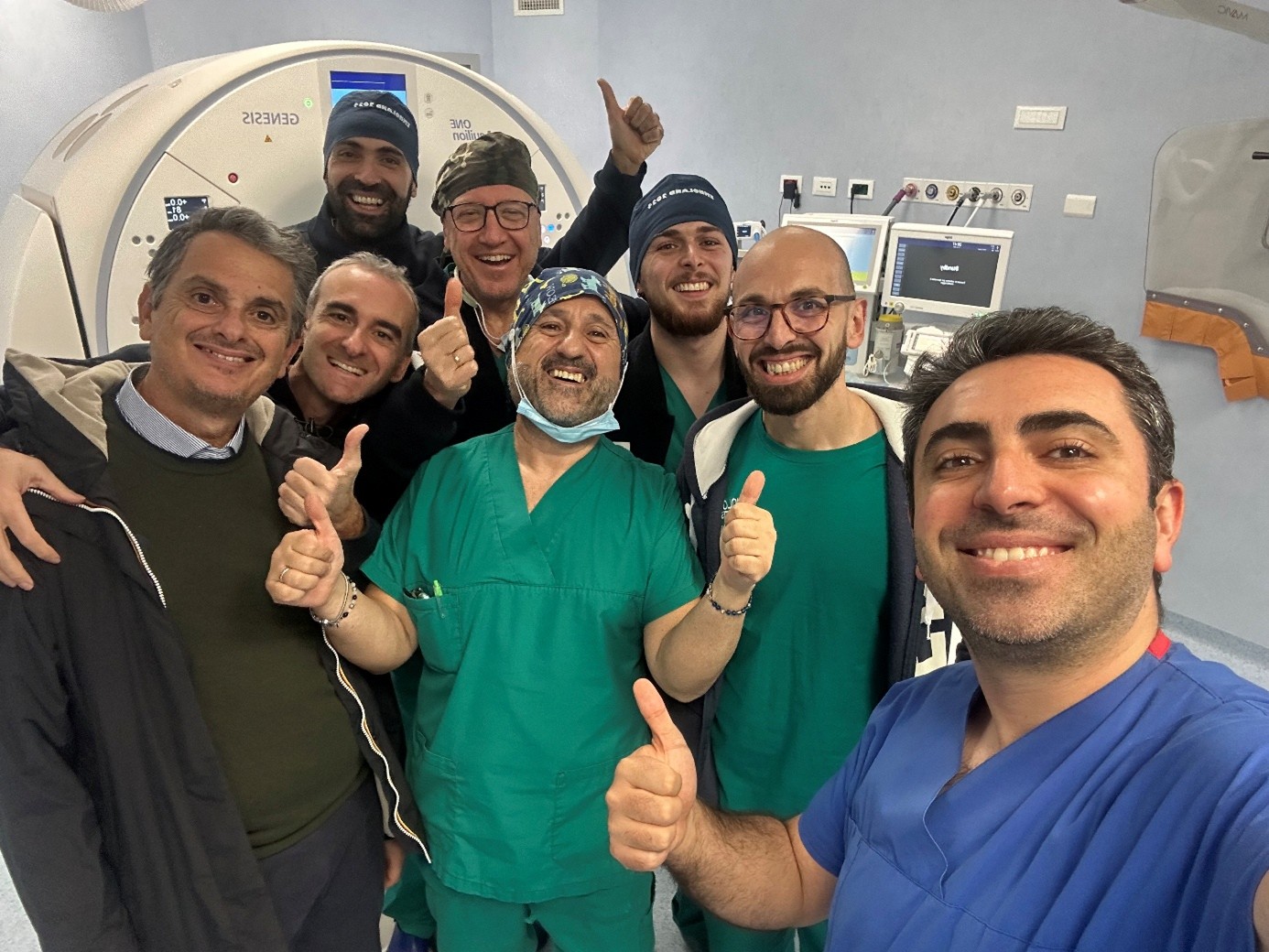
Last day of the fellowship, after the final case, with the IR team—an unforgettable end to an incredible month.
Conclusion
This fellowship has been a decisive milestone in my interventional radiology career. I return to Istanbul with:
- Improved CEUS and transradial procedural skills
- Advanced decision-making in catheter–wire selection and embolic material use
- Broader procedural experience across multiple subfields
- Strengthened technical confidence and improved procedural planning
- Enhanced understanding of complex peripheral, hepatobiliary, and oncologic interventions
- Valuable professional relationships and lasting personal friendships
I am sincerely grateful to CIRSE, Prof. Raffaella Niola, and Dr. Francesco Giurazza for their continuous support and mentorship throughout my stay.
My special thanks go to my colleagues and friends Dr. Felice D’Antuono, Dr. Francesco Pane, Dr. Claudio Carrubba, Dr. Antonio Borzelli, Dr. Fabio Corvino, Dr. Gianluca Cangiano, and Dr. Alessandro Borriello, whose support, teaching, and friendship greatly enriched my experience. I am also deeply grateful to all IR nurses, technicians, radiographers, and administrative staff who welcomed me as part of the Cardarelli family.