


CIRSE Fellowship report: Lemuel Marquez Narcise
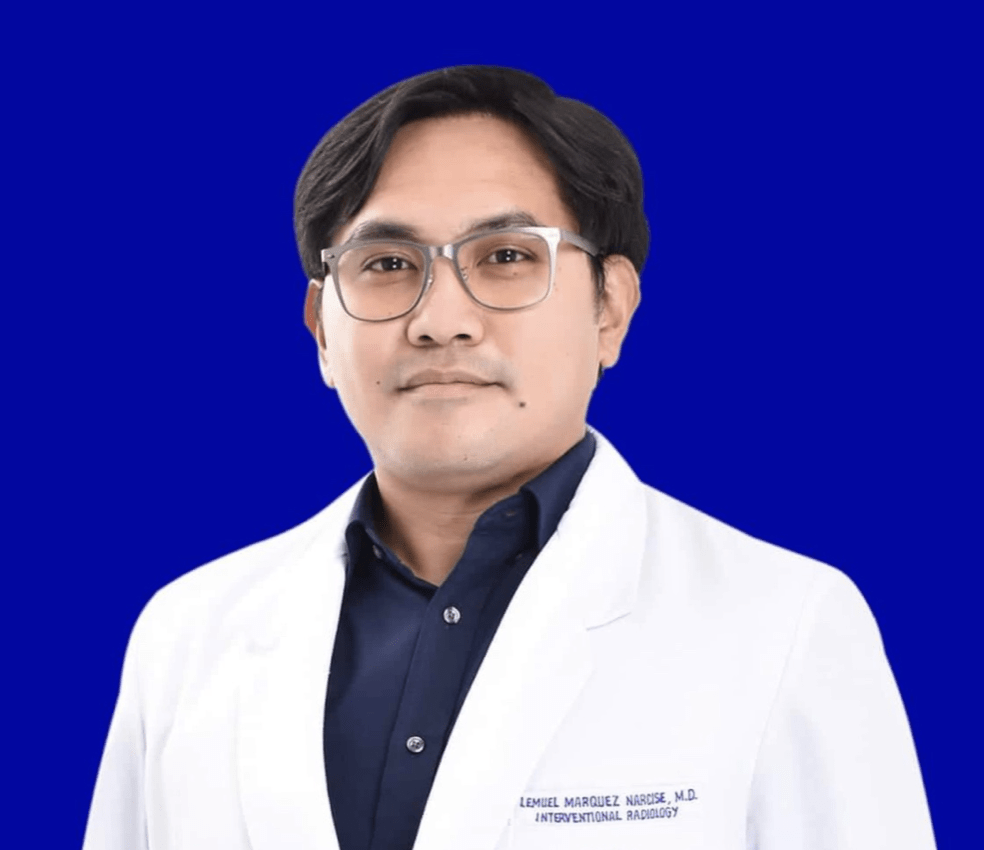
I am Dr. Lemuel Marquez Narcise, an Interventional Radiologist based in Ilocos Norte, Philippines.
Through the CIRSE Fellowship Grant, I had the privilege of completing a one-month training in interventional radiology (IR) at the Hôpitaux Universitaires de Genève (HUG) – Switzerland’s largest hospital, with approximately 2,100 beds. This formative experience significantly broadened my technical expertise, clinical exposure, and understanding of IR workflow in a major European academic center.
I am deeply grateful to my training supervisor, Dr. Alexis Ricoeur, Head of the Abdominal and Interventional Radiology Unit at HUG, for his mentorship and guidance. HUG offers an extensive range of diagnostic and interventional services supported by state-of-the-art imaging infrastructure, including dedicated CT, ultrasound, and angiography suites exclusively for IR.
The division itself is composed of interventional radiologists who are also trained in diagnostic radiology, allowing them to integrate clinical decision-making with both imaging interpretation and interventional expertise. This structure, combined with a variety of cases each day, created an ideal learning environment for advanced hands-on training.
Highlights of the fellowship
Several aspects stood out as highlights of my stay. First was the remarkable diversity of procedures performed daily, ranging from vascular and non-vascular interventions to complex hepatobiliary, oncologic, transplant-related, and pediatric cases. Memorable procedures included emergency coiling of a gastroduodenal artery (GDA) pseudoaneurysm, pediatric portosystemic shunt embolization, selective internal radiation therapy (SIRT) using Yttrium-90, portal vein embolization, pancreatic islet cell infusion for type 1 diabetes, percutaneous transhepatic laser lithotripsy, and venous leak embolization for venogenic erectile dysfunction. Witnessing how calmly and systematically the IR team managed both routine and emergent situations underscored their depth of experience and the strength of their workflow.
Another highlight was the emphasis on multidisciplinary collaboration. I observed interventional radiologists, surgeons, oncologists, nuclear medicine physicians, and other specialists routinely discussing complex cases. These discussions were academically enriching and demonstrated how shared decision-making contributes to optimal patient care.
What impressed me most was the independence and precision with which IR specialists performed procedures. Their meticulous planning, especially for complex embolization, thermoablation, and transplant-related interventions, reinforced the importance of understanding anatomy, anticipating complications, and mastering equipment use.
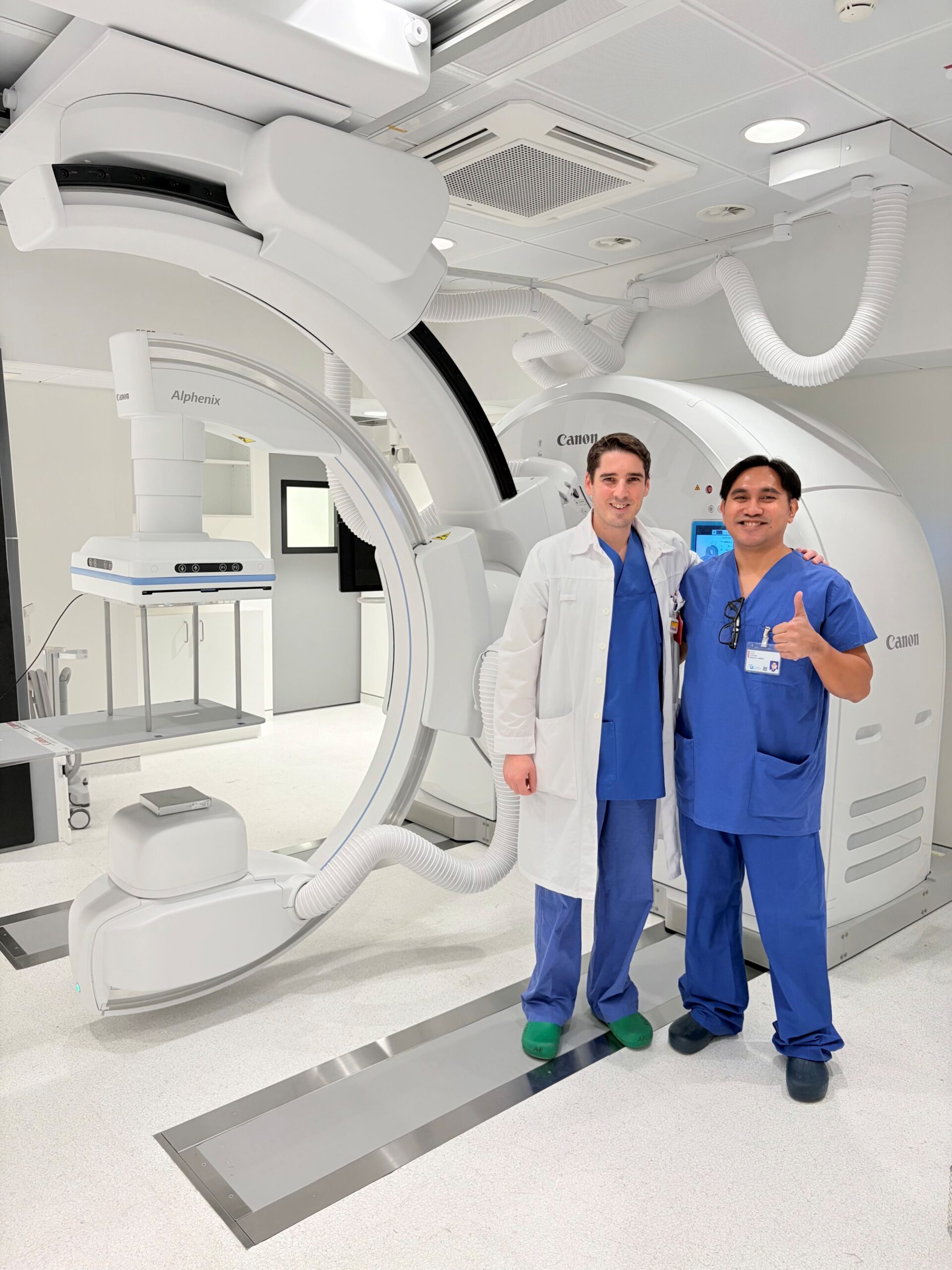
With my mentor Dr. Alexis Ricoeur, Head of the Abdominal and Interventional Radiology Unit at HUG
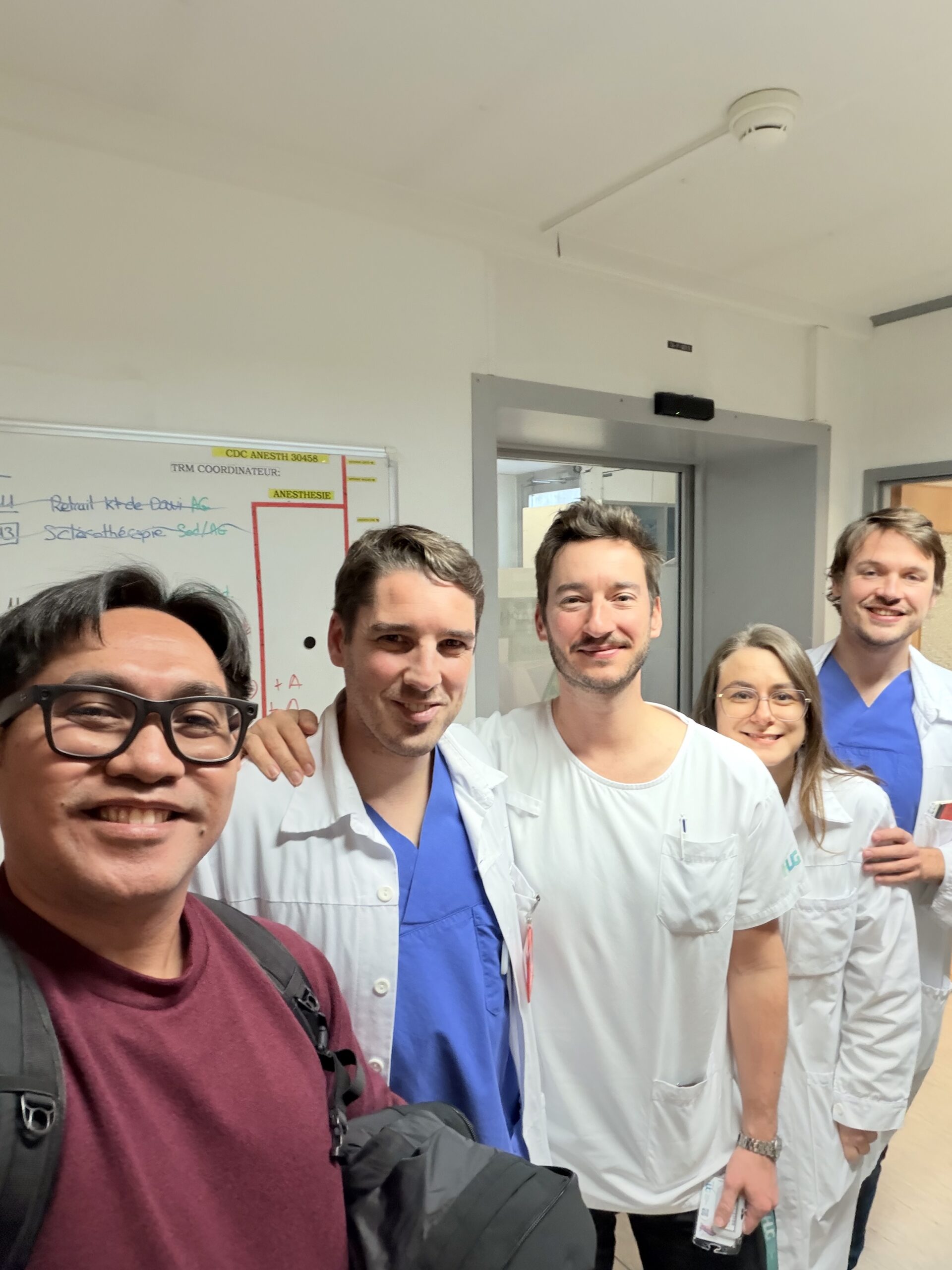
With Drs. Alexis Ricoeur, Jonathan Kohler, Ilinca Constatinescu, and Julian Grossmann
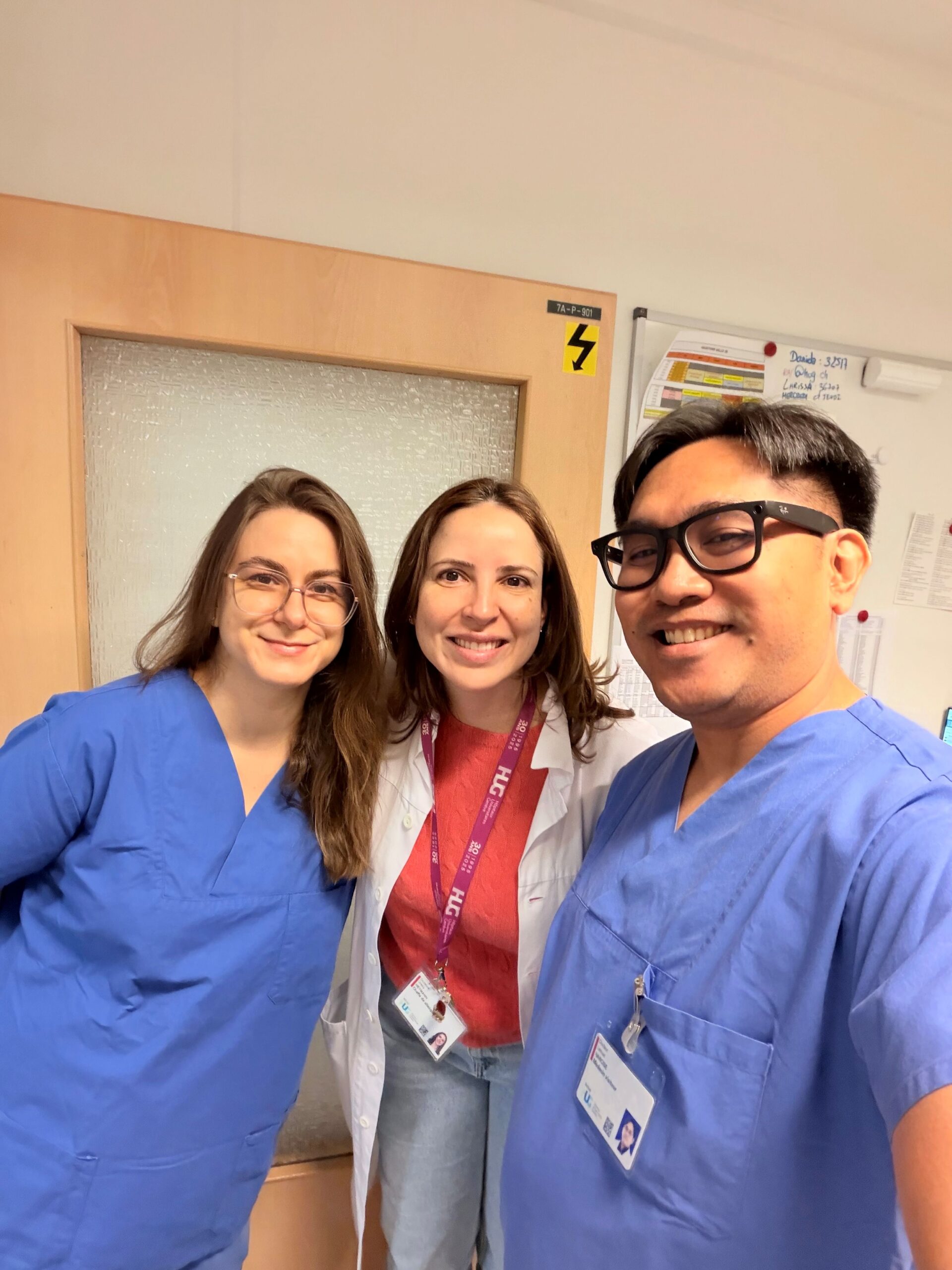
With the IR women of HUG, Drs. Ilinca Constatinescu and Greicy Heymann
Mentors and fellowship focus
I learned from outstanding interventional radiologists throughout my rotation, from the senior IR consultants to their young IR fellows, including Drs. Alexis Ricoeur, Matthieu Papillard, Christophe Constantin, Benjamin Plateau, Greicy Heymann, Ilinca Constantinescu, Jonathan Kohler, Julian Grossmann, and Elliott Brunner. They collectively focused on introducing me to new procedures while refining my technical understanding and demonstrating the operational efficiency of HUG’s IR unit.
My learning goals centered on understanding different procedural setups, exploring techniques for performing interventions independently, and gaining exposure to procedures not commonly performed in my home institution. These goals were well met through daily involvement in cases, from pre-procedure planning to post-procedure imaging assessment.
Procedures assisted and learning outcomes
Throughout the month, I assisted in or observed a wide range of interventions. These included:
-
- Vascular Procedures: AV dialysis fistula angioplasty, renal artery angioplasty for fibromuscular dysplasia via radial access, hepatic artery angioplasty in transplant patients, and IVC filter insertions and retrievals.
- Hepatobiliary and Oncologic Interventions: SIRT radioembolization sessions, portal vein embolization, multiple microwave thermoablation procedures under CT and ultrasound guidance, embolization of hepatic adenoma, embolization of segmental hepatic pseudoaneurysm, and several ultrasound-guided liver biopsies with track embolization, pancreatic islet cell infusion, PTBD insertions, bilioma drainage, and cholecystostomy tube placement.
- Men’s and Women’s Health Interventions: Prostatic artery embolization with CBCT guidance, uterine/fertility-related embolization procedures including glue embolization of trophoblastic remnants, and venous leak embolization for venogenic erectile dysfunction
- Pediatric IR Procedures: Portosystemic shunt embolization in a pediatric patient, angioplasty of cavo-caval anastomosis in an 18-month-old post-transplant patient, and various embolization and angioplasty procedures in older children with altered hepatobiliary anatomy.
This wide exposure allowed me to appreciate not only technical nuances, such as catheter selection, microcatheter manipulation, pressure injector settings, and embolic material preparation, but also procedural decision-making in both elective and emergency situations.
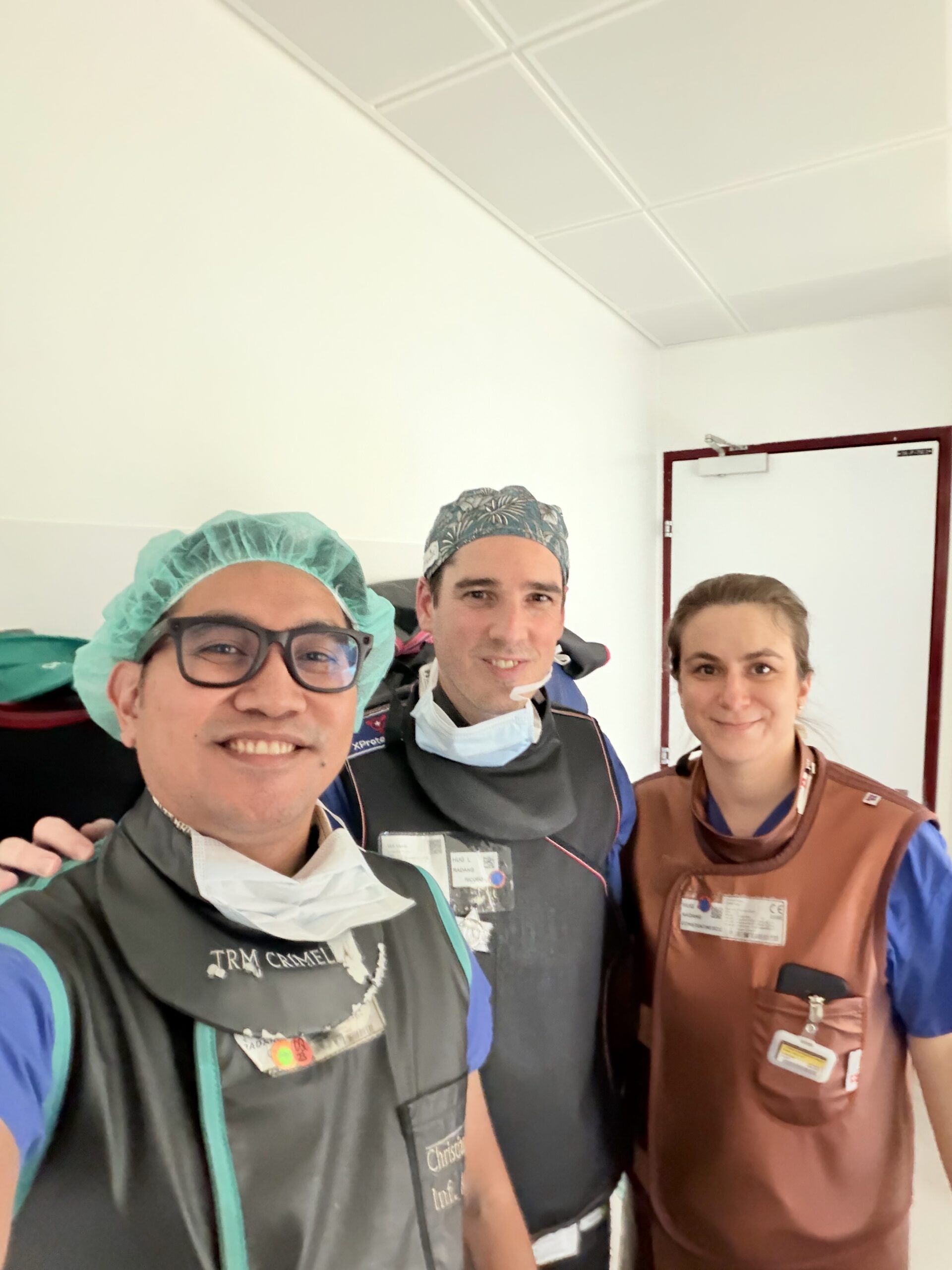
Hepatobiliary interventions with Drs. Alexis Ricoeur and Ilinca Constantinescu
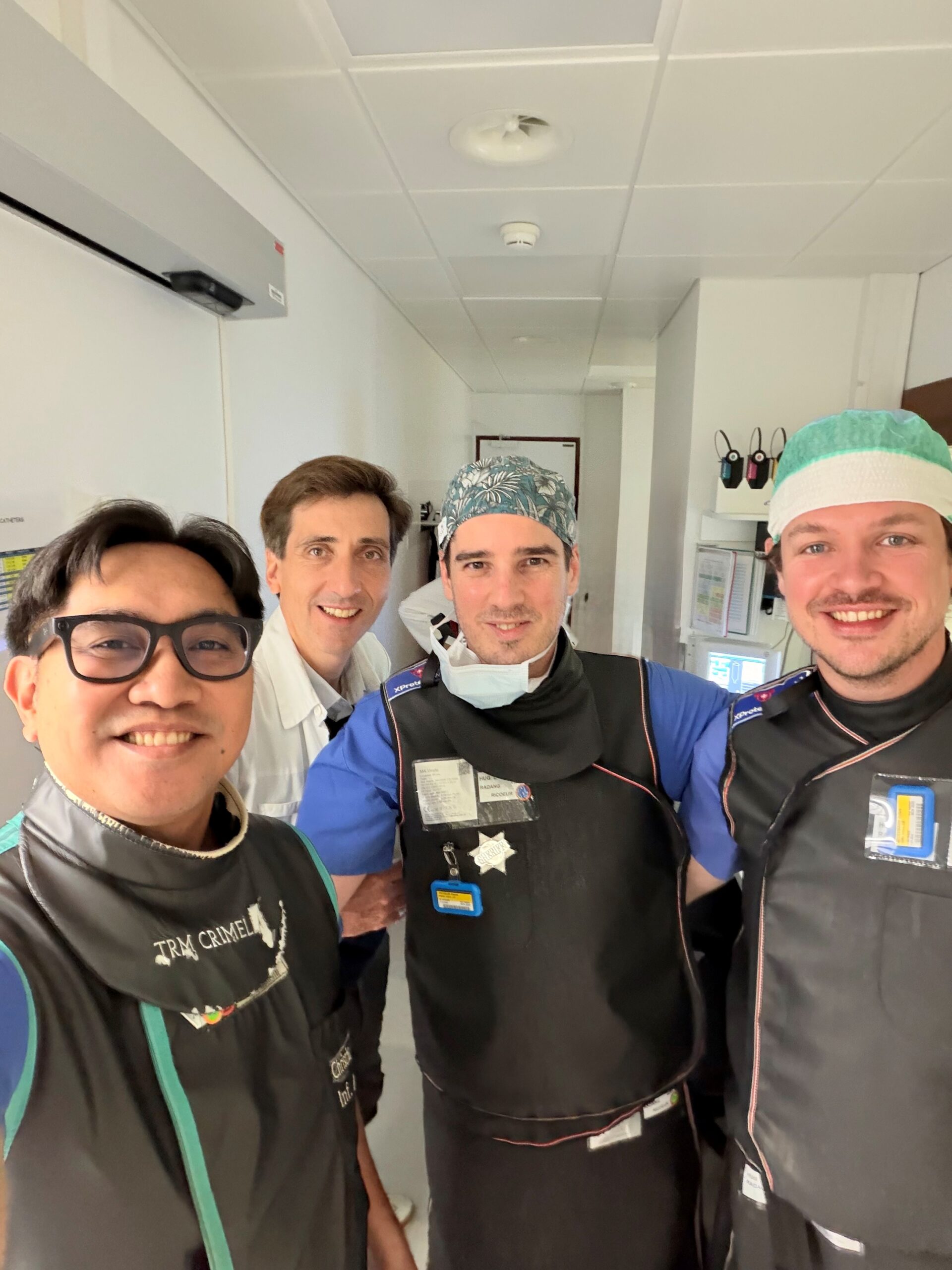
Pediatric and vascular procedures with Drs. Matthieu Papillard, Alexis Ricoeur, and Julian Grossmann
Differences between HUG and my home institution
Key differences were evident during my stay. HUG possesses significantly more advanced imaging infrastructure. The availability of dedicated CT scan, ultrasound machine, and an IR-specific CathLab allowed for efficient workflow with minimal downtime between cases. Furthermore, HUG has a wider range of catheters, guidewires, embolic materials, and ablation devices readily available. This allowed the IR team to tailor procedures very precisely based on pathology and anatomy. The institutional culture also emphasized multidisciplinary decision-making and protocolized periprocedural workflows, which optimized patient safety and throughput.
Clinical practice and periprocedural care
My learning experience extended beyond purely technical aspects. I immersed myself in pre-procedure evaluations, post-procedural monitoring discussions, and clinical decision-making, observing how IRs integrate imaging findings with patient symptoms and laboratory values. Periprocedural care, including antibiotic use, sedation protocols, anticoagulation management, and post-procedure instructions, was consistently systematic and well-coordinated.
Application to my personal practice
I return to my center with several new insights and techniques that I am excited to integrate into my practice. These include:
- Improved workflow and setup strategies inspired by HUG Interventional Unit’s systematic approach.
- Enhanced understanding of hepatobiliary intervention techniques.
- Expanded familiarity with thermoablation procedures under CT and ultrasound
- Refined angioplasty approaches for AV fistulas, transplant-related stenoses, and renal artery stenosis.
- A stronger interest in developing pediatric intervention and men’s and women’s health interventions locally.
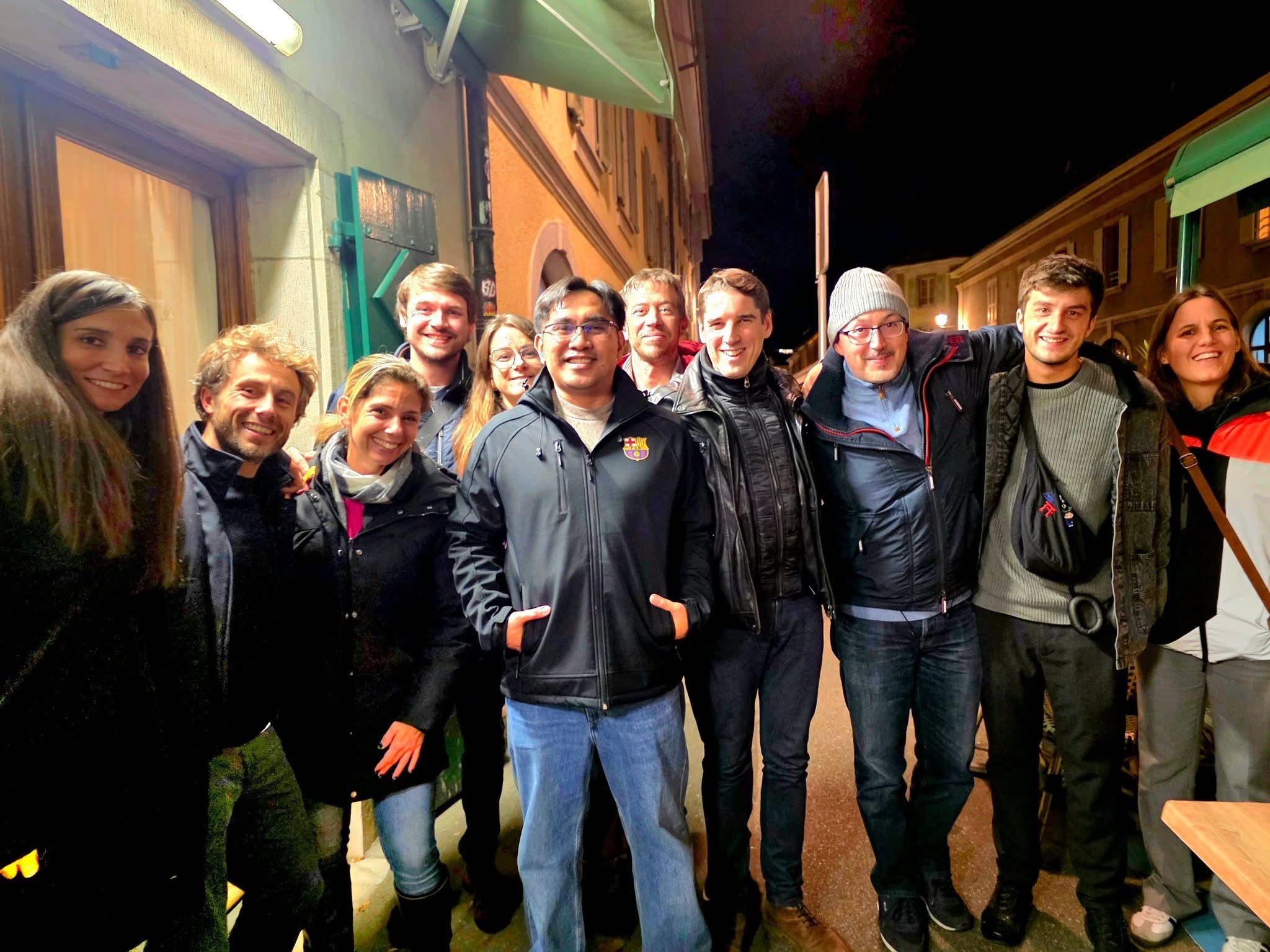
Fondue night with the doctors and staff of HUG IR Unit
Overall Experience and Conclusion
My expectations for the CIRSE Fellowship Grant Program were fully met. The month at HUG enriched my technical skills, broadened my exposure to advanced IR procedures, and strengthened my understanding of multidisciplinary IR practice in a high-volume European center.
This experience has profoundly influenced my perspective on how IR services can be structured and optimized to improve patient care. It will serve as a lasting foundation for advancing interventional radiology in my home institution and for my continued professional growth.