


CIRSE Fellowship report: Jakub Franke
My name is Jakub Franke, and I am a physician at the Medical University of Warsaw, Poland. It is one of the largest hospitals in the country, providing interventional radiology (IR) services for a wide population of oncologic and non-oncologic patients. We continuously strive to develop and improve our practice, and driven by this idea, I decided to apply for the CIRSE Fellowship Grant Programme. This report summarizes my fellowship at Institute Gustave Roussy in Villejuif, a renowned cancer centre with the IR service led by Dr. Frédéric Deschamps. My fellowship was made possible through the aforementioned programme, and I truly believe that it represents a pivotal stage in my personal and professional development.
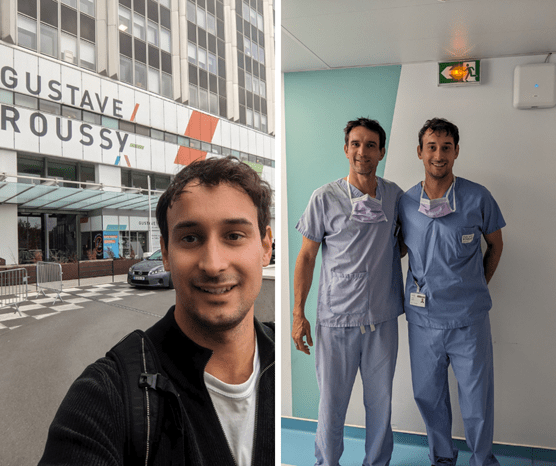
The first day at Gustave Roussy; together with Dr. Deschamps
The team led by Dr. Deschamps performs a wide variety of IR procedures in oncologic patients. Their IR service is an excellent example of the crucial role that interventional oncology plays in comprehensive cancer care. These procedures range from diagnostic biopsies, through minimally invasive treatments using various ablation techniques, to pain management, palliative interventions, and support for other specialties through embolizations or drainages.
The main goals of this fellowship were clearly defined:
- To deepen my experience in cryoablation procedures and learn more about the subtleties of indications, techniques, and limitations of this ablative modality, as well as observe intraprocedural tips and tricks to provide the best possible treatment.
- To gain exposure to musculoskeletal interventions that are not routinely performed at my home institution, such as ablations and osteosynthesis.
Moreover, I wanted to observe how the IR team manages the outpatient clinic, how it integrates into the multidisciplinary cancer care workflow, and what benefits it provides to patients. I was also interested in experiencing a different angiography suite setup and practical solutions that could enhance day-to-day practice at my institution.
Throughout my stay, I had the privilege of observing and assisting in a wide spectrum of both simple and advanced procedures, reflecting the capabilities and innovative spirit of Gustave Roussy. The days started early, and procedures were scheduled until late afternoon, providing ample opportunities for learning. Every case brought something new, showcasing different aspects of practice and preprocedural workup, and highlighting the importance of attention to detail—even in the simplest procedures. Moreover, the fellowship gave me the opportunity to participate in many complex procedures involving various treatment modalities, such as challenging cases of cryoablation of multiple lung metastases, large desmoid tumours, osteosynthesis within the pelvis, and combined ablation and cementoplasty performed under CT guidance for osseous metastatic disease. These experiences greatly enriched my technical understanding of the procedures—from patient selection, planning, and procedural safety, to efficacy assessment, postprocedural care, and follow-up.
Another exciting aspect of the fellowship at Gustave Roussy was the opportunity to observe several cases of robot-assisted ablation. While I had previously seen various navigation systems demonstrated at conferences and workshops, it was only through real clinical cases that I could truly appreciate their potential—particularly how they support physicians during technically demanding procedures, help reduce radiation exposure for patients, and reveal certain limitations and areas for further improvement.
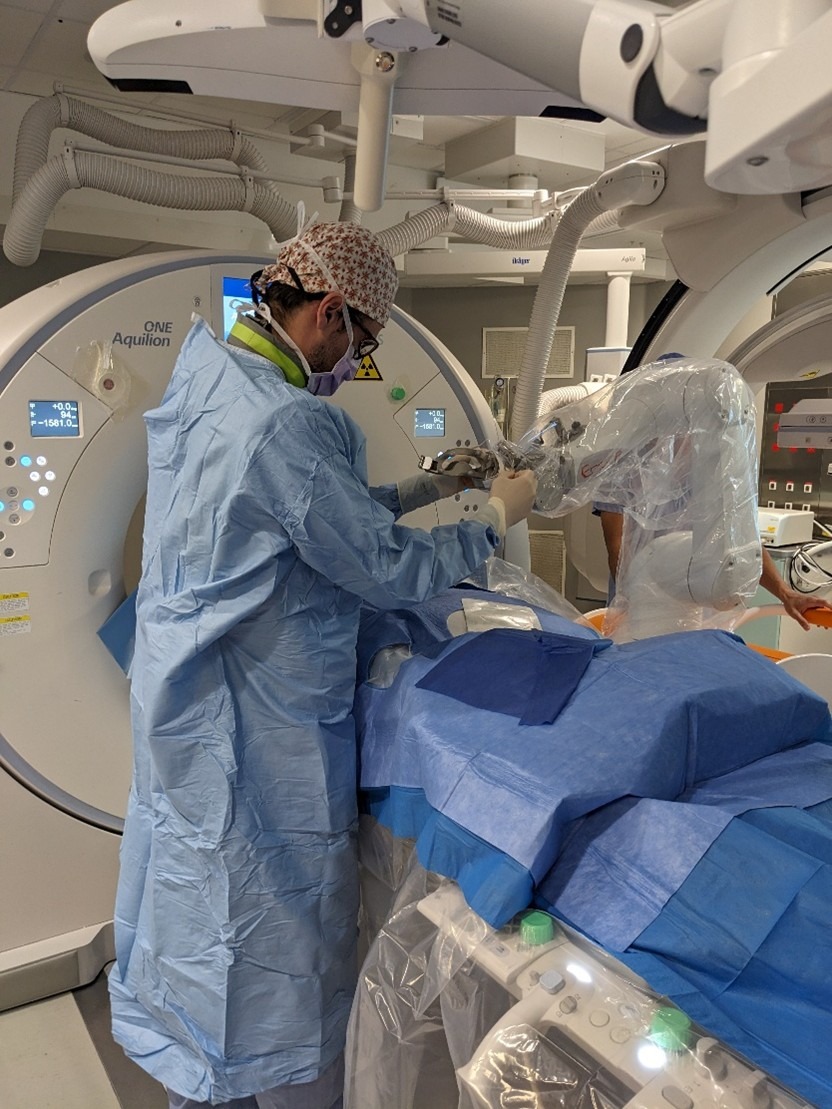
During the robot-assisted case of liver tumour ablation
It is worth emphasizing that Dr. Deschamps and his team at Gustave Roussy remain at the forefront of adopting electrochemotherapy in oncologic patients. This novel approach uses high-intensity electrical pulses to induce reversible electroporation of tumour cell membranes. The transient increase in membrane permeability, combined with the administration of a chemotherapeutic agent, results in a much higher intracellular drug concentration. During my stay, I had the opportunity to observe several cases of patients with challenging metastatic epidural spinal involvement treated with electrochemotherapy—from patient selection and treatment planning to procedure execution and follow-up. Exposure to such pioneering methods has greatly broadened my understanding of the potential within interventional oncology and the scope of emerging treatment modalities.
A particularly inspiring aspect of the hospital’s operations was the integration of most diagnostic biopsies into the outpatient setting. This has been made possible thanks to excellent organization, robust infrastructure, and streamlined patient flow. The outpatient model prioritizes patient comfort, minimizes disruption to daily life, and allows for more efficient use of resources. It is certainly an approach I hope to advocate for and implement upon returning to my home institution.
The fellowship experience not only exceeded my expectations but also represented an important stage in my professional development. Learning directly from Dr. Deschamps and his exceptional team provided a unique opportunity to observe interventional radiology practice at the highest level. Exposure to innovative approaches, novel ablative techniques, and well-structured clinical workflow enriched my skills and broadened my perspective in ways that will have a lasting impact on my future practice.
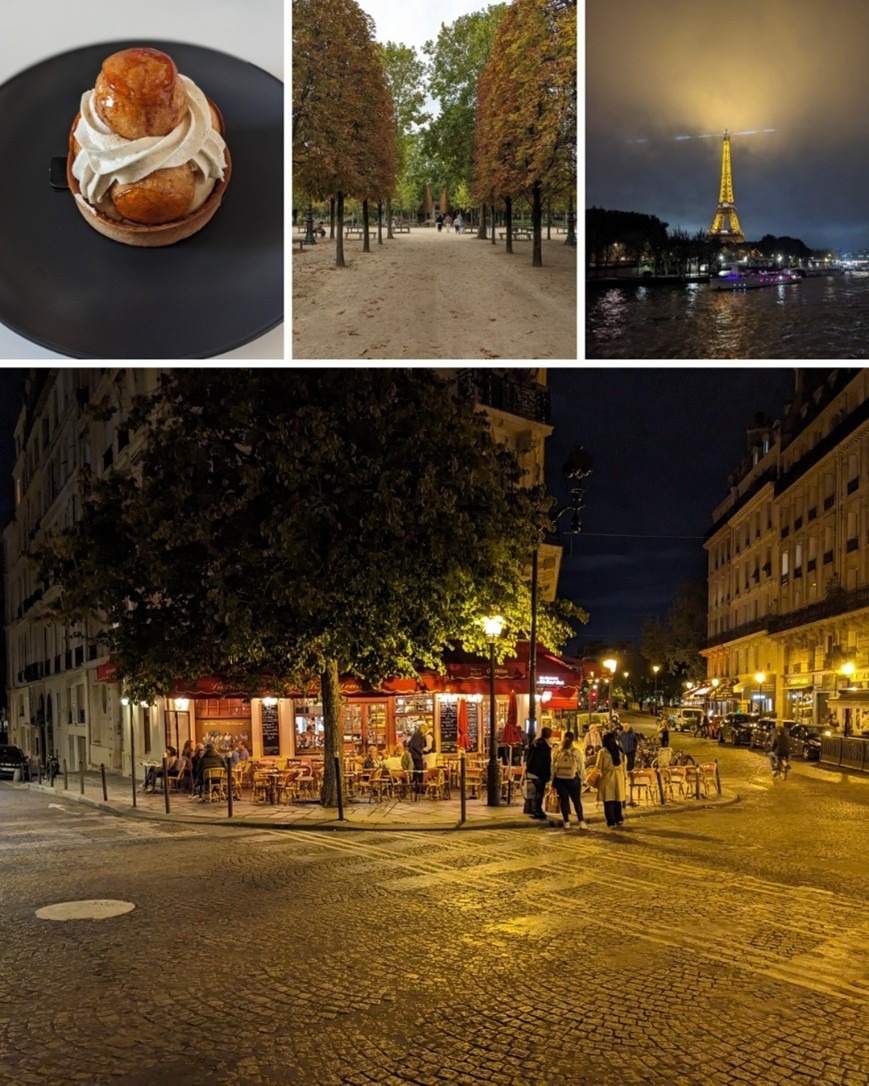
The professional dimension of my fellowship was complemented by the cultural richness of Paris itself. Weekends spent exploring world-class museums, wandering through historic neighbourhoods, and enjoying the unique atmosphere of Parisian bistros offered a rewarding counterbalance to the intensity of clinical training.
I would like to express my sincere gratitude to Dr. Frédéric Deschamps and the entire team of physicians, including Prof. Tselikas, Dr. Bonnet, Dr. Beunon, and Dr. Janvier, as well as the many other doctors, technicians, and nurses at Gustave Roussy for their time, guidance, generosity, and willingness to share knowledge and involve me in various aspects of the department’s daily work. Their openness and commitment to education made me feel truly welcome throughout the fellowship.
Finally, I wish to extend my heartfelt thanks to CIRSE for making this extraordinary opportunity possible—to observe and learn at one of Europe’s foremost cancer centres. I am confident that the invaluable experience gained during this fellowship will have a lasting impact on my clinical practice and on my understanding of the pivotal role interventional radiology plays in patient care. I wholeheartedly recommend the CIRSE Fellowship Grant Programme to all members of the IR community as an exceptional opportunity to enhance both knowledge and technical expertise.