


CIRSE Fellowship report: Ioanna Thanou
As a trainee in interventional radiology at the Naval Hospital of Athens, I had long aspired to gain experience in a purely oncological setting, where all interventional and diagnostic practices are focused exclusively on cancer patients. The CIRSE Fellowship Grant gave me the unique opportunity to immerse myself in a world-class cancer centre: the Royal Marsden Hospital in London. With clear goals in mind and high expectations, I joined the Interventional Radiology department under the mentorship of Prof. Nicos Fotiadis.
Experience at the Royal Marsden
From the very first day, I was warmly welcomed by the entire team, not just the interventional radiologists but also the radiographers, nurses, administrative staff, and diagnostic colleagues. It was immediately evident that this was a highly integrated and collaborative environment. I was deeply impressed by how seamless the coordination was among disciplines and how every detail in the workflow served a singular purpose: optimal oncologic patient care.
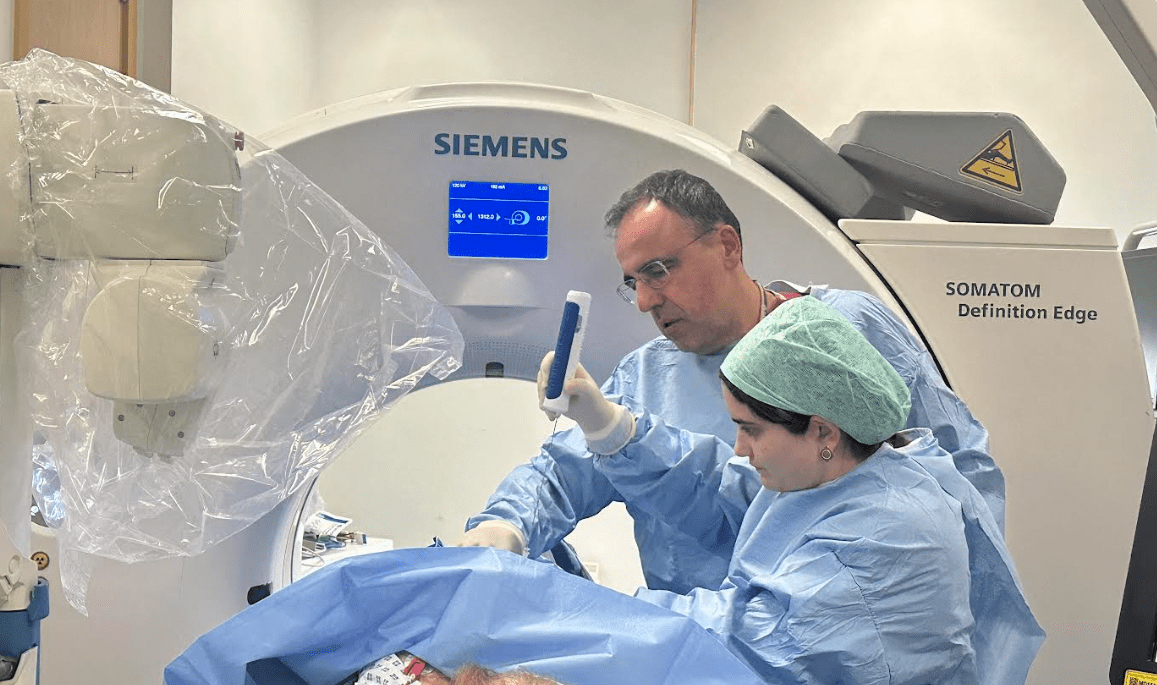
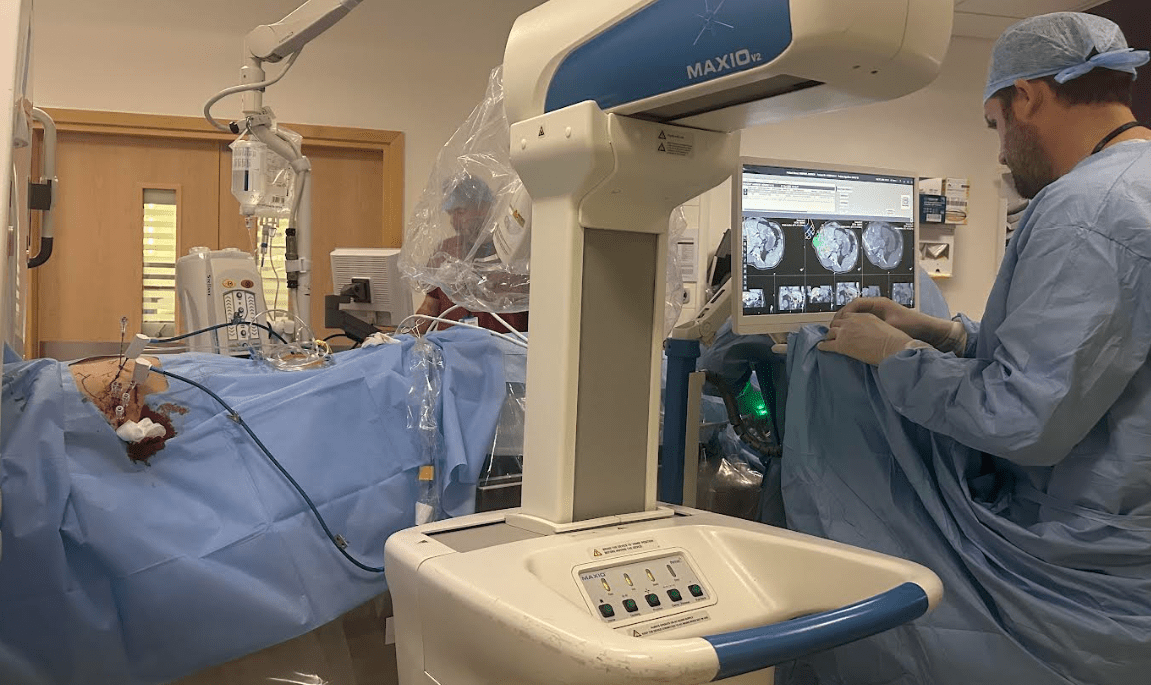
My day-to-day activities included observing and assisting in complex procedures, with a particular focus on CT-guided ablations using multiple needles. A clear highlight of my fellowship was my exposure to the use of robotic assistance with the Maxio™ system, a tool I had not previously encountered in clinical practice. Witnessing the precision and efficiency it brought to needle placement, particularly in complex or deep-seated lesions, was truly eye-opening. It shifted my understanding of what is technically possible in ablation.
The days in the department were not only educational but genuinely enjoyable, especially thanks to the collaboration with the registrars, exceptional clinicians, and truly supportive colleagues like Dr. Peter Macanena and Dr. Karthik Rajendran, as well as diagnostic colleagues Dr. Michel Alhilani and Dr. Olivia Goldberg, whose guidance and teamwork made every case a shared learning experience.
The Multidisciplinary Team (MDT) meetings were another formative part of my experience. These were not passive observational meetings; they were dynamic, detail-oriented discussions among interventional radiologists, oncologists, surgeons, and diagnostic radiologists. They revealed to me the full extent of decision-making in modern oncologic care and emphasized how critical a unified diagnostic and interventional strategy is for patient outcomes.
A particular highlight of my fellowship was the opportunity to work closely with Dr. Edward Johnston, whose inspiring approach to research and profound understanding of oncologic intervention offered me a new perspective on the depth and breadth of scientific inquiry possible within our field.
Being exposed to the full spectrum of interventional oncology — from image-guided biopsies and drainages to embolization, chemoembolization, and cryoablation — offered a comprehensive view of how a high-level IR department functions in an oncology-specific setting. Observing the structured workflow, consistent patient follow-up, and ongoing communication with referring teams helped me understand what true clinical integration looks like.
Learning Outcomes
This fellowship expanded my technical skill set and, more importantly, reshaped my clinical mindset. I deepened my understanding of ablation techniques, learned practical tips and planning strategies from seasoned interventionalists, and witnessed firsthand how cutting-edge technology can be seamlessly integrated into a department’s daily routine.
Beyond procedures, I gained invaluable insight into departmental structure, communication, and case prioritization. The fluid collaboration between interventional and diagnostic radiologists stood out. There were no rigid silos; everyone contributed meaningfully to the patient pathway. I came to appreciate how this level of communication enhances not only workflow, but also patient safety, outcomes, and satisfaction.
A particularly meaningful aspect of my experience was observing how closely research is embedded in daily practice. Seeing procedures that were part of active clinical trials and learning the rationale behind case selection, data collection, and audit processes helped me understand why we do what we do and how evidence-based practice is not just theory, but daily reality in a leading oncologic institution.
Reflections and Future Plans
Τhis fellowship reignited my passion for oncologic interventional radiology and confirmed my decision to pursue it further. It has inspired me to delve deeper into oncologic imaging, to align with my goal of achieving subspecialisation in interventional radiology, and to translate modern workflows back into the Greek clinical context.
Following the completion of the official fellowship period, I was fortunate to be offered the opportunity to continue my training at the Royal Marsden, where I remain actively involved in the department. This has allowed me to further consolidate the skills and insights gained during the initial weeks and continue expanding my experience in a structured oncological environment.
Of course, working in an oncological hospital comes with its own emotional weight. Being surrounded daily by patients battling serious illnesses can be psychologically demanding. But through constant exposure to these patients — people who face their disease with dignity, courage, and striking clarity — my mindset began to shift. Where I once saw “cases,” I started to see individuals who truly fight for their life. And in that realisation, there is hope. This human dimension of interventional oncology taught me that medicine is not only about precision, but also about presence and that optimism can often be found in the most unexpected places.
My long-term objective is clear: return to Greece equipped not only with technical expertise, but with a refined perspective on how an interventional radiology service can be optimally integrated within the broader oncologic care pathway. I aim to contribute to the development of structured MDT participation, improved imaging-guided treatment planning, and potentially even the future introduction of advanced technologies like robotic guidance into clinical practice.
Social and Personal Experience
Outside the hospital setting, London proved to be an extraordinary city. During my time there, I had the opportunity to explore world-class museums, attend theatre performances, enjoy art exhibitions, taste international cuisines and even experience the energy of a live football match. The city offers an unparalleled blend of culture, history, and modern life, with something for every taste and mood. Living in such a dynamic environment enriched my experience in ways that extended far beyond medicine. It offered balance, perspective, and a renewed sense of curiosity, all of which complemented and enhanced my professional journey.
Acknowledgements
I would like to extend my deepest thanks to Prof. Nicos Fotiadis at the Royal Marsden, whose guidance, openness, and collegiality shaped every part of this experience. Special thanks to Prof. Dimitris Filippiadis, whose encouragement and example first led me to pursue interventional radiology, and to Dr. Grigorios Tsoukalos and Dr. Orestis Kavvadas, who supported my initial steps in the field back at the Naval Hospital of Athens.
To CIRSE, thank you for making this transformative experience possible. I am truly grateful for the opportunity and look forward to applying what I have learned in the years to come.