


CIRSE Fellowship report: Clarissa Hosse
My name is Clarissa Hosse, and I am a board-certified radiologist at Charité – Universitätsmedizin Berlin, where I also completed my residency within Charité Virchow Klinikum. Since board certification in December 2024, I have worked primarily in interventional radiology (IR), including CT-guided biopsies and ablations (HDR-Brachytherapy), port catheter placements, bleeding management, tumor therapies (radioembolization, TACE), and TIPS procedures.
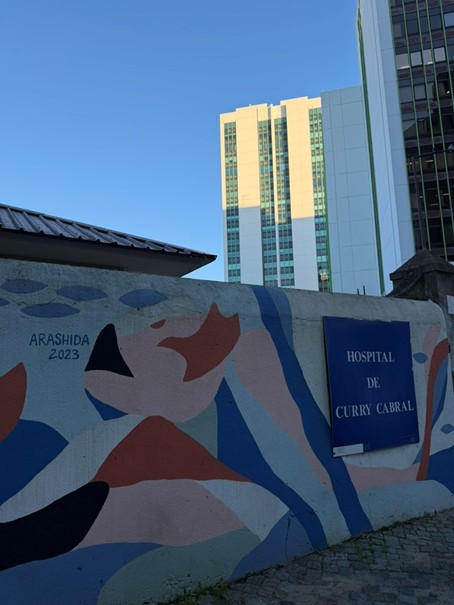
Supported by the CIRSE Fellowship Grant Programme, I completed a one-month fellowship in IR in Lisbon, Portugal (Curry Cabral Hospital). My aims were to broaden procedural exposure, observe how a different organisational model shapes daily practice and training, and take home ideas that are realistic for implementation in our home department.
Why Lisbon and why this host centre?
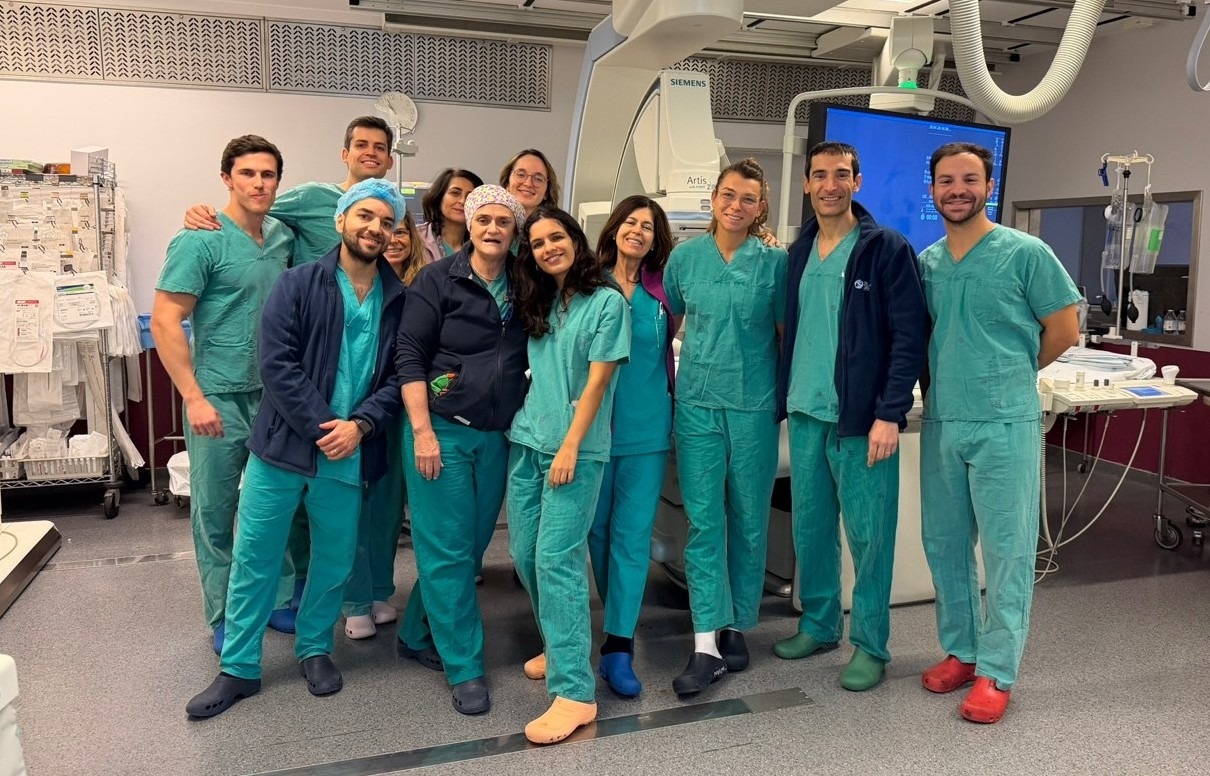
I chose Hospital Curry Cabral because it is regarded as an excellent training site and because its focus on hepatobiliary interventions and tumor therapies aligns closely with my clinical interests. From the first day, I felt welcomed by the team, and their openness to teaching created an ideal environment for a month of learning.
Department organisation and first impressions
During my month in Lisbon, there happened to be a particularly strong resident presence on most days, alongside variable specialist coverage across the week and a deliberate approach to scheduling complex cases on days with more senior support.
At the table, procedures were typically performed with a minimum of two physicians present. This enabled continuous teaching and shared decision-making. Nursing staff focused mainly on patient preparation and post-procedural care rather than assisting at the sterile field, while radiographers/technologists provided strong technical support, including operating the table and system components that are often handled by physicians at my home institution. Responsibilities were clearly communicated before each case, and the atmosphere remained collegial and focused throughout the day.
One day, Dr. Tiago Bilhim took me with him to a private hospital to observe the workflow there, which was very interesting.
Daily workflow
The daily workflow benefited from a fixed anaesthesia schedule with dedicated anaesthesia days. On Wednesdays and Fridays, an anaesthesiologist was present and could provide sedation when requested. This improved planning and allowed ablations or more complex interventions to be scheduled confidently on those days.
The daily rhythm was well structured: Procedures began at 8:30 am until 3 or 4 pm, and consultations were typically handled in the afternoon, protecting a stable daytime window for scheduled procedures and teaching. During my stay, I observed some emergencies; there were no in-house night shifts within the IR routine, but some of the specialists are on call. The overall impression was a service designed to preserve daytime capacity for planned interventions, complex cases, and education, which in turn created room for reflection and feedback after procedures.
Imaging strategy and procedural techniques
Clinically, I was particularly impressed by the confident ultrasound-guided approach, especially for biopsies and microwave ablations (MWA). In scenarios where CT guidance is often my default at home, the Lisbon team used ultrasound efficiently and safely, supporting flexibility and streamlined workflow. This prompted me to reflect more systematically on when CT truly adds value versus when ultrasound can achieve the same clinical goal with fewer logistical constraints.
The technical environment included advanced integration of imaging, including CT integrated into the angiography setting. I also observed a different approach to TACE, with device-supported planning and tracking workflows that differed from our local practice. Beyond equipment, there were variations in access routines and frequent use of embolisation materials that are not our standard choice in Berlin. Rather than “better versus worse,” these differences underlined that high-quality IR can be delivered through different, locally optimised approaches, and that available resources and departmental standards shape many default decisions.
Training culture and learning environment
The teaching atmosphere was one of the strongest aspects of the experience. With two physicians at the table, there was time for structured explanation of procedural reasoning, device choice, and management strategies for potential complications. The deliberate scheduling of challenging cases on days with increased senior support further strengthened training, ensuring that complex procedures were approached with appropriate supervision and a clear sense of shared responsibility.

What I learned and what I will bring back
Key takeaways included: team-based practice at the table to improve safety and teaching; complexity-based scheduling to match case difficulty with senior coverage; an ultrasound-first mindset for selected procedures; a clear division of responsibilities with radiographers/technologists to free physicians for strategy and patient safety.
What I bring home is not only procedural and organisational inspiration, but also the memory of Lisbon as a city that makes learning easy: open, relaxed, and beautifully layered between tradition and modernity.
Gratitude and closing thoughts
I am sincerely grateful to CIRSE for supporting international training opportunities that strengthen the IR community across Europe. I would also like to thank Professor Bilhim and the entire team at Hospital Curry Cabral for their generosity, professionalism, and welcoming attitude. I return to Charité with renewed motivation and new clinical perspectives.
Muito obrigado!