Cardiovascular and Interventional Radiological Society of Europe
Slider
PublicationsCIRSE InsiderUpcoming CIRSE webinar to highlight real-world data on transarterial radioembolization

Upcoming CIRSE webinar to highlight real-world data on transarterial radioembolization

November 12, 2025

CIRSE launched two research projects, the CIRSE Registry for SIR-Spheres Therapy (CIRT) and the CIRSE Registry for SIR-Spheres Therapy in France (CIRT-FR), on transarterial radioembolization in 2019 and 2022, respectively. As eight years of data collection concludes, CIRSE is hosting a free webinar to share key findings and stimulate discussion within the IR community. We spoke with webinar moderators Profs. José Ignacio Bilbao and Thomas Helmberger to find out more. 


José Ignacio Bilbao
Thomas Helmberger

CIRSE Insider: Prof. Helmberger, can you briefly explain the aim of CIRT and CIRT-FR? What makes these studies significant?

Helmberger: CIRT’s goal was to capture outcomes in routine clinical practice for both primary and secondary liver cancers, thereby complementing clinical trial data with robust “real-world” evidence. CIRT-FR is the France-specific extension of this project, mandated by the French health authorities as an offshoot of CIRT. CIRT-FR aimed to gather comprehensive data on patients treated with Y-90 resin microspheres in France, specifically to assess treatment safety, effectiveness, and quality of life under national reimbursement criteria. In fact, the French authorities made reimbursement for certain TARE patients conditional on collecting this real-world evidence.

These studies are significant because they represent one of the largest real-world evidence efforts in interventional oncology for liver cancer. Additionally, because of the large scale of CIRT, we’ve been able to identify new prognostic indicators – for example, an analysis of the European CIRT data highlighted the AST-to-Platelet Ratio Index (APRI) as a potential predictor of survival after TARE. Insights like these, along with the confirmed quality-of-life data, help doctors refine patient selection and aftercare.

CIRSE Insider: CIRT and CIRT-FR collected real-world data from medical centres on a multinational and national scale, respectively. Prof. Bilbao, what is the value of collecting real-world data in IR research?

Bilbao: Registries with real-world data allow a better understanding of functionalities, applications, and treatments in a daily practice setting. They allow us to obtain robust safety and efficacy data, enable data collection on less common tumours, and give relevant information concerning long-term patient outcomes.


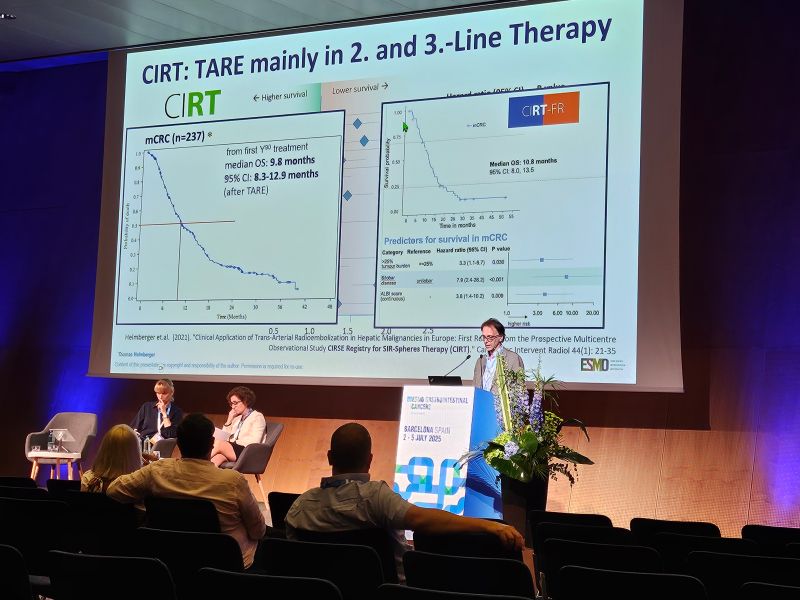
Prof. Helmberger presenting at the ESMO Gastrointestinal Cancers Congress in July 2025
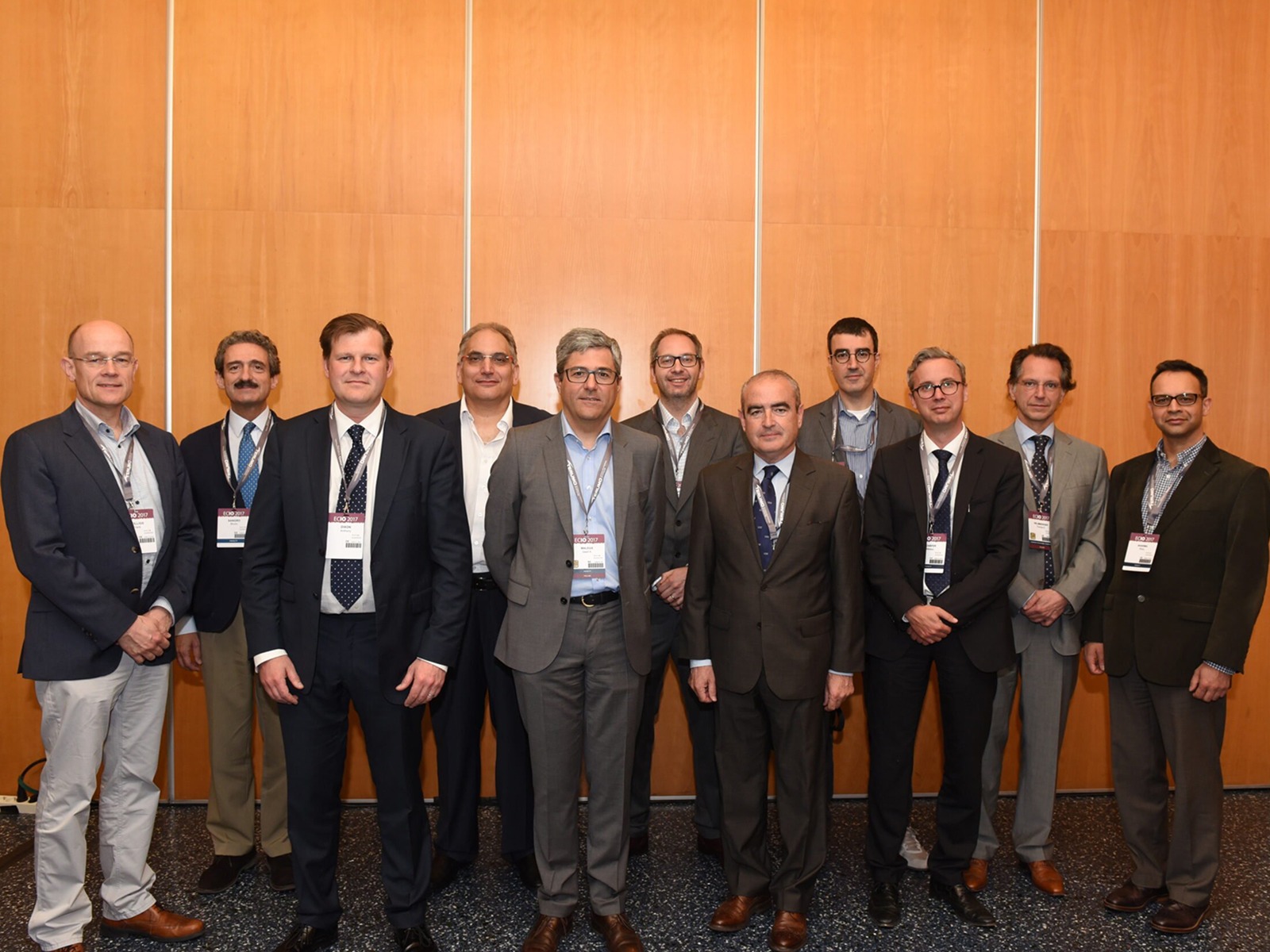
The CIRT Steering Committee (not pictured: D. Arnold, O. Pellerin)

CIRSE Insider: CIRT-FR contributed to the French national health authority’s evaluation of the reimbursement of SIR-Spheres. What are the benefits of collecting real-world data for government health agencies?

Bilbao: Although the task set by the French health authorities was challenging, the feedback from the hospitals and the intense work and dedication of the CIRT-FR committee led to the presentation of solid data that permitted the extension of reimbursement of SIR-Spheres in France. Thanks to the registry, the health authorities had an immense amount of data about a therapy applied in a large number of hospitals, each with their own levels of care, where SIR-Spheres treatment was selected following multidisciplinary discussion for each individual case. In other words, CIRT-FR painted a wide picture for the government authorities that gave them a better understanding of the daily clinical practice in a significant number of hospitals.

CIRSE Insider: What is the biggest challenge in integrating real-world data into clinical guidelines?

Bilbao: The meta-analysis of randomized clinical trials shows major support for endorsing a certain therapy and its inclusion in clinical guidelines. Registries can provide insight into rare indications of a particular therapy and detect infrequent complications that may not appear in more short-term, focused clinical trials.

That said, an obvious drawback of registries is that when the datasets are incomplete, inconsistent, and inaccurate, they lead to unreliable conclusions with limited generalizability. The design of a well-organized registry must avoid bias, missing or low-quality data, privacy risks, regulatory ambiguity, and methodological limitations. To overcome these hurdles, registries must be carefully organized with consistent governance.

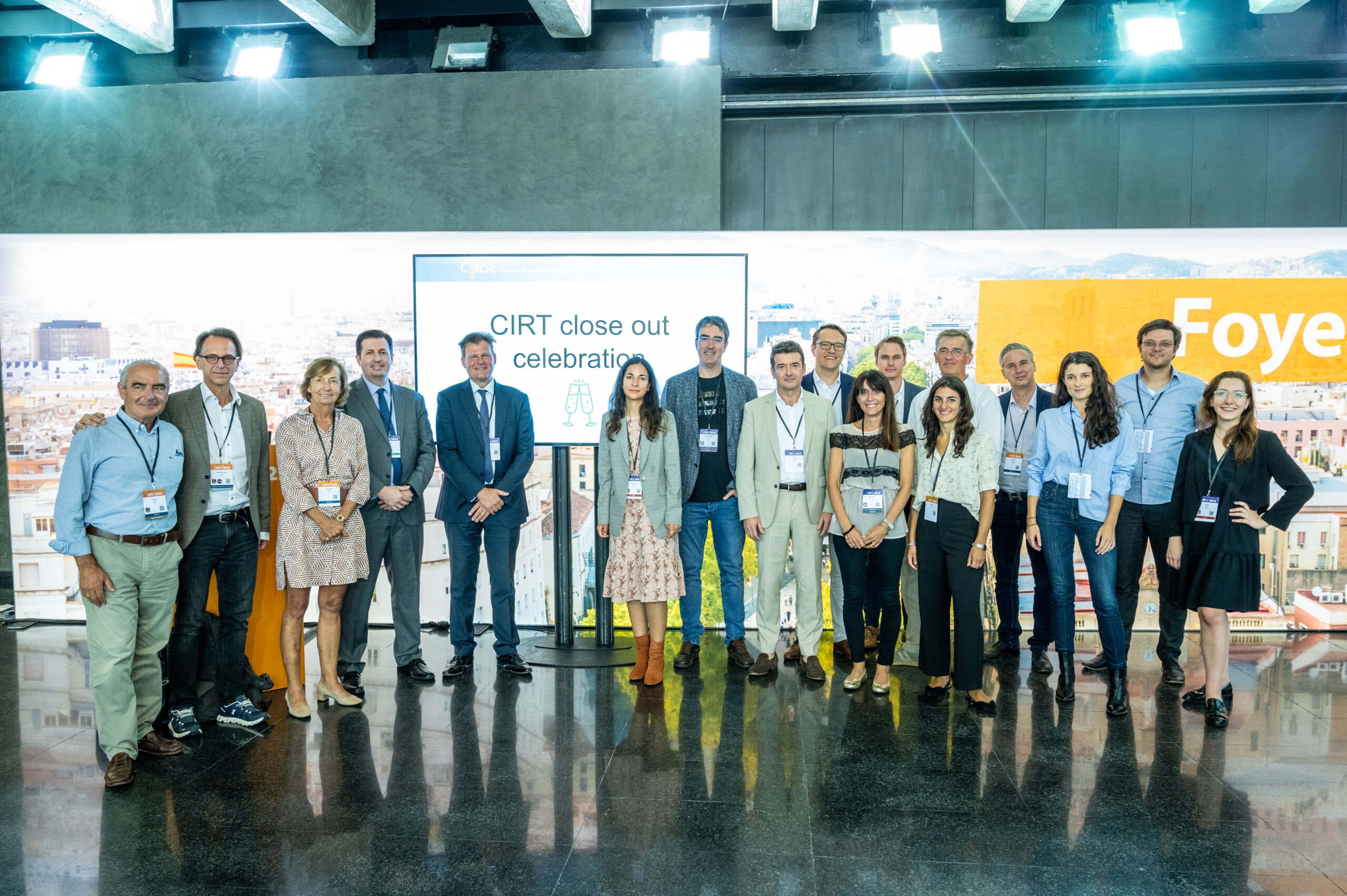
The CIRT close-out event at CIRSE 2022

CIRSE Insider: Prof. Helmberger, what new research avenues are emerging from TARE studies in primary and secondary liver tumours?

Helmberger: One exciting avenue is therefinement of dosimetry for radioembolization. Research has shown that more precise, patient-specific dose calculation and delivery can improve treatment effectiveness in terms of survival outcomes without increasing toxicity. Another direction involvescombination therapies for primary liver tumours where immunotherapy has become part of standard care; TARE might boost the immune response or vice versa, potentially leading to improved outcomes in advanced cases.

Researchers are also focusing on better patient selection through biomarkers. As mentioned, analyses from the CIRT registry identified the APRI score as a promising predictor of TARE effectiveness. In addition, there’s a lot of interest in the role of TARE as a downstaging tool. Finally, we’re looking beyond the usual indications: while colorectal metastases and hepatocellular carcinoma have been the main focus, investigators are now examining TARE in other types of secondary liver tumours (“non-colorectal” metastases).

CIRSE Insider: Who should attend the upcoming webinar? What can they expect to take away from it?

Helmberger: This webinar is geared toward the wider interventional oncology and hepatobiliary cancer community. We especially encourage practicing interventional radiologists who perform TARE or are considering it to join as well as researchers in the field of liver cancer therapy. Oncologists and hepatologists who collaborate with IRs or refer patients for liver-directed treatments will also find it useful. Really, anyone involved in treating liver tumours can benefit.

Through live polling and a Q&A during the webinar, the audience can also actively contribute questions or vote on discussed topics. I look forward to hearing the perspectives of colleagues from different hospitals and countries. For example, how do our findings resonate with what they have observed in their own practice? Do they have suggestions or even critiques that could spark further analysis? Ultimately, I hope everyone leaves the webinar not only with fresh insights about TARE but also feeling engaged in a community dialogue – one that helps us all refine our approaches and, most importantly, improve patient care in interventional oncology.