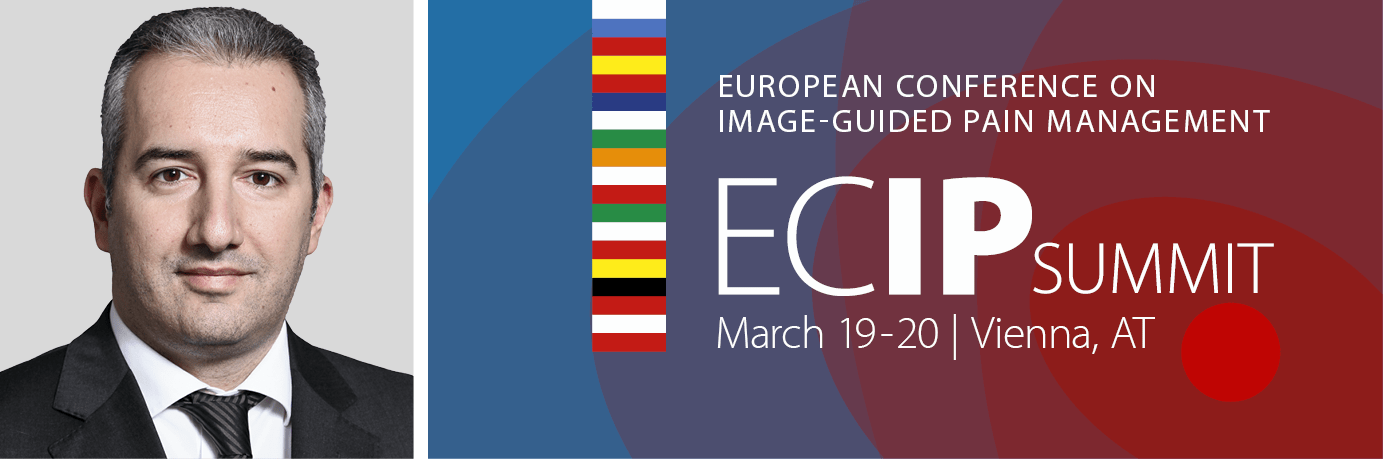
CIRSE Insider: The idea for ECIP began in 2024. What motivated CIRSE to establish ECIP? Why is it important for CIRSE to organize and host ECIP alongside its other conferences?
Filippiadis: CIRSE’s decision to establish and host ECIP stems from both a clinical imperative to improve pain management through image-guided therapies and a strategic aim to broaden the society’s educational and leadership role within all areas of interventional radiology. Up until now, there hasn’t been a major forum dedicated to all aspects of pain management — an area where IR expertise is increasingly relevant. ECIP fills that gap. By hosting a dedicated conference on image-guided pain management, CIRSE helps position interventional radiologists as central contributors to multidisciplinary patient care in a domain that intersects with other specialties.
CIRSE Insider: Why did you decide to volunteer to be a ECIP Summit 2026 Scientific Programme Committee (SPC) chairperson?
Filippiadis: I chose to volunteer because I strongly believe that image-guided pain management represents one of the most important growth areas for interventional radiology. ECIP offers a unique opportunity to define this field and demonstrate how minimally invasive, image-guided therapies can transform patient care. Contributing to the scientific direction of the ECIP Summit allows me to support and foster educational excellence and encourage high-quality clinical practice at a moment when our specialty has a real chance to shape the future of pain management.
CIRSE Insider: The inaugural summit takes place over two days with distinguished speakers from around the world. What programme topics are personally important to you and relevant to your clinical practices?
Filippiadis: Neuropathic, degenerative, and cancer pain are relevant to my clinical practice. The session on multidisciplinary integration and practice development is personally important to me and hopefully will strengthen and define interventional radiology’s place in pain management.
CIRSE Insider: What are the hot topics in pain management currently, and how will they be addressed at the Summit?
Filippiadis: The management of cancer-related pain through percutaneous ablation and augmentation, nerve injections and neurolysis, as well as the management of spine and joint degenerative pain through percutaneous and trans-arterial therapies, represent some of the most pressing challenges in contemporary pain care. Alongside lectures from world-class experts addressing all aspects of chronic pain, the ECIP Summit programme will feature interactive discussions that explore the scientific, clinical, and organisational development of image-guided pain therapy. This combination is essential for advancing the field and reinforcing the role of interventional radiology in delivering meaningful, patient-centred solutions.
CIRSE Insider: What do you see as the biggest unmet needs in pain management, and how can ECIP contribute to this area?
Filippiadis: Chronic pain is a major and increasing health challenge worldwide, affecting millions of patients and often inadequately managed with existing systemic therapies, some of which contribute to a global opioid crisis. Interventional radiology, with its image-guided, minimally invasive techniques and therapies, has unique potential to improve pain management outcomes, reduce reliance on systemic medications, and restore patient function.
CIRSE Insider: As ECIP transitions from an inaugural summit to an annual conference in 2027, what topics, sessions, or activities would you like to include for ECIP in the future?
Filippiadis: The ECIP Summit 2026 will lay the groundwork for the annual ECIP Conference. The ECIP 2027 agenda will comprehensively address interventional radiology’s clinical role across all aspects of chronic pain, with a strong emphasis on multidisciplinary integration and a patient-tailored approach. In parallel, the ECIP 2027 exhibition area will bring together interventional radiologists and industry partners to exchange opinions upon a broad range of medical devices and technologies used in minimally invasive, image-guided pain management. Finally, a dedicated training village will leverage the latest radiation-free educational platforms, including saw models, augmented reality, and robotic systems, to deliver high-level, hands-on education and support the next generation of procedural excellence.