


CIRSE Fellowship report: Dr. Murat Aşık
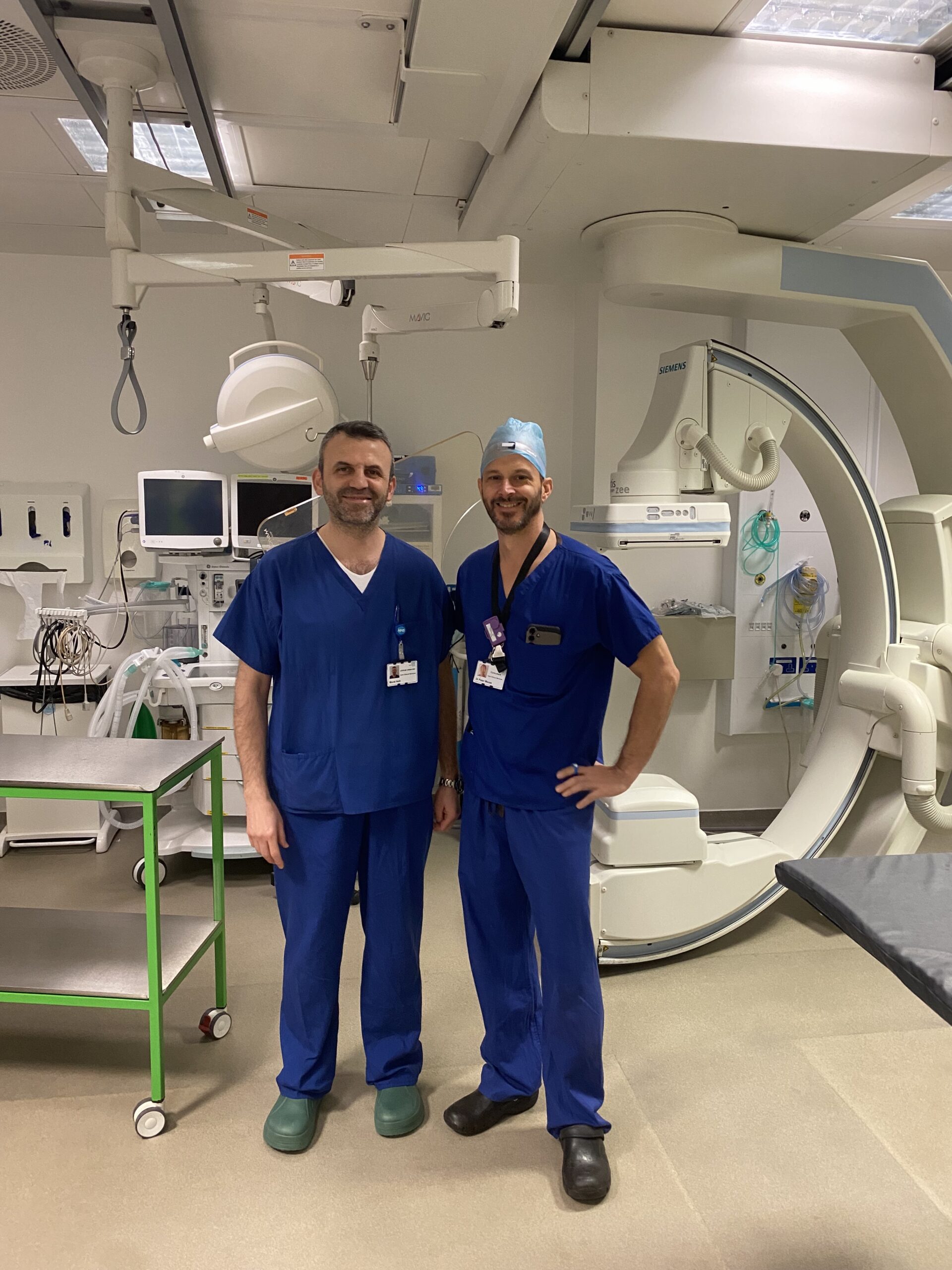
I would like to begin this report by expressing my sincere gratitude to Dr. Peter Mezes, under whose mentorship I had the privilege of working throughout my observership. I am particularly grateful for the case discussions he led, which deepened my understanding of complex endovascular strategies and procedural planning.
I also extend my appreciation to CIRSE for providing this opportunity. Their support made it possible for me to gain invaluable insight into advanced interventional radiology practice within a leading European centre.
Departmental Structure and Clinical Integration
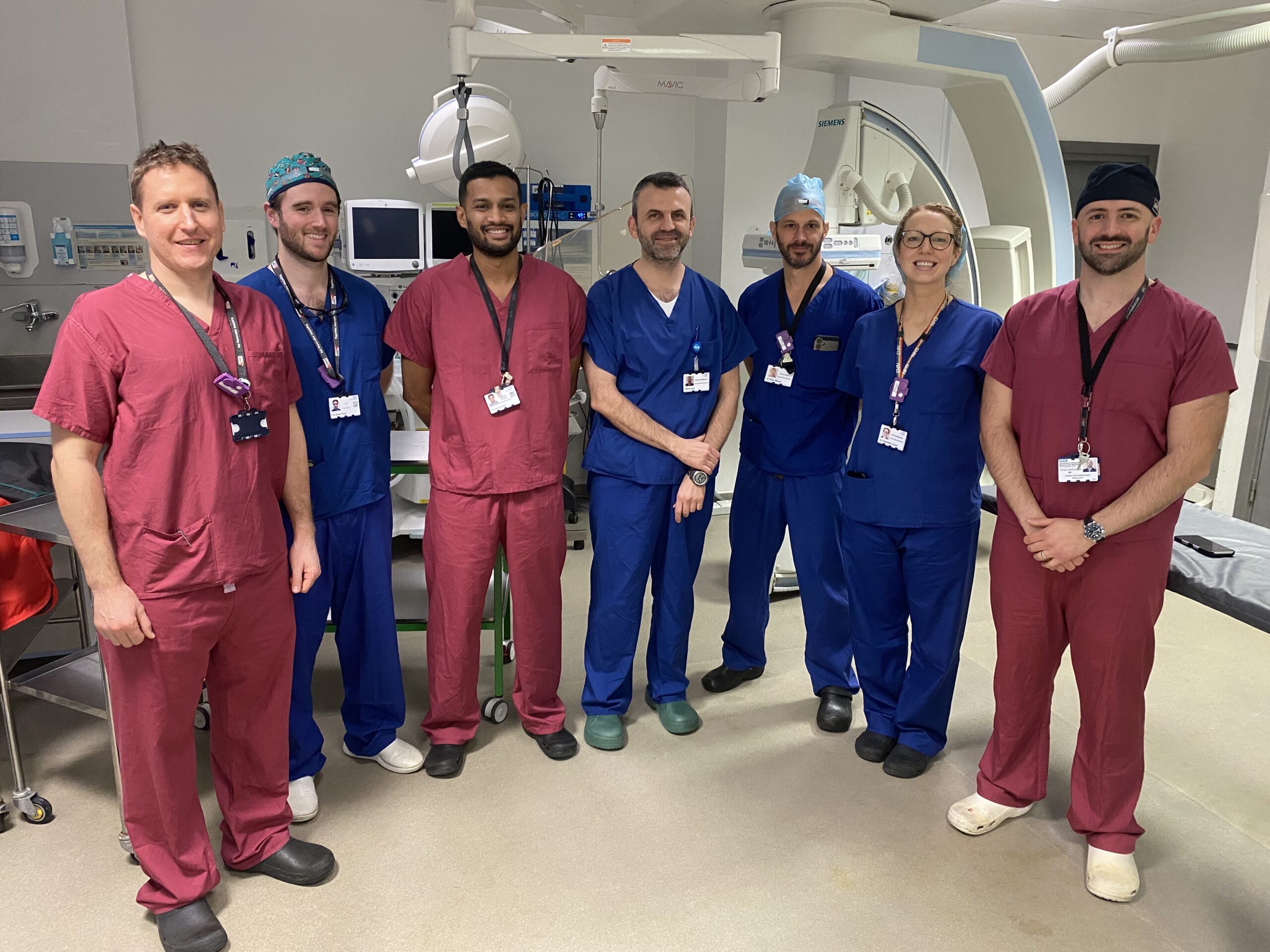
Throughout the observership, I participated in the daily activities of the North Bristol NHS Trust, Southmead Hospital Interventional Radiology Department, including case-planning meetings, imaging review sessions, and multidisciplinary conferences. Integrating into this workflow allowed me to appreciate the systematic approach used in managing complex vascular and oncologic cases.
Advanced Vascular Interventions and Case-Based Learning
A substantial part of my learning came from both observing procedures and engaging in in-depth case discussions with Dr. Mezes and his team. Several specific cases contributed meaningfully to my educational experience:
Fenestrated EVAR Case Discussion
One of the most educational discussions involved a patient with a juxtarenal abdominal aortic aneurysm in whom standard EVAR was not feasible due to inadequate neck anatomy.
Under Dr. Mezes’s guidance, we reviewed:
- Planning of a three-vessel fenestrated graft
- Strategies to ensure accurate alignment of fenestrations with the celiac trunk, SMA and renal arteries ostia
- The importance of wire and catheter stability during branch cannulation
This discussion provided valuable insight into the critical steps that determine procedural success in complex aortic reconstructions.
Visceral Artery Pathology Management
We also reviewed a challenging case involving visceral artery aneurysm, stenosis, and related pathologies. Academic discussion focused on:
- Navigating tortuous vascular anatomy with microcatheters
- Coil versus liquid embolic selection
- Prevention of complications through appropriate embolic planning
This exchange deepened my understanding of embolisation strategies and the nuances of embolic material selection.
Chronic Iliocaval Occlusion Strategy Session
In preparation for a complex chronic iliocaval venous occlusion intervention performed in the hybrid theatre,
Dr. Peter Mezes and Dr. Barış Ata Özdemir involved me in a detailed review of:
- Preoperative CT venography mapping and identification of potential recanalisation channels
- Techniques for sharp recanalisation
- Stent diameter and landing-zone selection
- The role of hybrid surgical support should endovascular access prove challenging
Observing the subsequent procedure after discussing its planning steps was particularly instructive and reinforced the link between preparation and procedural execution.
TACE Case Review for Multifocal HCC
Another valuable learning opportunity came from the detailed assessment of a patient with multifocal hepatocellular carcinoma undergoing staged TACE. Together, we reviewed:
- Identification of tumour feeders arising from accessory hepatic branches
- Selection criteria for DEB-TACE versus conventional TACE
- Strategies to avoid non-target embolisation
- Treatment endpoint evaluation based on angiographic findings
This discussion enhanced my understanding of interventional oncology decision-making and procedural refinement.
Gastrointestinal Stenting and Palliative Care Pathways
I observed several malignant obstruction cases requiring GI stenting, often preceded by patient-specific discussions with Dr. Mezes. These involved:
- Determining appropriate stent length and landing zones
- Managing technically challenging obstructions
- Anticipated symptom progression and management of potential complications
These real-time discussions contributed significantly to my understanding of palliative IR interventions.
Hybrid Theatre Collaboration and Technical Insights
The hybrid operating theatre provided a unique environment to observe collaboration between interventional radiology and vascular surgery. Discussions with Dr. Mezes before and after hybrid procedures were especially informative and highlighted:
- The rationale for combining open and endovascular techniques
- Equipment selection for complex venous and arterial recanalisation
- Evaluation of intraprocedural imaging findings to guide next steps
These multidisciplinary interactions demonstrated the essential role of IR within comprehensive vascular care pathways.
Educational and Professional Impact
The mentorship of Dr. Peter Mezes greatly enhanced the depth and value of this fellowship. His structured explanations, interactive teaching style, and focus on evidence-based practice helped consolidate my knowledge in the following areas:
- Complex aortic repair
- Visceral artery interventions
- Chronic venous occlusion management
- Procedural planning and complication management
This fellowship has strengthened my clinical confidence and broadened my perspective on managing advanced IR cases. I intend to incorporate the techniques and decision-making principles learned into both my daily practice and academic teaching activities.
Final reflection
My CIRSE fellowship at North Bristol NHS Trust, Southmead Hospital, under the mentorship of Dr. Peter Mezes and his colleagues, was an outstanding experience that significantly contributed to my professional development. The combination of high procedural volume, advanced endovascular techniques, multidisciplinary collaboration, and continuous case-based education provided a rich and rewarding learning environment.
I remain sincerely grateful to CIRSE for supporting this educational opportunity, and I look forward to applying the knowledge gained to improve patient care and advance the practice of interventional radiology in my home institution.